Ekaterina Kovalenko connects consciousness and physicality
Ekaterina Kovalenko is a Berlin-based sculptor, specializing in site-specific installations using various mediums, from ceramic to VR and online installations. Her works explore the contradictions in human physicality, sensuality, self-perception, taboo, and stigmatization.Ekaterina's work deeply explores the connection between body and consciousness, using physical appearance as a universal language to engage viewers.
How did you first get into sculpture and ceramics? Was there a specific moment or influence that sparked your interest in this medium?
I will start from afar. Ever since I can remember, I have been drawing. I had a ton of problems with my school teachers because I just couldn't stop drawing all the time. It was always graphics and always people. Because of that, I went to a clothes design college when I was 14, so I could still draw people and make some sort of profession out of it.
Closer to the end of my education there, when I was on the brink of choosing where to study next (and I had no idea, because clothing was undoubtedly not my branch), I bought a new material, polymer clay, to try to make a present for my friend's birthday. I wanted to make a small human figurine. I unpacked it, started kneading, and quickly made a miniature hand. And it. Was. Good. This was a moment of epiphany. I heard trumpets, saw light rays, and deities sang for me—this was my purpose, this was what I wanted to do for the rest of my life: figurative sculpture. But doesn't it only exist in museums? Isn't that an extinct art form? Can I actually learn it?
It turned out, yes, I could, and I could actually choose between a few institutions. After six years at the Academy, I graduated as a specialist in sculpture. We studied clay, bronze, wax, and stone, but not ceramics, which came into my life thanks to a certain obstacle—I moved to Berlin and left my big cozy studio with all my previous stuff and instruments. All I had in my new place was a small room in our apartment with my partner, which I arranged as a workshop. Before that, I used to make big sculptures with a dirty production cycle, and now I needed to figure out how to make them small and clean. This was a choice of convenience for me. Using ceramics for small-sized sculptures is relatively easy when you're not experimenting with glazes. Ceramics have been very kind to me, and I'm glad things turned out this way.
Your sculptures often seem to blend classical techniques with contemporary themes. Who or what are your biggest inspirations in your work? How do you incorporate elements of digital art into your traditionally physical medium of sculpture?
I draw inspiration from multiple sources, with the most outstanding for me being pre-Renaissance art, religious art, ancient sculpture and ceramics, and curiosity cabinets. I'm also inspired by contemporary artists who work with corporeality, like Ivana Bašić, Ben Zank, and Berlinde de Bruyckere, as well as artists who work with elements, like James Turrell and Lily Clark. I would also mention one piece by Giorgio Andreotta Calò called "Senza Titolo (La fine del mondo)" ["Untitled (The End of the World)"]. And, of course, what can be more inspiring than nature?
For the non-physical world, I use the same principles that I would in real life, but with fewer restrictions. Digital space for me is the ultimate demiurgic space—limited only by your imagination, craft, and knowledge of a program's possibilities. Well, in the end, I try to create an experience, to draw viewers inside the project cloud, and to let them feel the atmosphere that I inhabit with my ideas. To achieve this, I use portals to new dimensions within my projects, such as VR goggles, web browsers, or phone cameras (AR).

Can you describe your creative process from conceptualization to the final piece? How do you decide on the themes and forms for your sculptures?
I have different approaches when it comes to the creative process. The first way is all about collecting ideas. I try to quickly sketch any more or less interesting idea or vision that I have during my everyday life. These can be rooted, for example, in pareidolia effects, forms that I see in my dreams, or inspirations from other people's and nature's creations. I collect these sketches in notebooks and refer to them when I have the time and resources to actually create something.
The second way is when I work on a specific project that I have in mind. I start with a theme, vision board, or a cloud of terms associated with the project. I read, watch, search for information, draw life studies, and talk to my friends about it. Gradually, it grows a body and starts walking by itself. I always try to find a theme that not only bugs me but one that people can relate to, no matter where, when, or how they live their lives. Texts and site-specific installation compositions usually come at the end. I'm interested in creating works of art that can live on and always find their meaning, even if it is far from my original idea. That's why I gravitate towards figurative art—this is a language people will always speak.
The third way involves getting directions from others, by which I mean commissioned art. It usually develops according to classical principles: there is a technical inquiry, and you use those parameters to the best of your ability, trying to marry your vision with the expectations of the client. There is nothing wrong with that—almost all art before the very end of the 19th century was made as a commission.
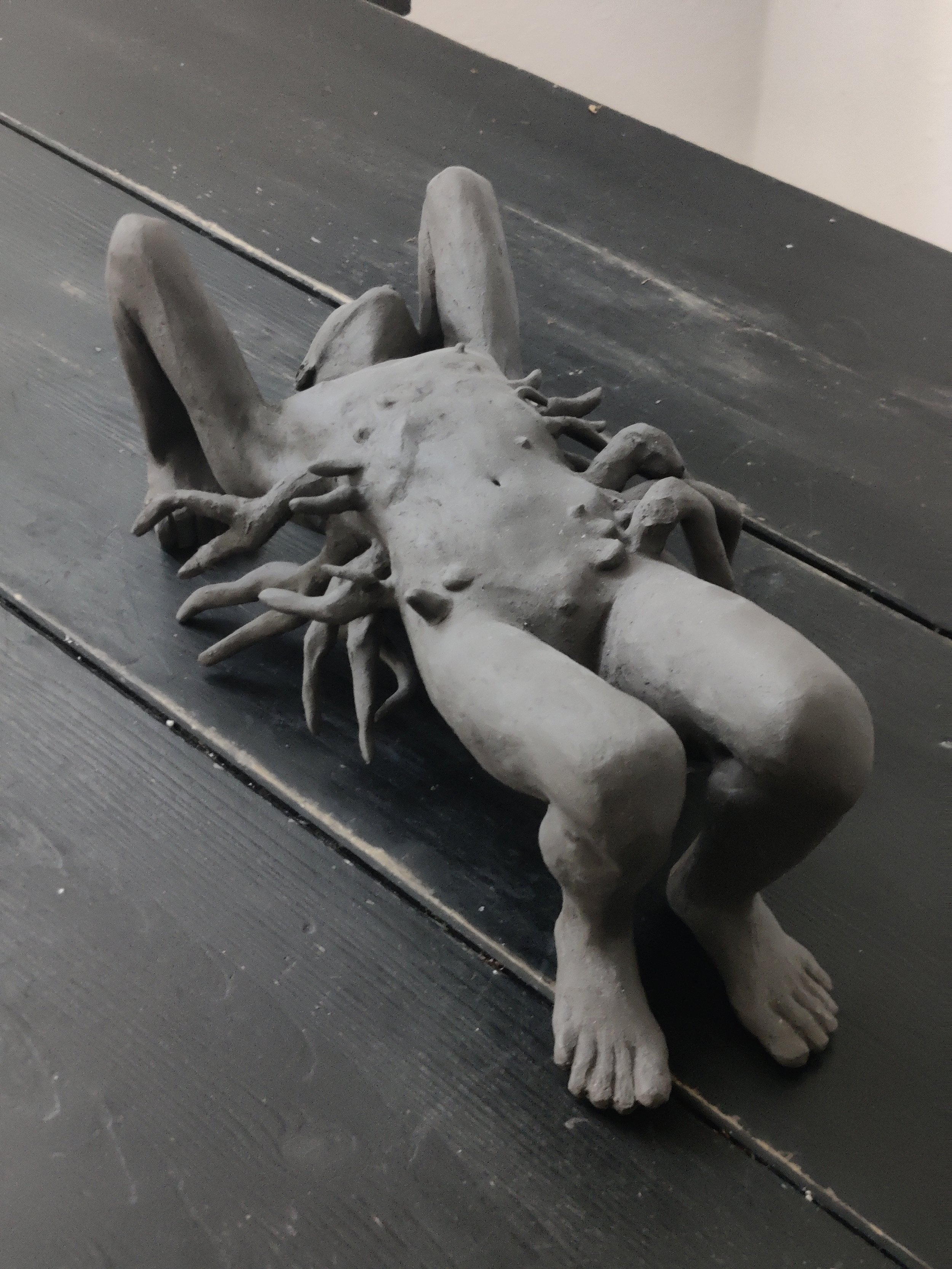
Do you have a favorite material to work with, and why? How does it contribute to the storytelling in your pieces?
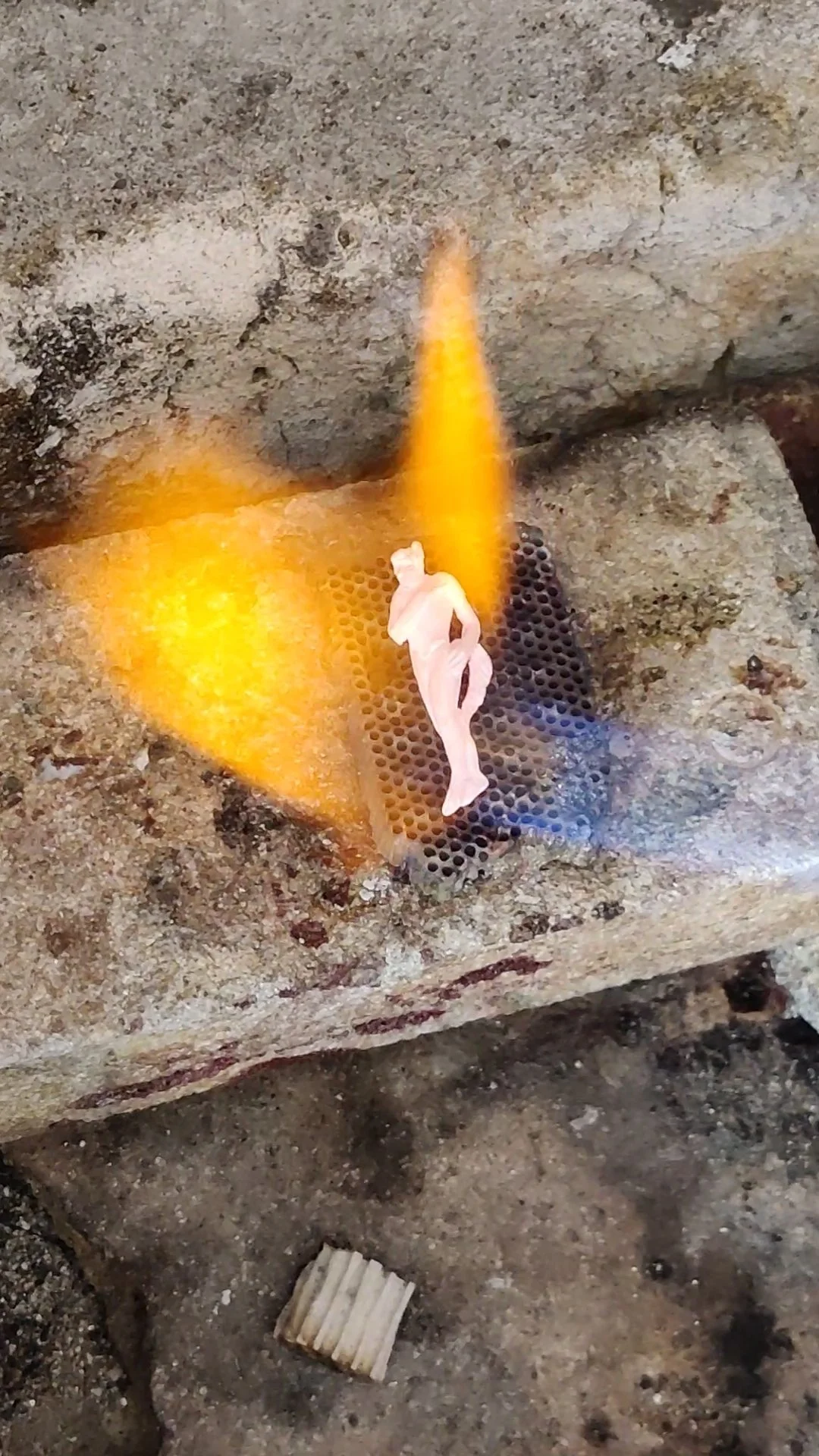
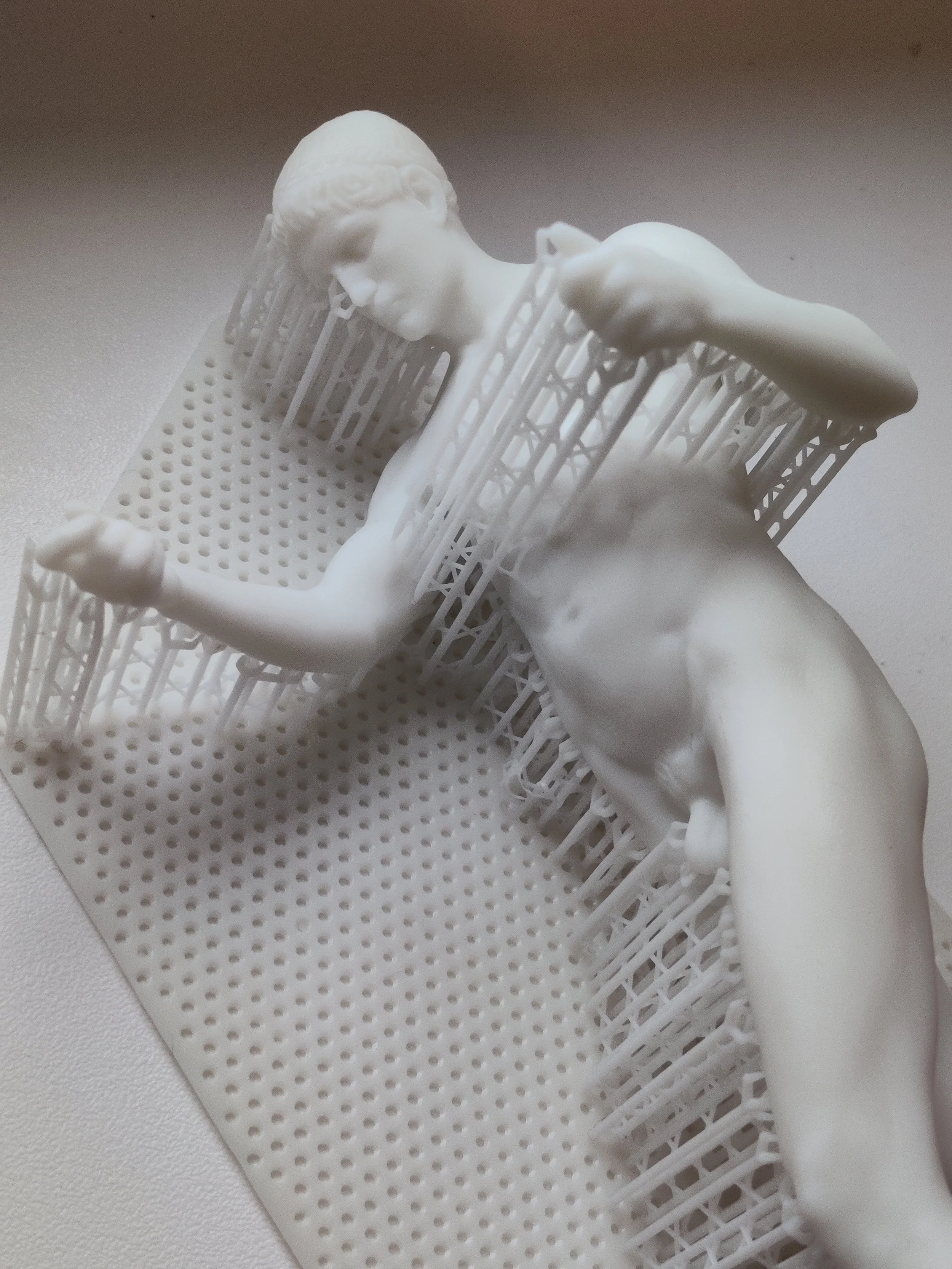
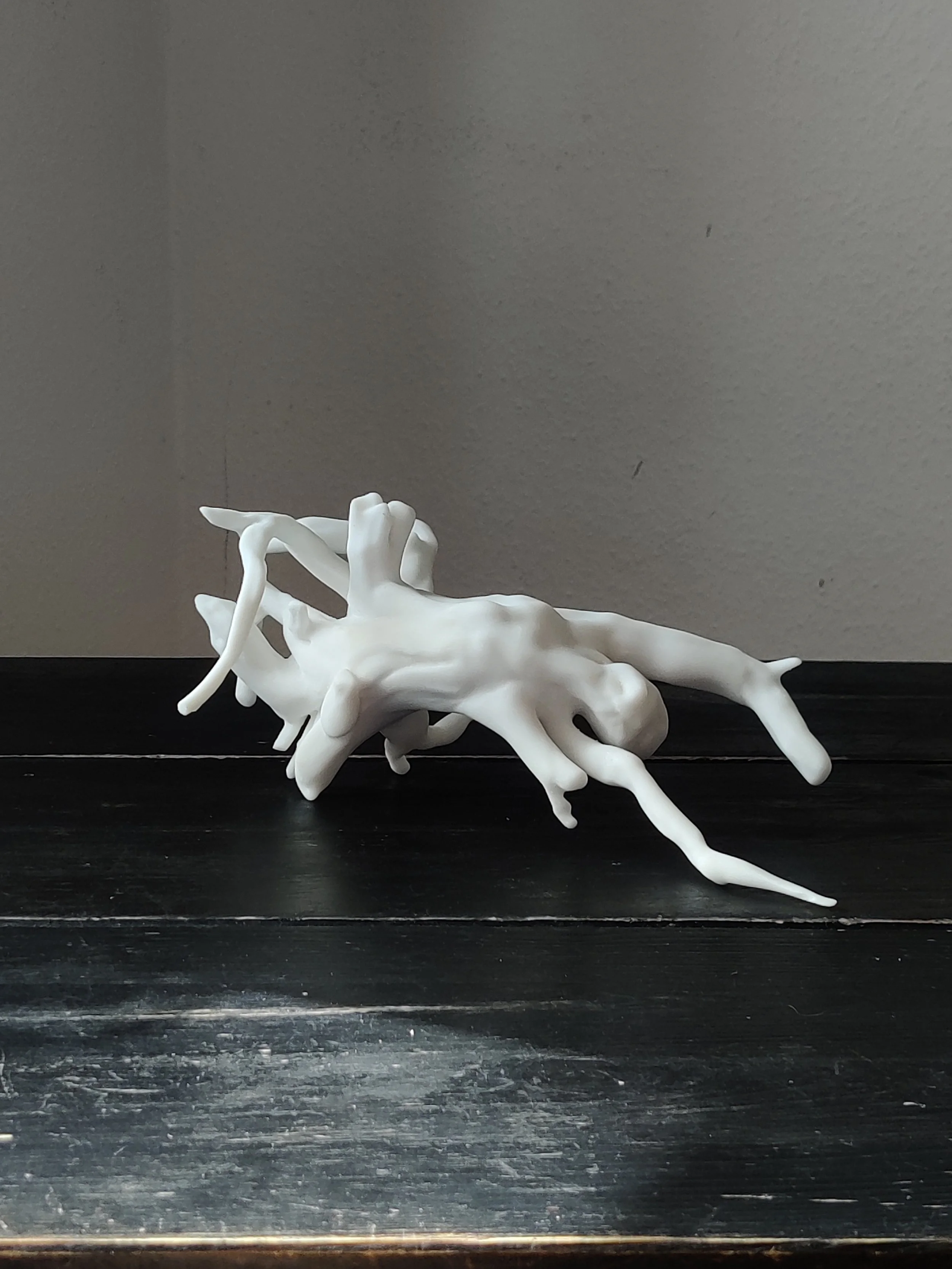
For my real-life objects, I prefer to choose materials that have a long lifespan and look noble, like silver, ceramic, and bronze. Ideally, they should be eco-friendly and pleasant to touch. I love exploring new materials and new techniques. My only regret is that I don't always have the resources for that. Recently I discovered a new, cool material for 3D printing—white eco resin that looks slightly translucent, just like marble.
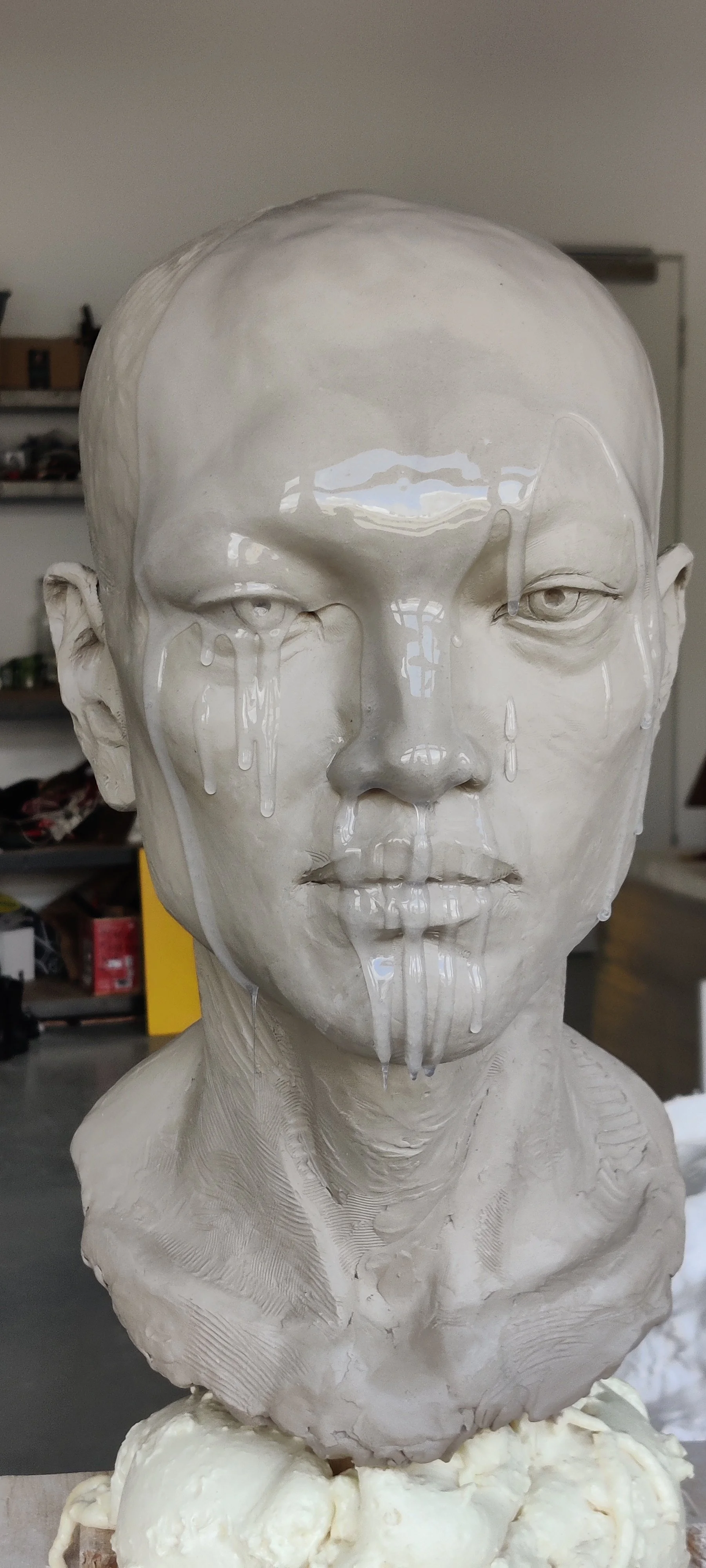
I'm still not sure if I can name my favorite material, but the most common for me is, of course, clay. Clay is my everyday companion; it has its own character and temperament. It can help you, show you the way, or ruin your progress if you resist it. In contrast, plasticine has almost no character and is a very obedient material. It was my companion throughout years of practice, but here in Europe, I haven't yet found a sufficient alternative that is both affordable and of high quality. Soon, I will try a new material for me—glass.
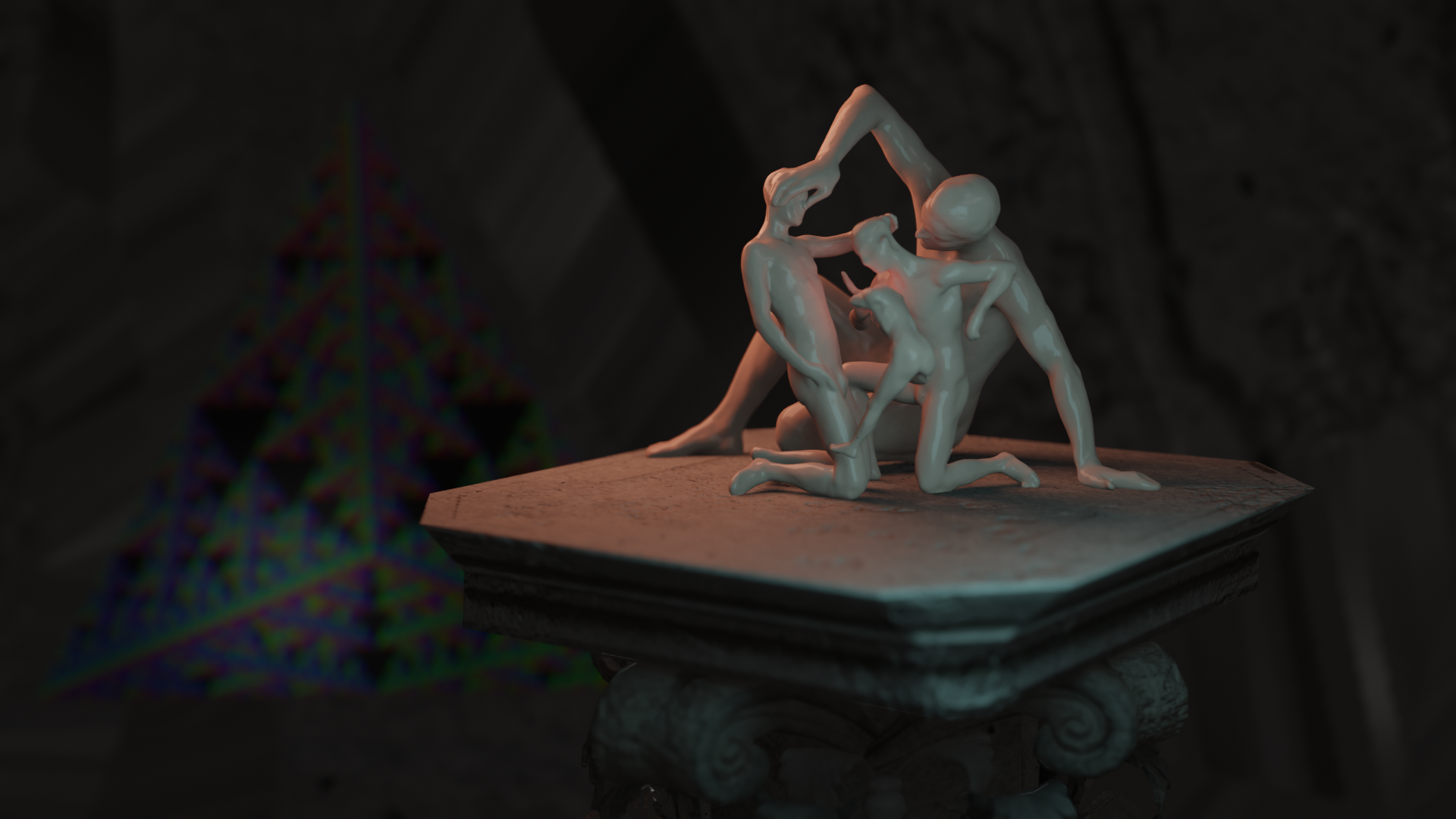
Your works often explore themes of the human body and its forms. What messages or emotions do you aim to convey through your sculptures?
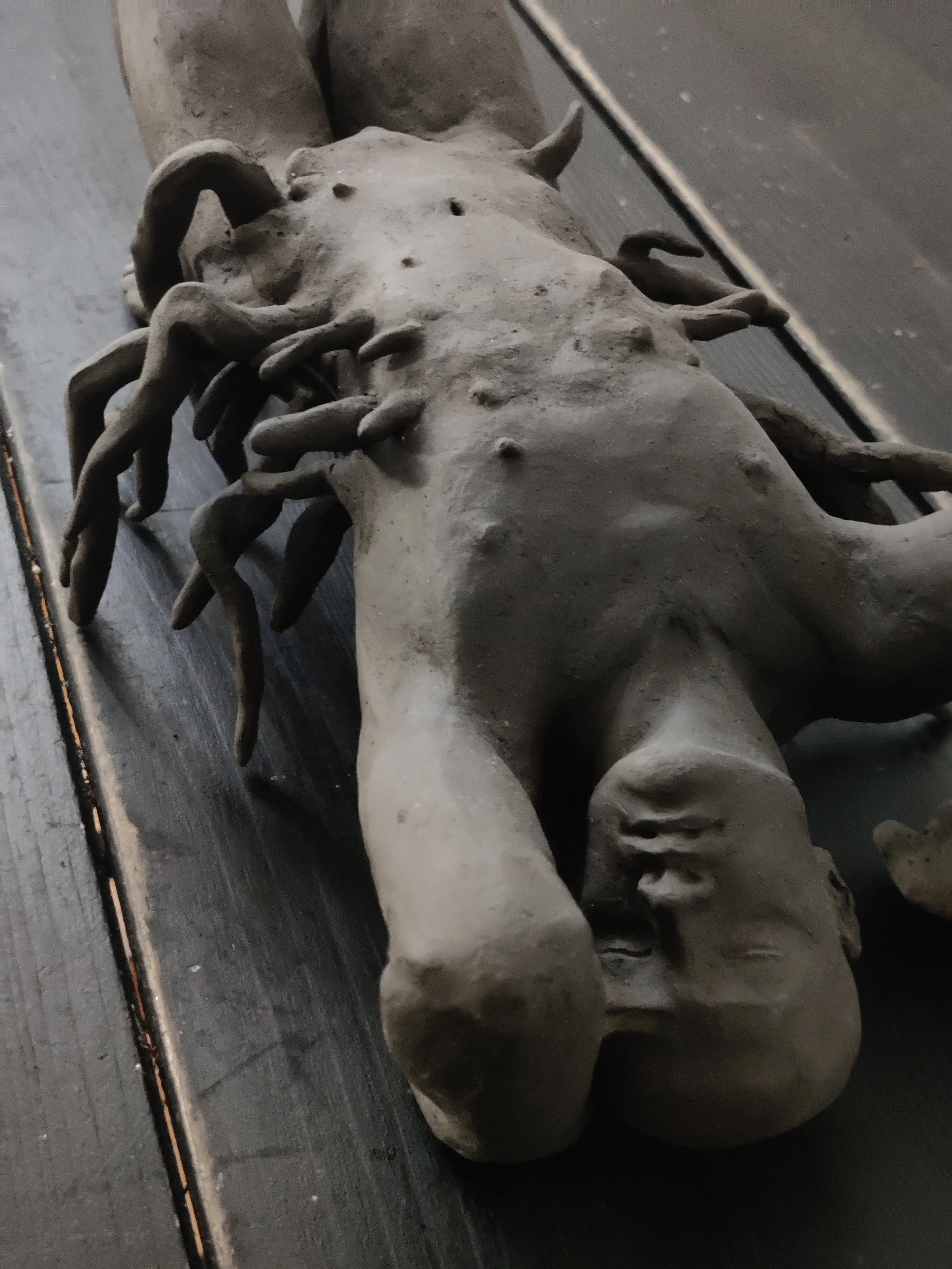
Usually, my themes are uneasy, troubled, uncomfortable. In the past, I have addressed topics such as body dysphoria, disillusionment with anthropocentrism, the correlation between humanity and the planet, and the relationship with death. I am also focused on the unconventional beauty, strangeness, and darkness within everyone's soul. I use figurative sculpture to attract people to these themes, to invite them for a discussion or, at the very least, to make viewers dip their toes in them.
Two new themes that I'm currently working on concern queerness as an inevitability and old age as an ostracized state. However, there is only so much you can put into a piece of work—the viewer is a co-creator. I agree with Erwin Panofsky's classical theory on three levels of perception of art. The first level involves a general understanding of color, composition, and form. The second level requires knowledge of mythology, history, and symbols that an artist has embedded in their work. The deepest level is the most complex, where the viewer evaluates a piece in the context of its meaning within the socio-cultural landscape. I believe that once the work is finished, it starts to live on its own, growing its own meanings. I am happy with any level of perception that a viewer can see my works with because you never know what seed will sprout. With my works, I aim to convey: embrace the full circle of life. Try to put yourself in others' shoes. Be compassionate, open, curious, and unconventional. Don't be afraid to listen to those who are silenced. Find your passion. Look and see that everything is a part of you, and you are a part of everything, and it is beautiful even when it hurts.
You also teach workshops and courses. How does teaching influence your own creative practice?
"Docento discimus" is Latin for "by teaching, we learn." I find the most joy in learning new things, and even more joy in transferring knowledge to others. Sculpture can teach you to be patient, attentive, passionate, sensitive, logical, and strategic. It's amazing how many additional skills you pick up along the way of learning sculpture. When I teach, I always choose a new scenario for new people, tailored to our needs, and it always makes me reevaluate and elevate my own mastery.
I'm also opposed to the idea of hidden or jealously withheld knowledge. Knowledge defends itself from the lazy, ignorant, and unworthy; it takes time and resources to collect it and become skilful. So, let us help each other, and we will only get richer along the way.
https://www.instagram.com/uncle_katya/
https://ekaterinakovalenko.com/