SELES HOUSE is making cuteness strange
SELES HOUSE is a Seoul-based fashion label built like a world of its own: sweet, nostalgic and slightly strange. Ribbons, unicorns, pearls and cake motifs meet piercings, hardware and exposed skin, creating clothes that refuse to choose between innocence and provocation. Under the phrase “YOU ARE SAFE HERE,” the brand makes room for tastes adults are often taught to edit out of themselves — the childish, excessive, funny and deeply personal. We spoke with SELES HOUSE about childhood memories, contradictory femininity, creative accidents, and the imaginary house that keeps growing with every collection.
What made you start SELES HOUSE in the first place? Was there something you felt was missing from fashion, or did the brand grow more naturally out of your own taste and life?
SELES HOUSE didn’t really begin because I felt something specific was missing from fashion. It grew much more naturally from the things I have always loved. Since I was young, I’ve been drawn not only to clothes, but also to cartoons, toys, cakes, old objects, cute packaging, and anything that seemed to carry its own little world. As I got older, I started thinking that those tastes didn’t necessarily have to stay in childhood. I wanted to create clothes that could hold onto those things we still love as adults — things that may feel a little childish, strange, or overly sweet, but are also very personal. So in many ways, SELES HOUSE was created somewhere between the things I loved as a child and the things I still love now.
Your website opens with “YOU ARE SAFE HERE.” What does safety mean inside the world of SELES HOUSE?
For me, “YOU ARE SAFE HERE” is less about physical safety and more about creating a space where you don’t have to explain or feel embarrassed about the things you love. As we grow older, I think we naturally start editing our own tastes. We wonder if something is too cute, too much, or not appropriate for our age. Inside SELES HOUSE, I want people to feel free from those kinds of rules. You can love unicorns and ribbons, while also being rebellious, strange, or a little provocative. It is a safe space in that sense — a place where different sides of yourself are allowed to exist together.
Why a “house”? Does SELES HOUSE represent a physical place, an imaginary one, or a kind of chosen world people can enter through clothing?
I didn’t originally imagine it as a literal physical space. To me, a house is one of the most personal places we have, but it is also somewhere you can build your own world most freely. At home, you can surround yourself with the things you love, wear what you want, and create your own atmosphere without thinking too much about how other people see you. So SELES HOUSE is closer to an imaginary space — a world that you can briefly enter through a piece of clothing or a bag. As each collection grows, it also feels like another room is being added to the house. I often think of each season as a new room, memory, or part of that world.
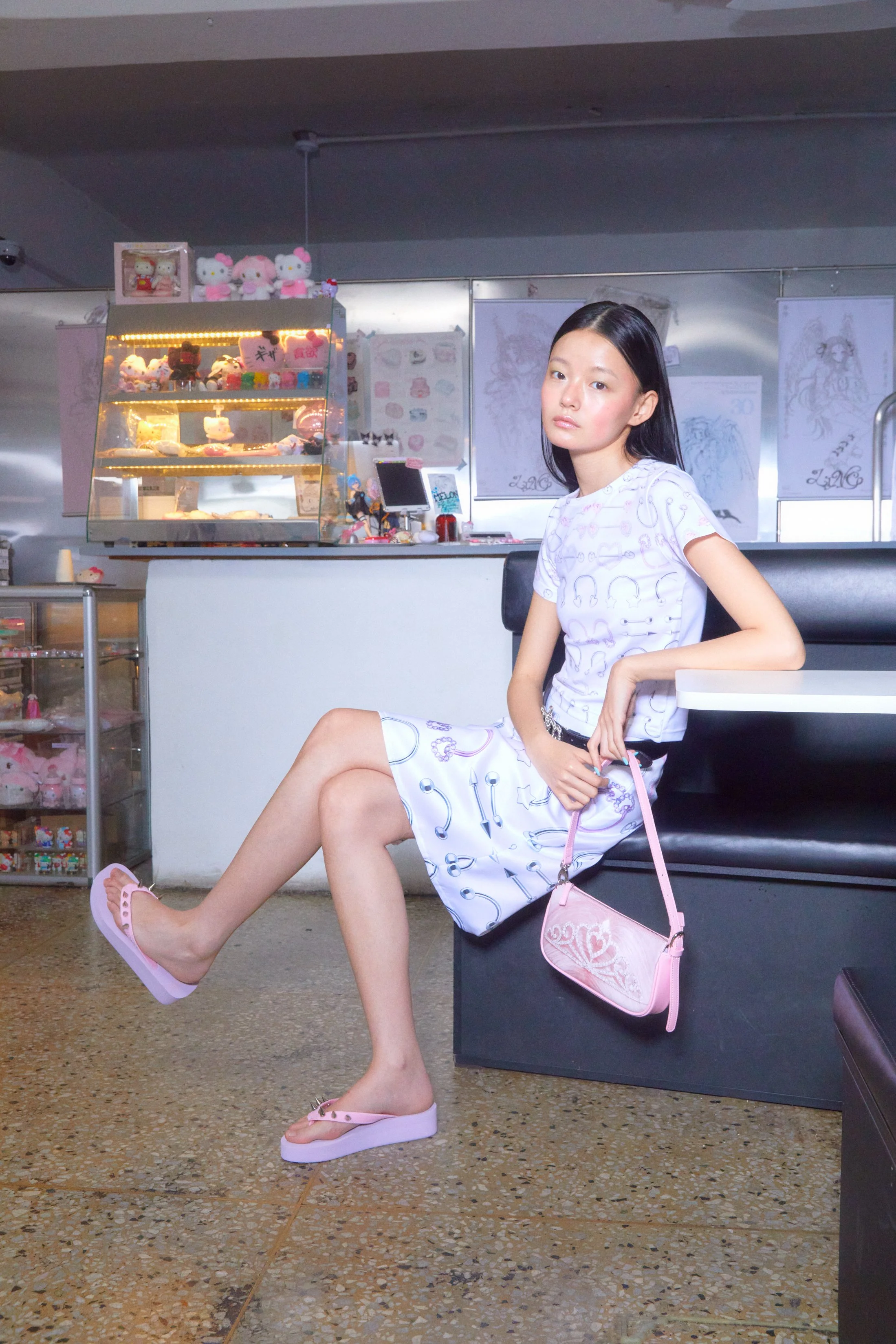
There’s a strange tension in your clothes between innocence and something more rebellious: ribbons, unicorns and pearls sit alongside piercings, exposed skin and hardware. What attracts you to putting those languages together?
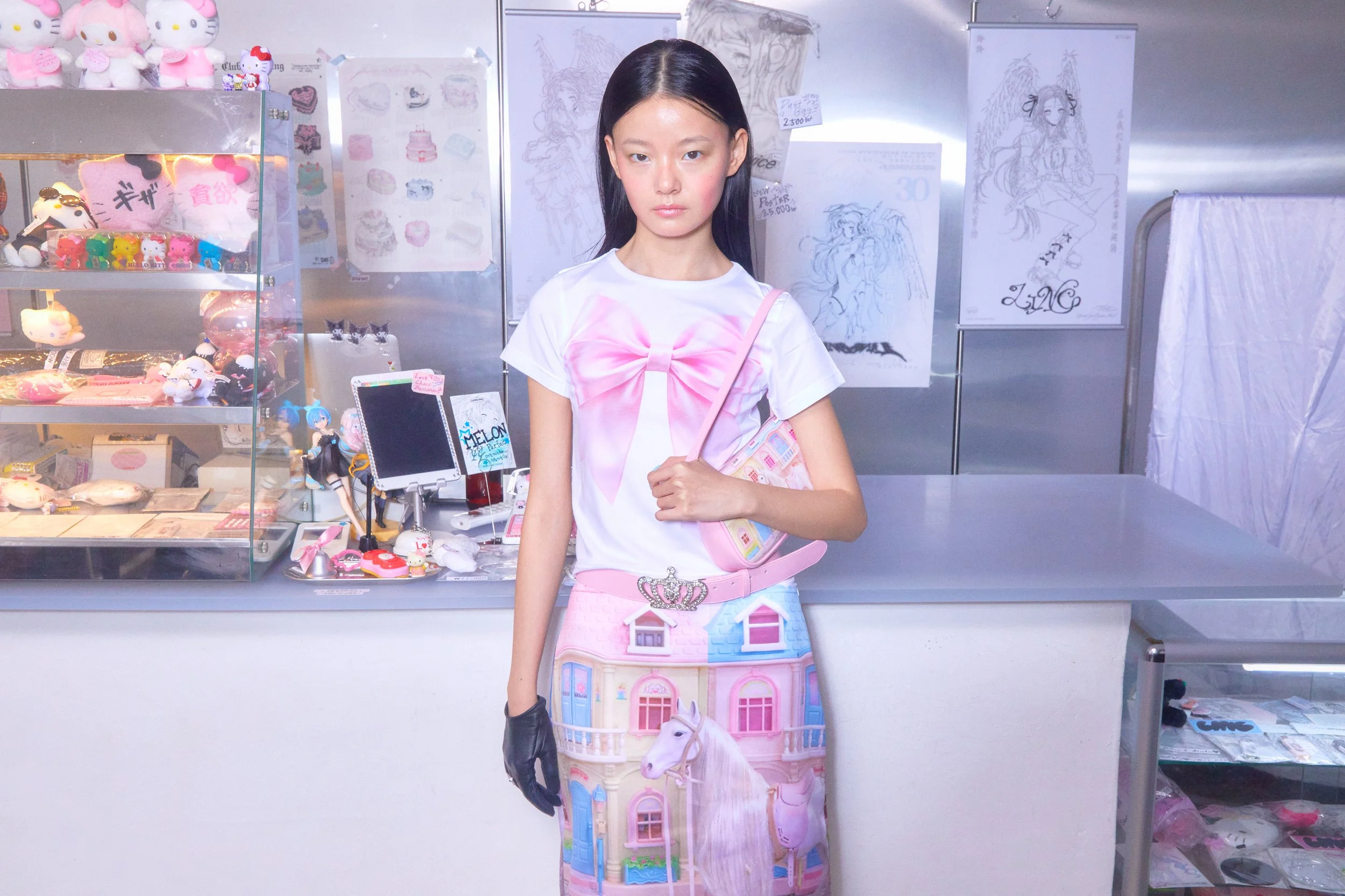
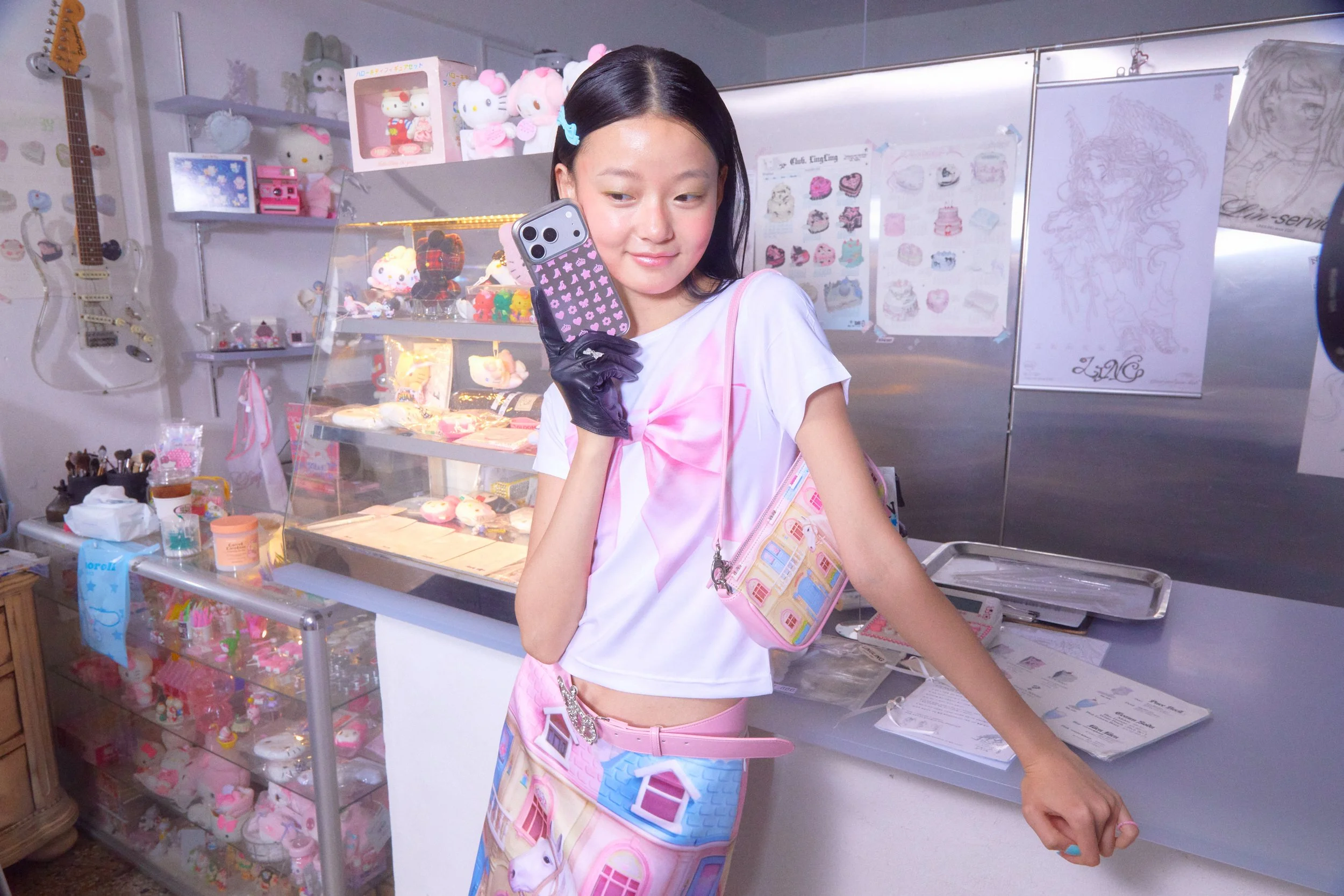
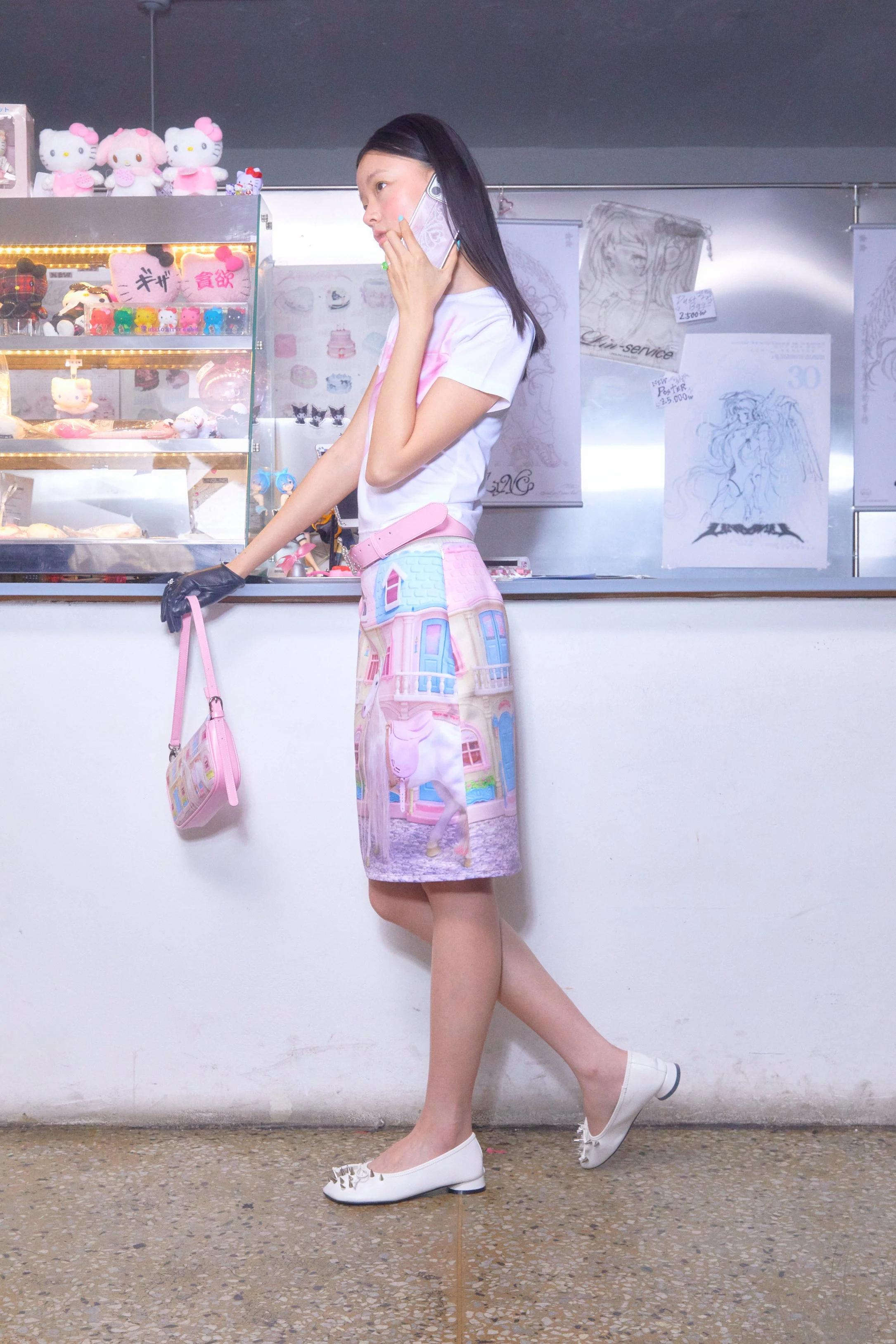
I think things become much more interesting when completely opposite elements exist together. Ribbons, pearls, and unicorns can feel very innocent and traditionally cute, but when you add piercings, studs, metal, or exposed skin, they suddenly develop a different personality. I’m more interested in something that is slightly disturbed or unexpected than something that is perfectly cute. People are not just one thing either. Someone can be cute, aggressive, sexy, funny, and vulnerable at the same time. I want the clothes at SELES HOUSE to carry those different personalities together as well.
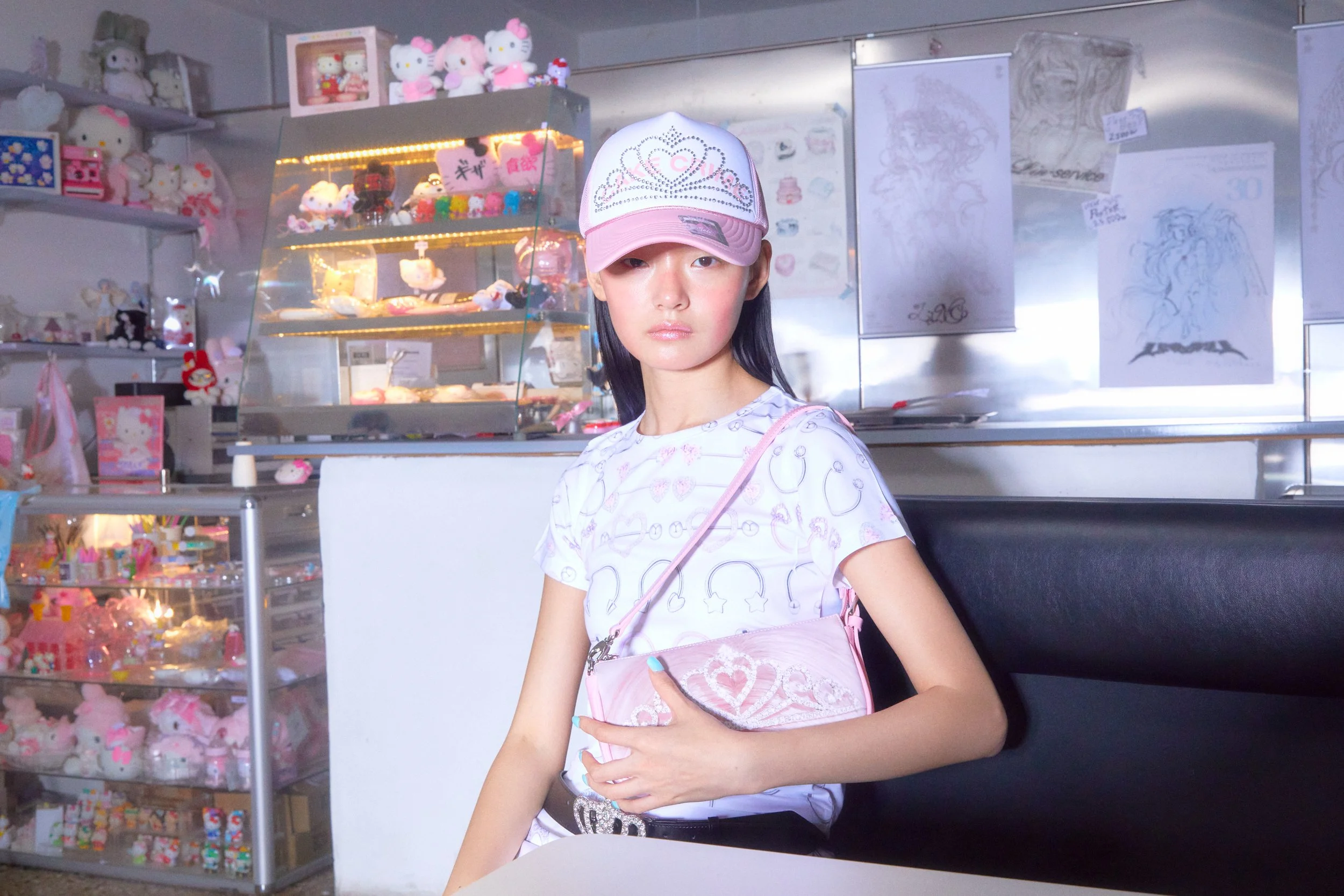
Some of your sweetest motifs are also slightly strange — the pierced heart, a cake turned into clothing, a unicorn appearing across bags and skirts. Do you think cuteness becomes more interesting when something disturbs it?
Yes, definitely. I tend to look longer at something beautiful when there is one slightly strange or unexpected detail. It could be a pretty heart with piercings, a birthday cake turned into clothing, or a unicorn appearing in a place where you wouldn’t normally expect to see one. It’s not that I want to reject cuteness — I genuinely love very cute things. But when you add a little discomfort, humor, or absurdity to it, I think it becomes more than simply “cute.” It starts to have its own character.
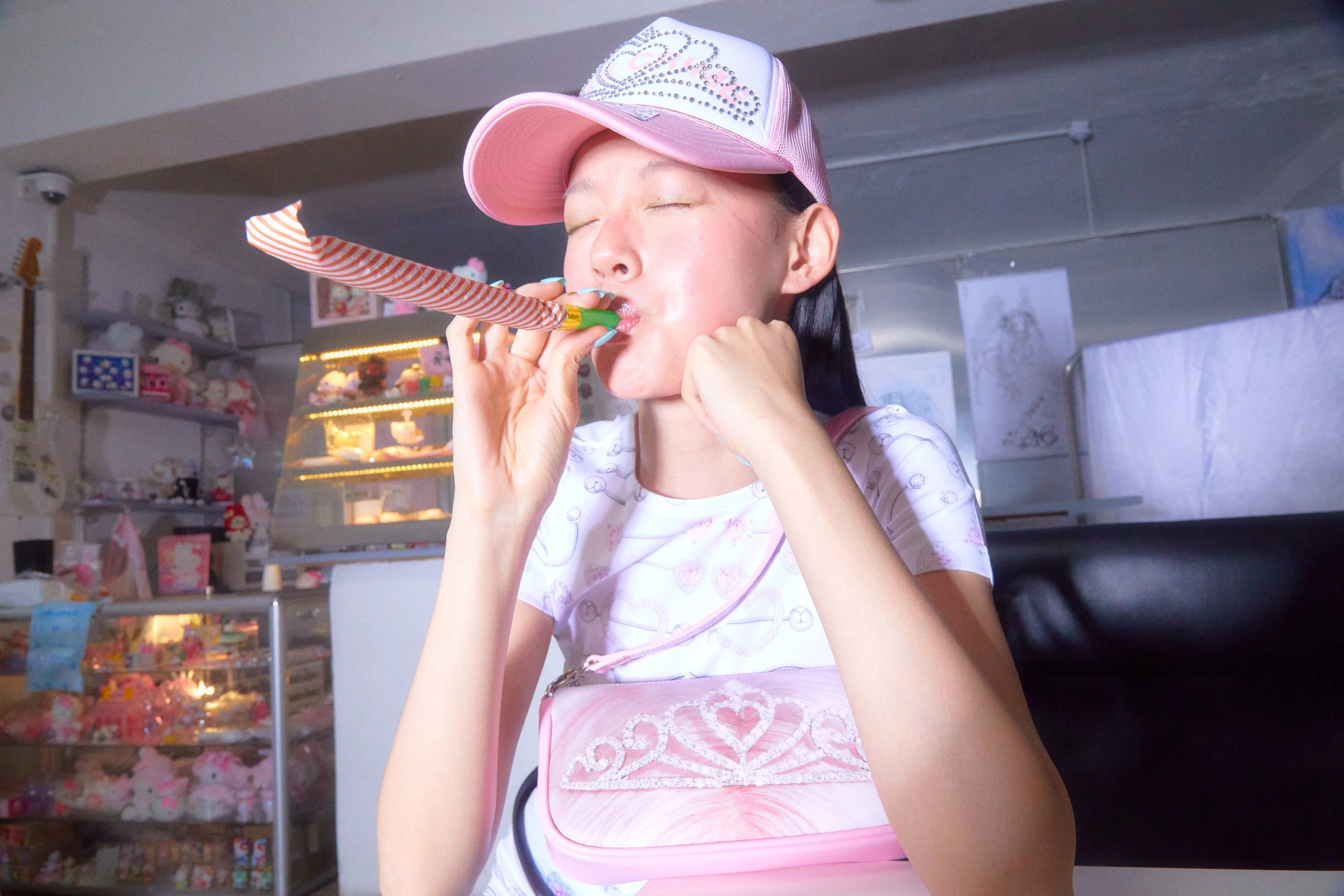
A lot of fashion still treats femininity as either delicate or overtly sexual. Your work seems comfortable letting it be cute, provocative, funny and excessive at the same time. What does femininity mean to SELES HOUSE?
To me, femininity isn’t one fixed image. Being feminine doesn’t necessarily mean being delicate or quiet, and it also doesn’t have to mean being overtly sexy. You can wear lots of ribbons and still feel strong. You can wear a very short skirt and still feel cute. You can be excessive, funny, strange, or rebellious at the same time. The femininity I want to express through SELES HOUSE is about not having to resolve those contradictions. I think cuteness, sexuality, humor, and rebellion can all exist in the same person, and that freedom itself feels very feminine to me.
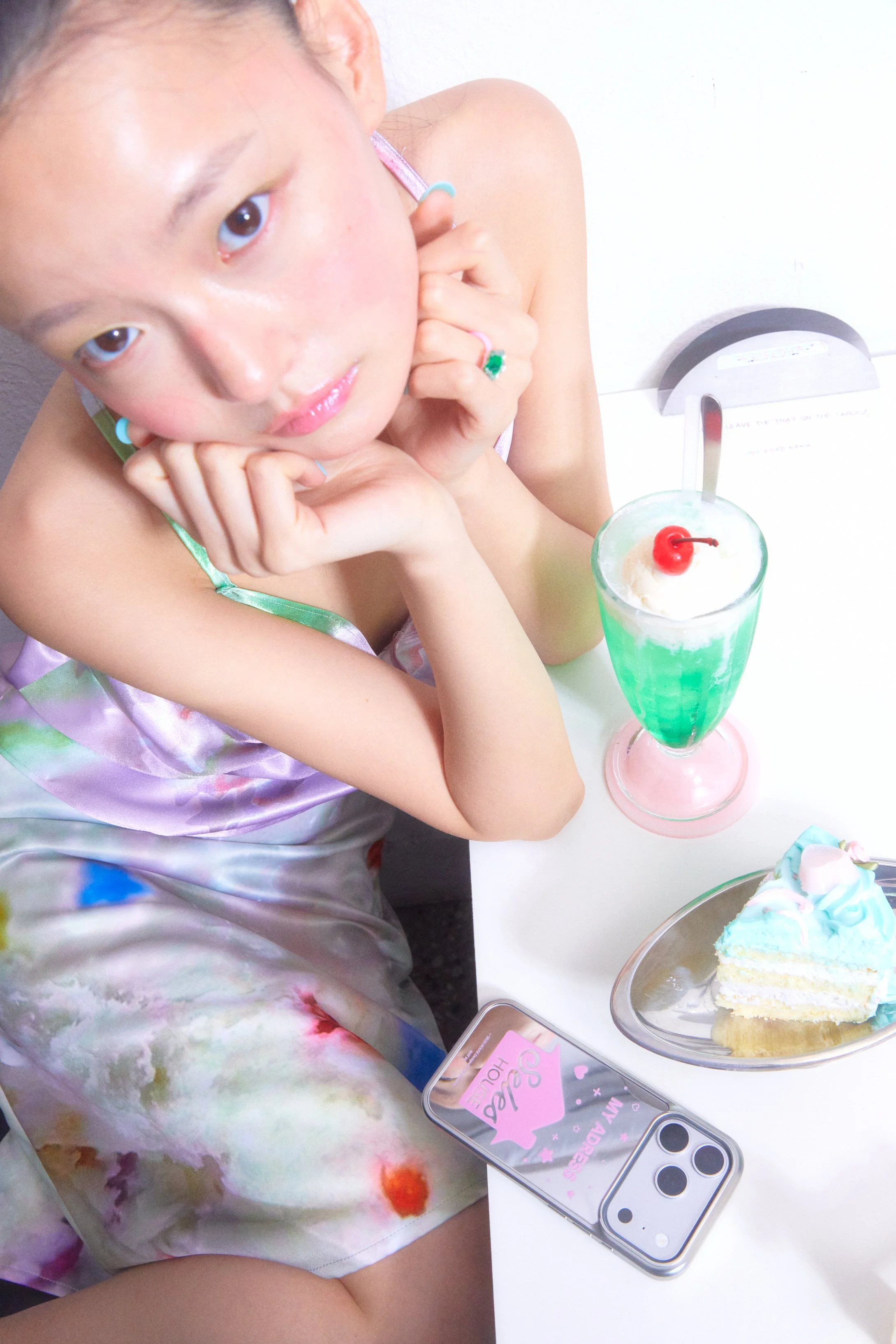
If you could place SELES HOUSE pieces into a completely unexpected setting — somewhere far outside fashion — where would you want to see them, and why?
I think I would love to see them in an old amusement park or an empty, slightly forgotten hotel. I’m more drawn to places that feel as if time has stopped than spaces that are perfectly designed for fashion. I especially like places where traces of people remain — old decorations, furniture, objects, or little signs that someone used to be there. Spaces that feel beautiful, nostalgic, and slightly lonely. I think SELES HOUSE pieces in that kind of setting could feel less like products and more like objects that had always belonged there.
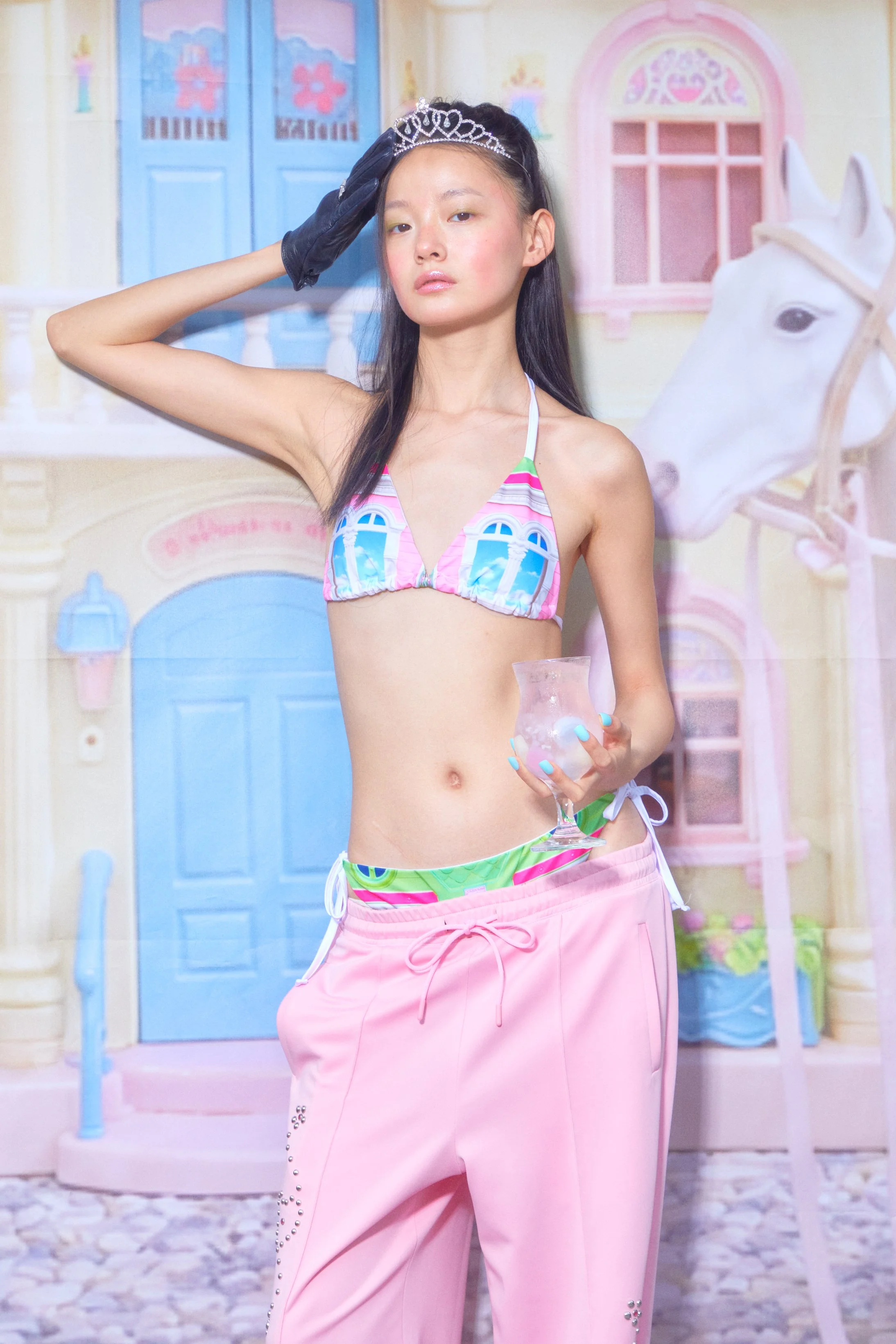
SELES HOUSE is based in Seoul, a city with an incredibly fast-moving fashion and beauty culture. Does being surrounded by that constant visual change make you want to move faster with it, or build something more recognisably your own?
Seoul is an incredibly fast-moving city. It’s not only fashion — the speed at which images, trends, and content are consumed is very fast as well. Being surrounded by that means I’m constantly seeing new things and being influenced by change. But I think that is exactly why building a distinct visual identity for SELES HOUSE has become even more important to me. Rather than constantly trying to follow every new trend, I want someone to see one image or one piece of clothing and think, “That feels like SELES HOUSE,” even before seeing the brand name. I want the brand to keep changing, but to have a world underneath it that remains recognisable.
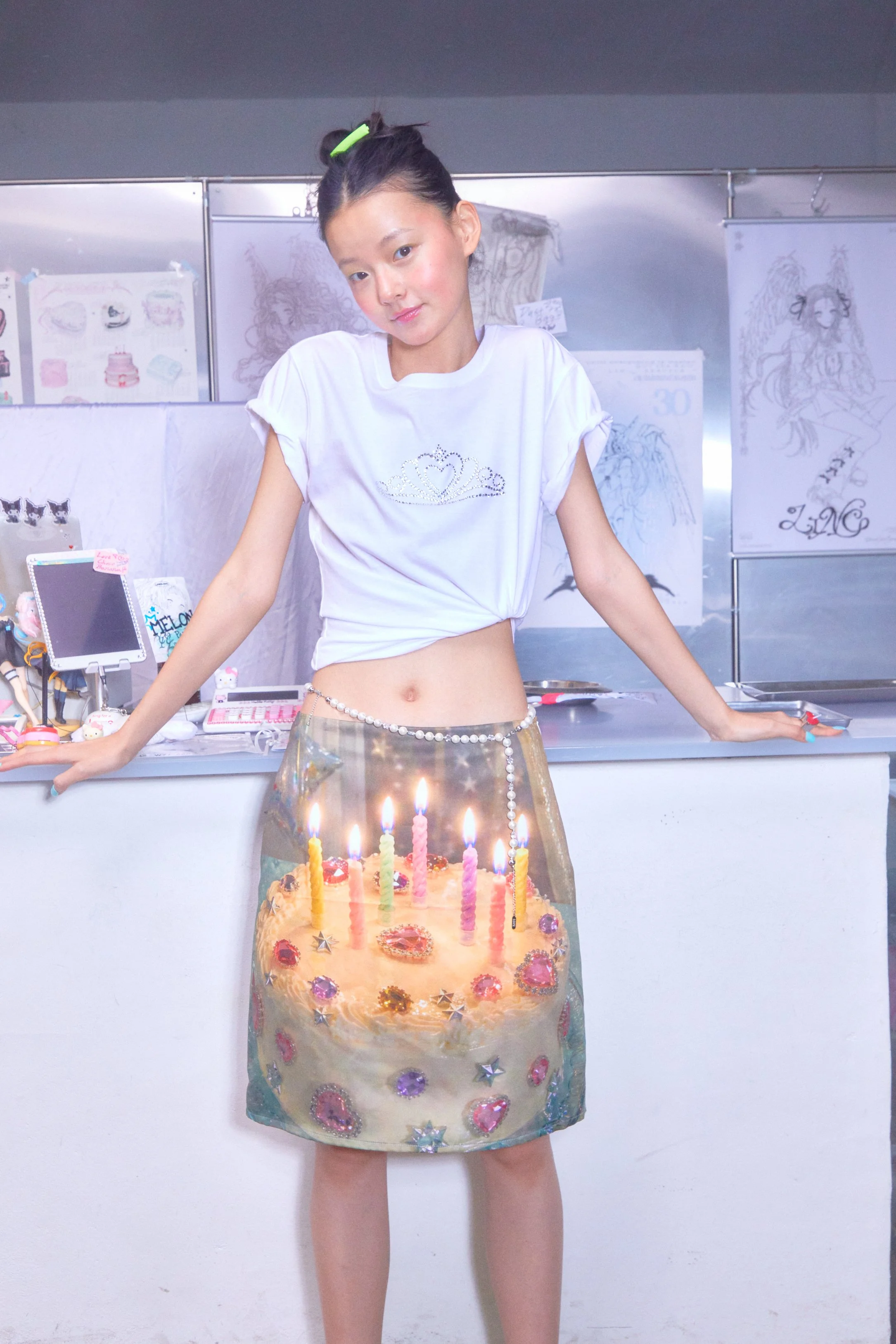
What part of the design process still surprises you, even now? Where do you look for inspiration on a daily basis?
The most exciting moments are when something turns out completely different from what I first imagined, but ends up being better because of it. I usually begin with a fairly clear image in my head, but the fabric, print scale, sample process, or an accidental detail can push the design in an entirely different direction. I really value those kinds of accidents. I also don’t look for inspiration only within fashion. I find it in cartoons and storybooks from childhood, old advertisements, toys, cake decorations, vintage accessories, and even very short scenes from films that somehow stay in my memory. I think I’m especially drawn to things that bring back the feeling of childhood memories.
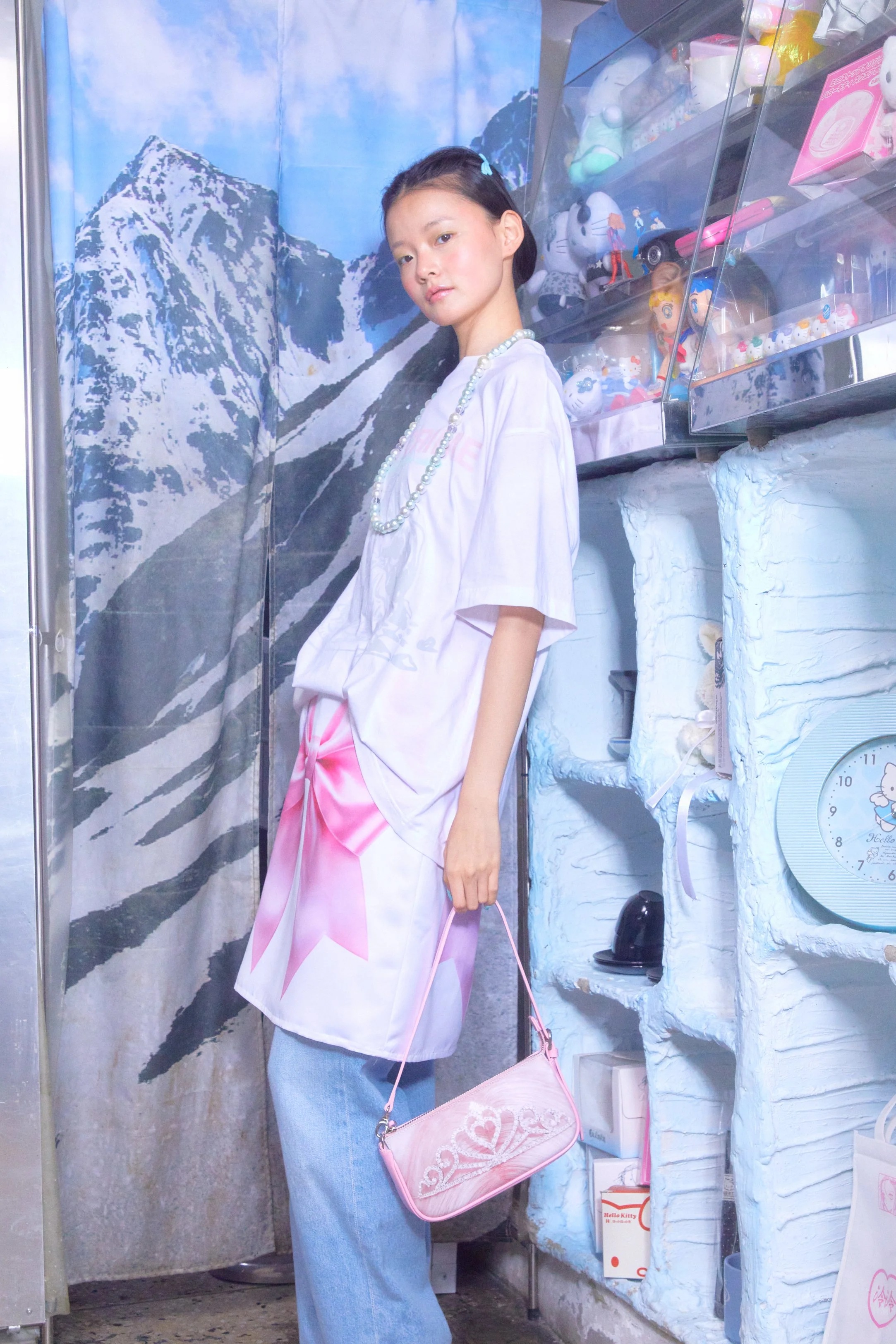
If SELES HOUSE really were a house and we walked through its front door, who and what would we find inside?
I think it would probably be a slightly strange house. There would be a cake somewhere, ribbons and gems scattered around, and unicorns or pegasuses would somehow feel completely normal inside it. The wardrobe would be full, but not perfectly organised. There might be a tiara or a bag left on the floor as if someone had just taken it off. And inside, I imagine people who have grown up but never completely forgotten the things they loved as children. A house that is a little cute, a little strange, a little messy, but still comfortable. That is probably what SELES HOUSE would feel like.