What Grows Beneath : Pat Frades-Santos on fungi, healing, decay, and the emotional ecosystems living under the skin
Some artists use nature as decoration. Pat Frades-Santos uses it as a language.
Working across polymer clay, air-dry clay, and ceramics, Frades-Santos creates strange ecosystems where fungi bloom from faces, bodies become landscapes, and growth emerges from places we usually associate with damage. Her work exists somewhere between comfort and unease: pastel-colored mushroom colonies, dreamlike forms, and quiet figures that invite viewers closer before revealing something darker beneath the surface.
Influenced by horror, animation, ecology, and the hidden intelligence of fungal networks, Frades-Santos explores transformation, healing, decay, and the emotional worlds we carry inside ourselves. Her sculptures feel simultaneously biological and psychological—as if thoughts, memories, anxieties, and desires have taken root and begun to grow.
In this conversation, we spoke with Pat about fungi as a worldview rather than a motif, the relationship between beauty and discomfort, sensory experience as a form of healing, and why some of the most powerful forms of growth happen underground, unseen.
Interview by DRECK.
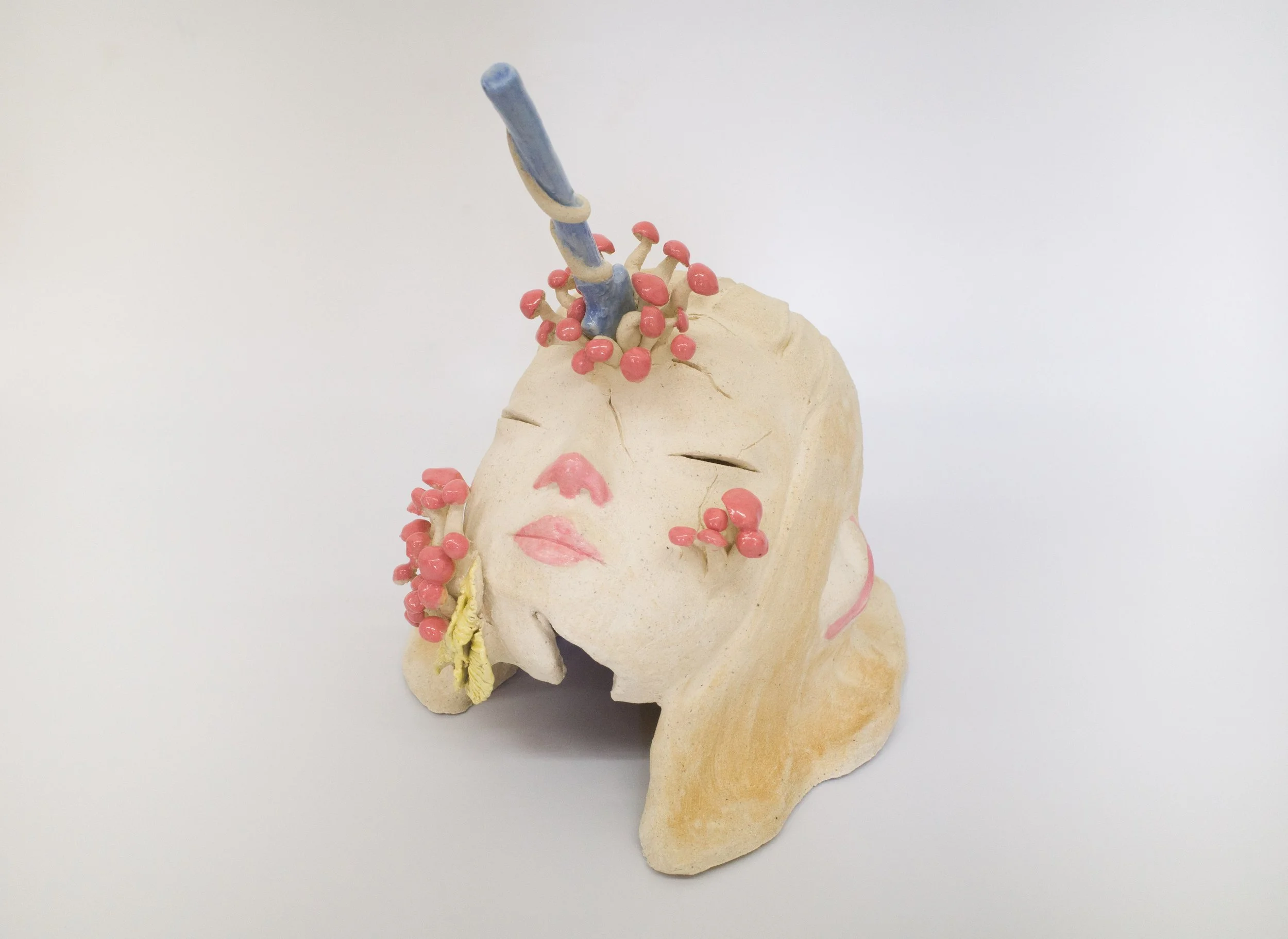
TURN OFF THE NEWS_01_Ceramic
Your mushrooms are seductive up close, but also unsettling. When did fungi stop being a “motif” and become a worldview for you. And what, specifically, shifted in the way you see humans inside nature?
Growing up, my siblings and I were drawn to animated series, anime, and horror or psychological video games. Even when we didn’t fully understand them, we were fascinated by distorted creatures and strange worlds whose forms were unsettling but still beautiful. That attraction to the “twisted” stayed with me.
When I first played The Last of Us, I was struck by how it approached infection through fungi. It felt familiar, yet completely unfamiliar at the same time. That tension sparked something in me. I began experimenting with fungi visually, but as I researched real fungal ecosystems, my perspective shifted. I became interested in how fungi thrive in decay, how they break things down to create new life, and how deeply interconnected they are with everything around them.
Over time, fungi stopped being a motif and became a worldview. They helped me see humans not as separate from nature, but as part of the same cycles of growth, collapse, and regeneration.
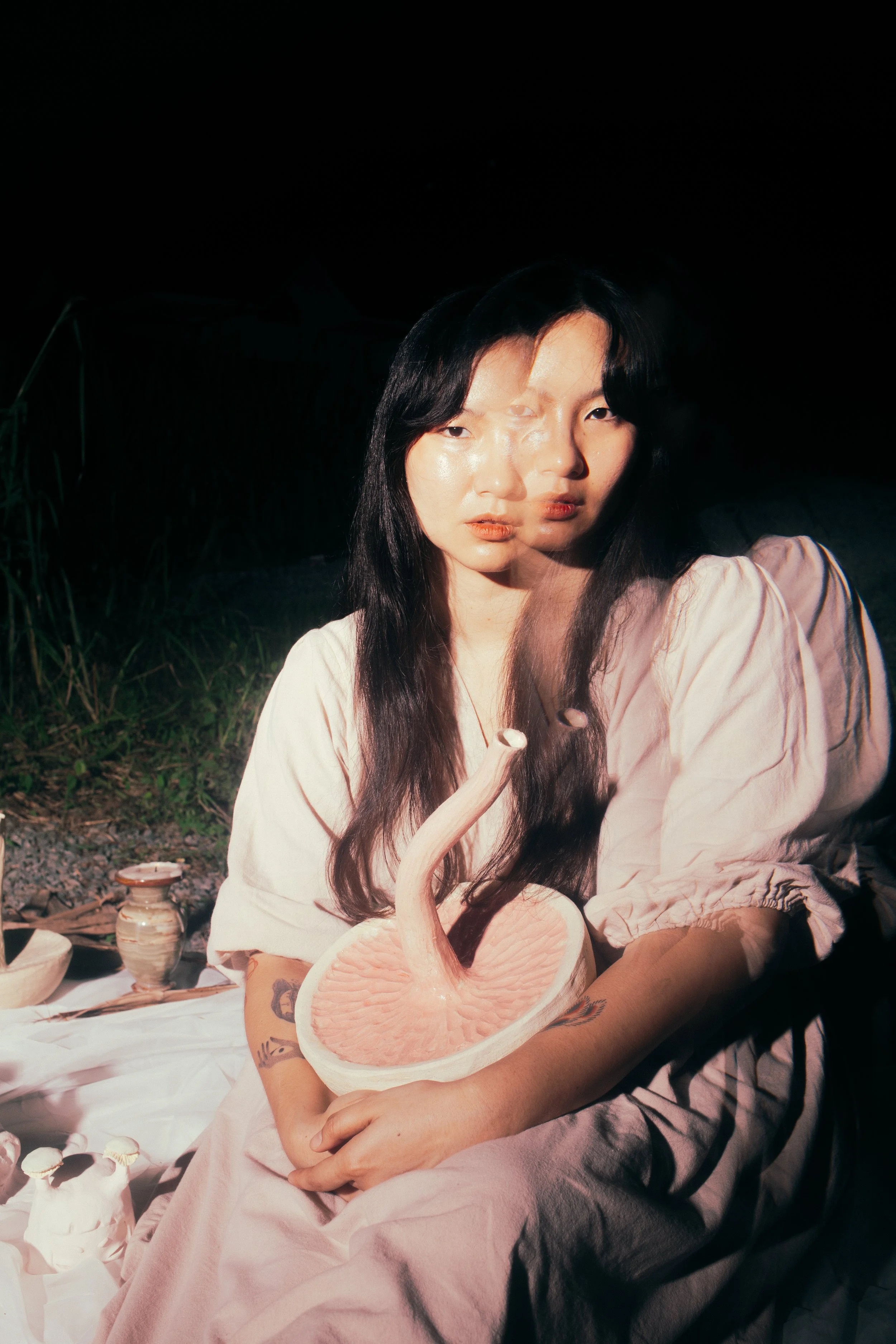
Photo by Ennuh Tiu
So many of your heads feel calm, even as the fungus breaks through the face. Why the neutral expressions? Are they about surrender, numbness, relief, transcendence… or something darker?
The neutral expression is intentional. I’m interested in how the face can become a mask — how we can look calm or still on the outside while something overwhelming is happening internally. The fungus breaking through the surface represents those inner states: overthinking, pain, fear, healing, or even relief. The calmness isn’t exactly peace. It’s ambiguity. It could be surrender, numbness, or transcendence. I want viewers to project their own emotions onto it.
It reflects how we carry entire emotional ecosystems inside ourselves that others never see. The body stays composed, even while something is quietly growing or unraveling underneath.
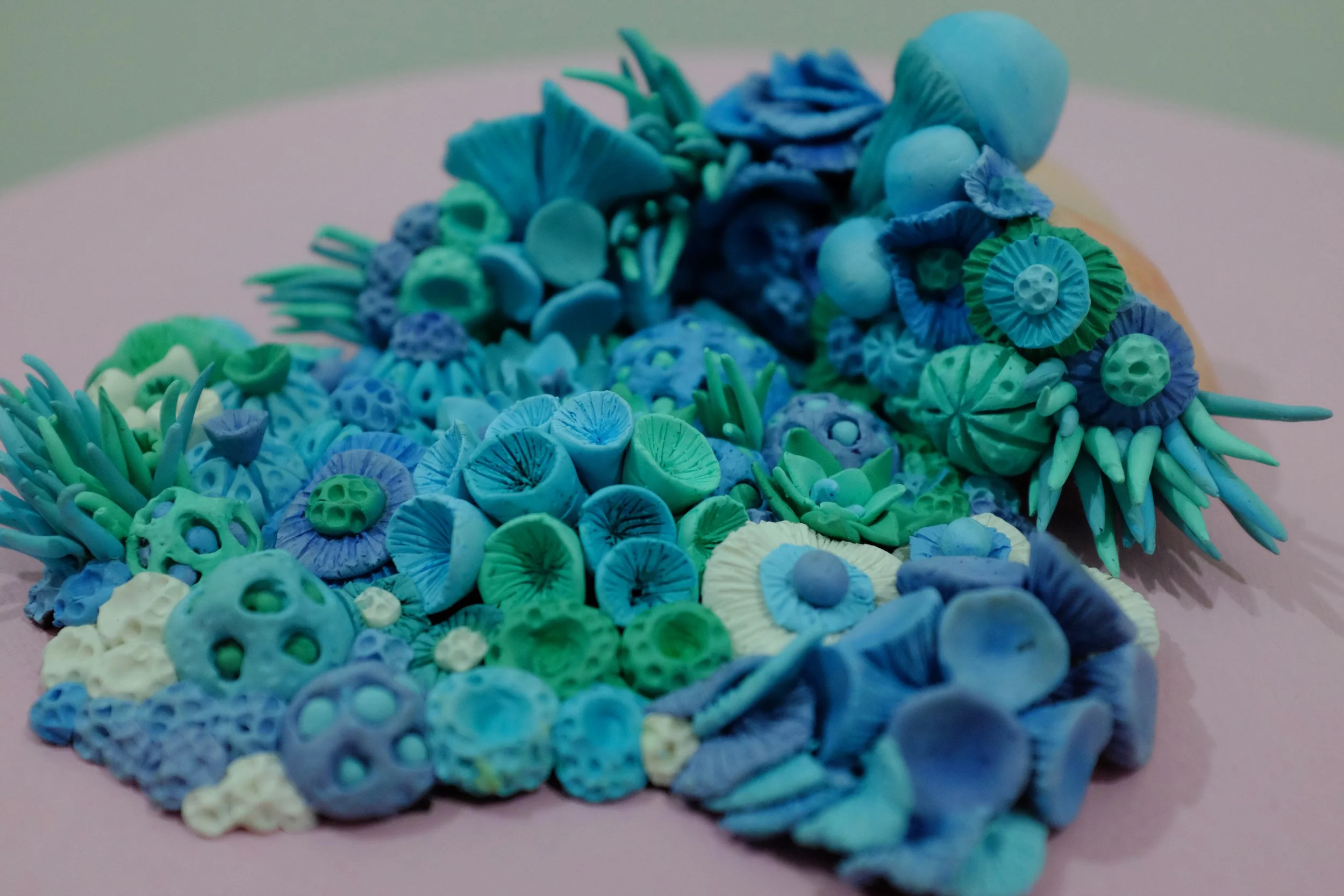
Too Real_Polymer Clay 2019
The title “Self-Medicate” is loaded: comfort, coping, stigma, taboo. What does “self-medicating” mean in your work? Escape, healing, dependence, a ritual, a critique or all at once?
“Self-medicate” is often treated as a taboo term, usually tied to dependence or avoidance. In my work, I reclaim and broaden the meaning. I see self-medication as an intuitive and sensory form of healing— the ways we turn to touch, smell, taste, and to nature itself to soothe and regulate our bodies. Fungi become my symbol for this process: foraging, gathering, and using what the earth offers as everyday care.
Rather than escape, it’s about exploration and restoration. It’s a quiet ritual of reconnecting with the body and the environment, and recognizing healing as something cyclical and ongoing rather than clinical or fixed.
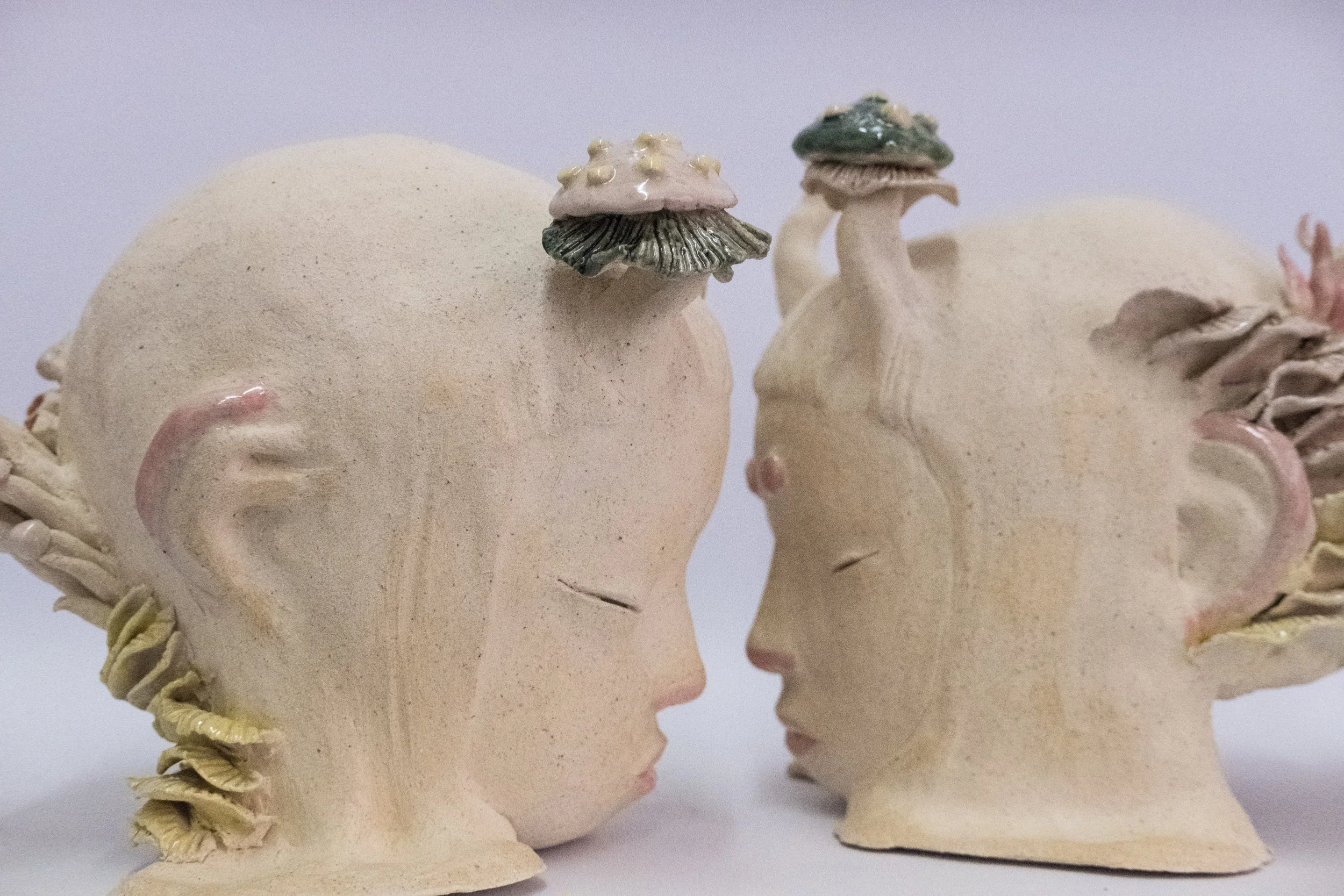
The Things You Tell Yourself_ceramic
Your series maps the senses (sight, smell, taste). When you build an exhibition around a sense, what’s your method? Do you start from memory, scientific curiosity, bodily craving, or a visual “recipe”?
My process usually begins intuitively. I start from sensation rather than theory, what something might smell like, taste like, or feel like in the body. I sketch freely and release ideas before organizing them into form. The final pieces often shift during making, because ceramics itself has an unpredictability that I like to follow.
Earlier works leaned more on instinct and atmosphere. But after reading Entangled Life by Merlin Sheldrake, my approach became more research-based. Learning about fungal networks and ecological interconnection made me think of the senses as layered and intertwined rather than separate. Now I balance intuition with research and collaboration. I design exhibitions almost like environments to “forage” through, where viewers move through sight, smell, and taste the way we would encounter mushrooms in nature.
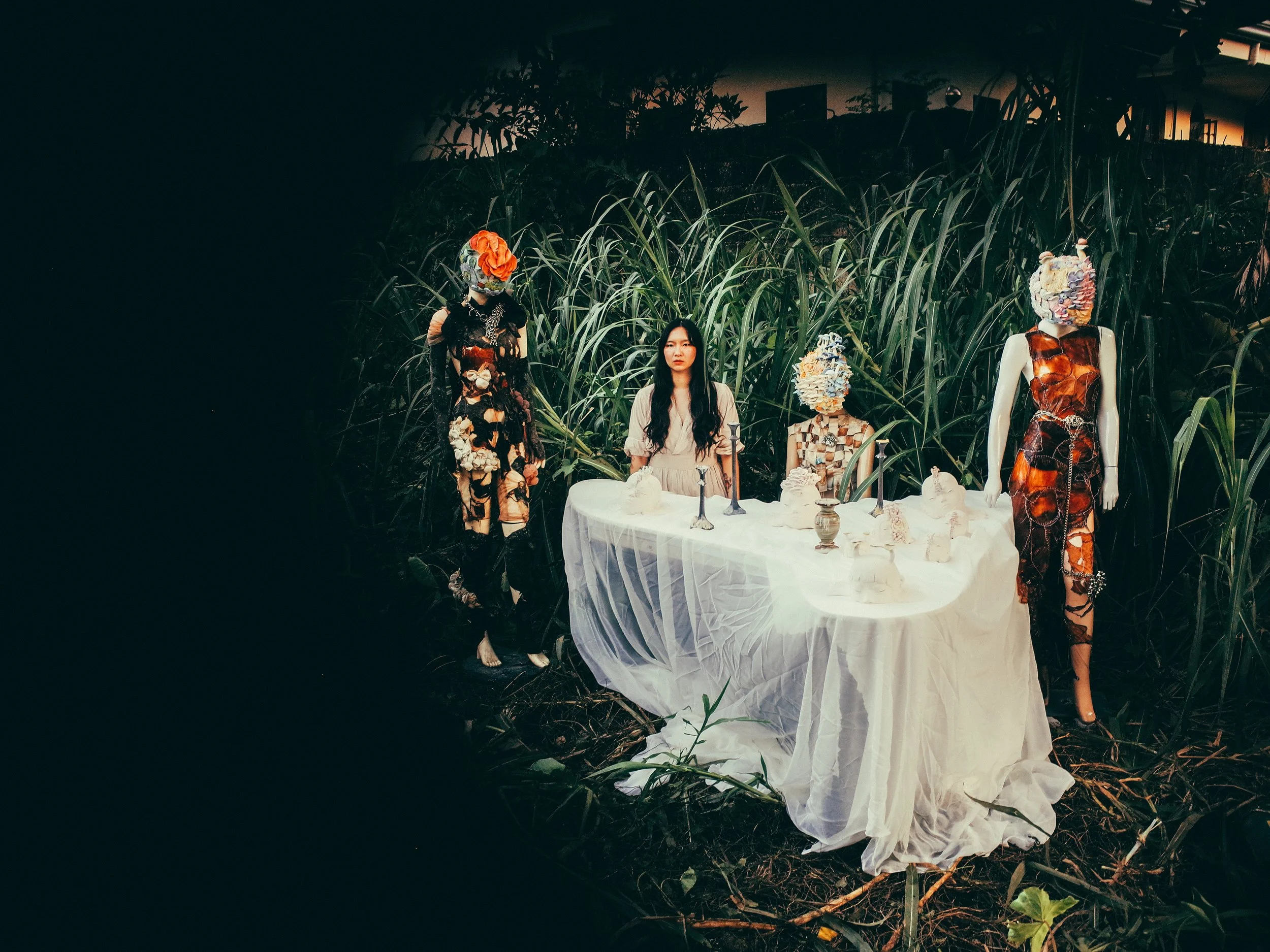
Photo by Ennuh Tiu
In Indulge, visitors could literally taste the work via edible collaborations. What does it change when the audience consumes something? Does it make the piece more intimate, more complicit, more temporary?
For Indulge, I wanted the exhibition to move beyond looking and become fully experiential. Eating makes the encounter intimate and bodily. The work enters you, becomes part of you, and then disappears. I collaborated with a chef to create savory dishes using gourmet and medicinal mushrooms so visitors could taste fungi not just as symbols in my sculptures, but as something alive and nourishing. In contrast, I made pastel-colored mushrooms from gumpaste that are sweet and decorative but lacking real sustenance. That contradiction questions surface appeal versus actual nourishment.
By allowing the audience to consume the work, the piece becomes more intimate and more temporary. It only exists for a moment before it’s digested, mirroring how healing is a daily, repeated act rather than something permanent.
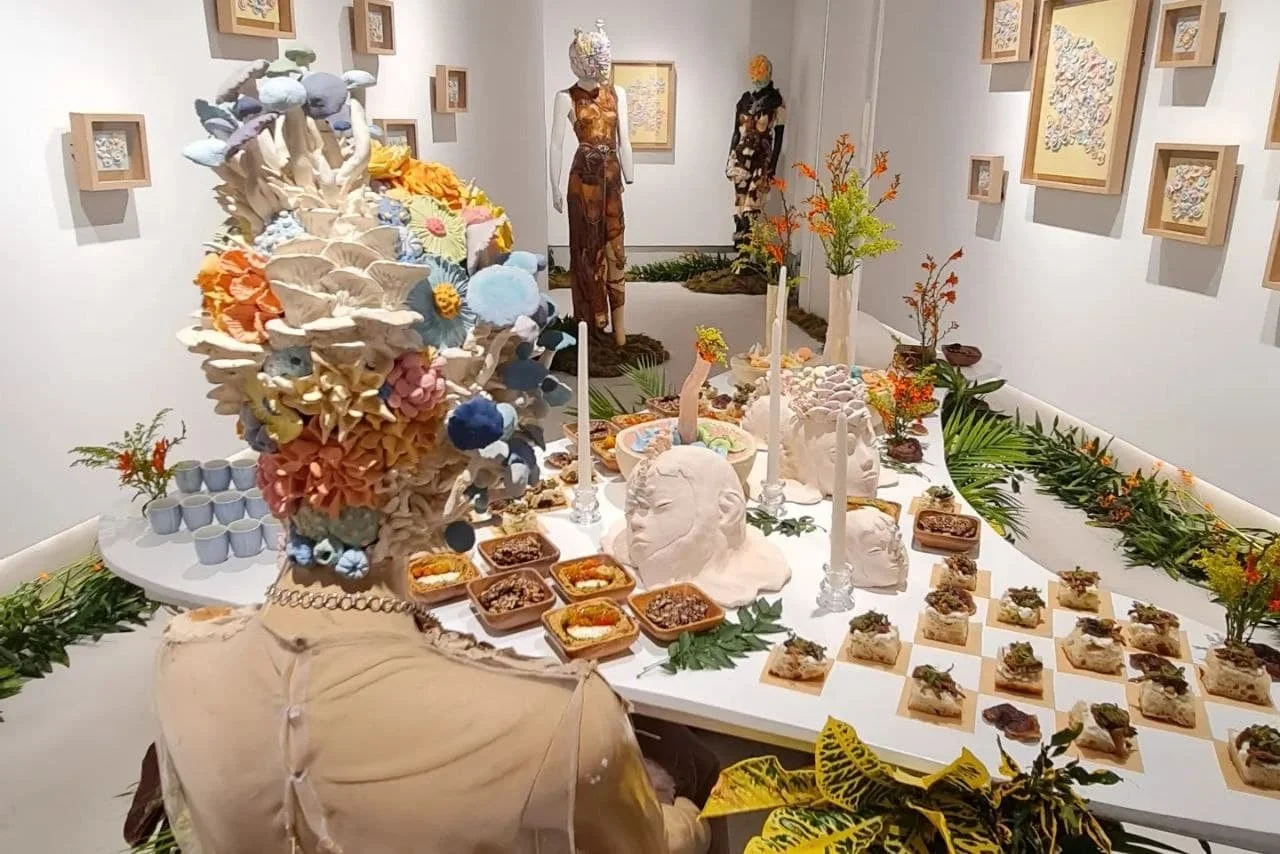
III.Self-Medicate_Indulge
Your references move between The Last of Us-style infection horror and an Alice-in-Wonderland pastel wonderland. Why was it important to keep the palette “approachable” while the concept can easily tip into fear?
The pastel palette is also intentional because my themes involve decay, infection, and psychological tension, I didn’t want the work to feel immediately threatening. I wanted to invite people first, soft colors feel nostalgic and comforting. Viewers come closer, thinking the work is gentle, and only then notice the ruptures and growths. The sweetness becomes a kind of disguise— a lure. Beauty draws you in before the discomfort reveals itself. That tension between attraction and unease is central to the experience of the work.
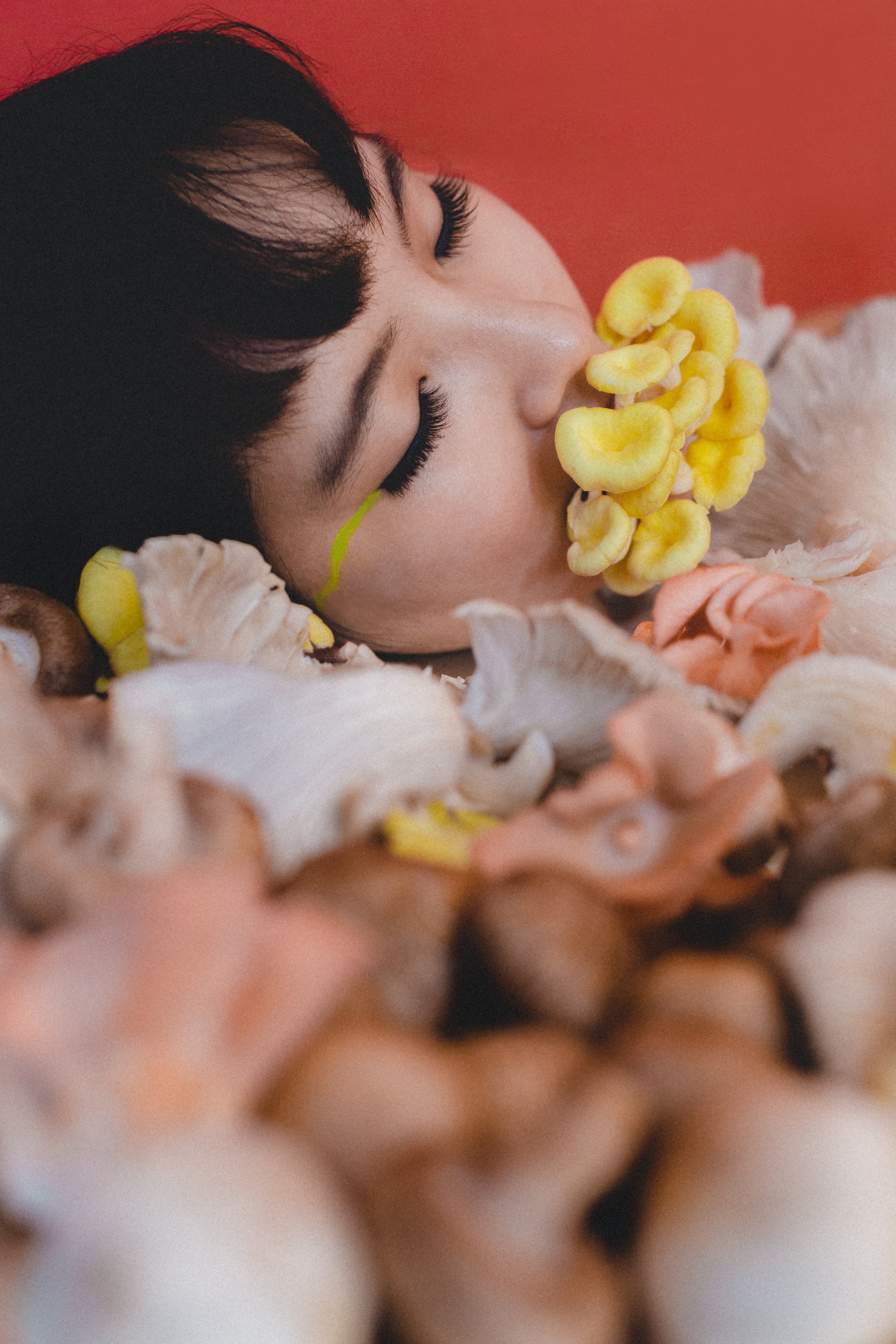
Photo by Aia Solis
You talk about fungi as ecosystem engineers, symbiosis, decomposition, the underground work that keeps life going. How do you translate those invisible processes into form (texture, clustering, “growth logic”)?
I think about those invisible processes as parallels to my own making process. Ceramics itself already comes from the earth, so the material feels like a natural starting point, the vessel becomes both body and ground. When I translate fungi into form, I focus on growth logic rather than decoration. I build clusters that spread, stack, and branch out, almost the way mycelium threads move underground. The forms rarely feel isolated; they connect, overlap, or emerge from inside the figure, as if something is slowly pushing outward. Texture is important too. I work with tension in the surface — cracks, ruptures, swelling, roughness. It suggests pressure and transformation happening beneath the skin. It should feel like something alive and still growing, not static.
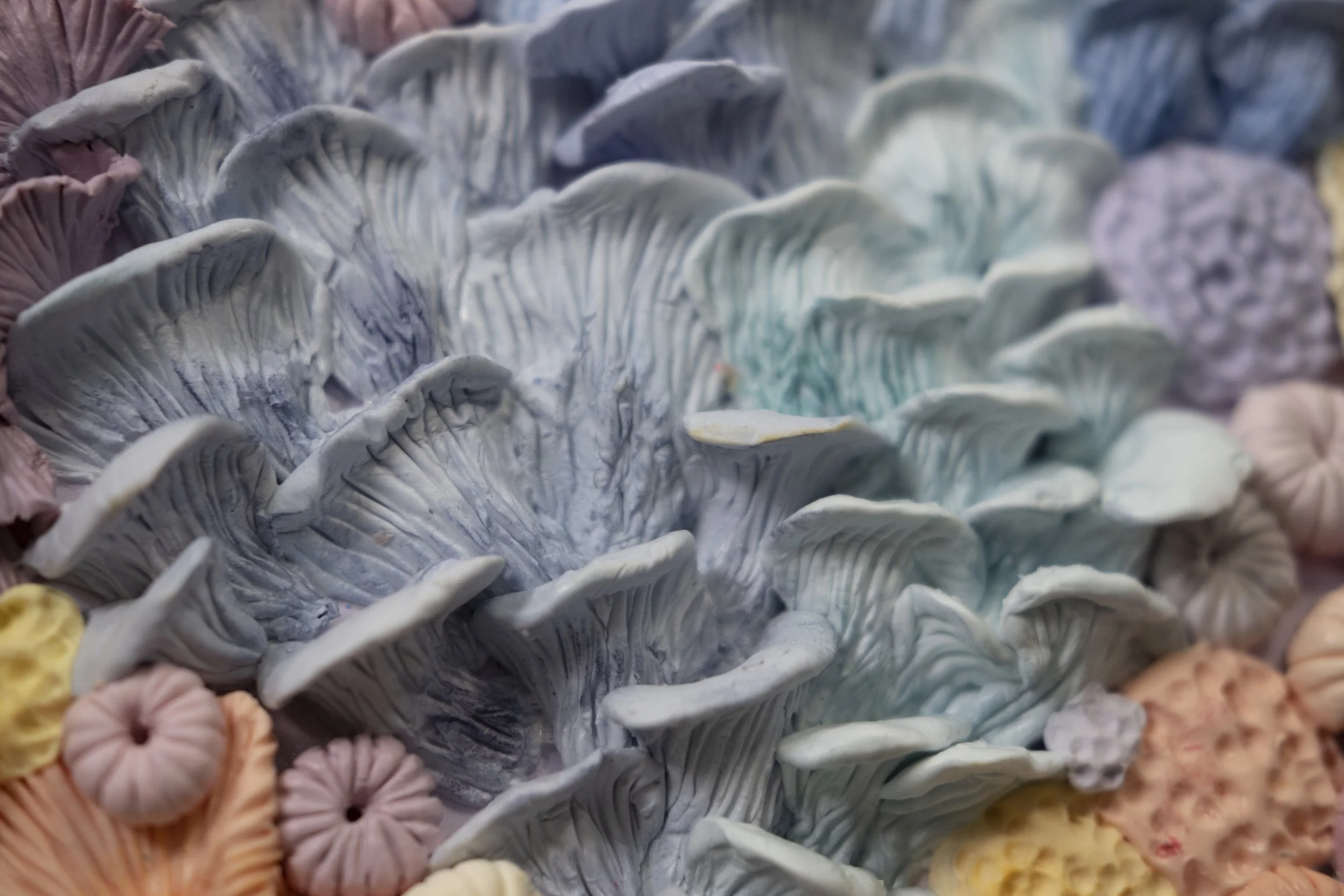
Ethereal I_Air Dry Clay
You’ve mentioned expanding across polymer clay, air-dry clay, and ceramics. What do you think will only become possible (emotionally or conceptually) once the material changes. What does ceramic let you say that polymer can’t?
Each material carries a different emotional and conceptual language. They don’t just change texture, they change how I think and move while making.
Polymer clay was my entry point. It’s immediate and controlled, which allowed me to experiment freely and get comfortable shaping forms with my hands. Ceramics on the other hand feels more alive and unpredictable because it comes directly from the earth and goes through firing, it holds more risk and transformation. Cracking and warping become part of the process. The loss of control mirrors my themes of growth, decay, and change.
Ceramic has weight and permanence. The surface records every touch and mistake, which makes the work feel more bodily and vulnerable.
Learning it feels endless, and that ongoing discovery connects closely to my Self-Medicate series, especially the sense of touch.
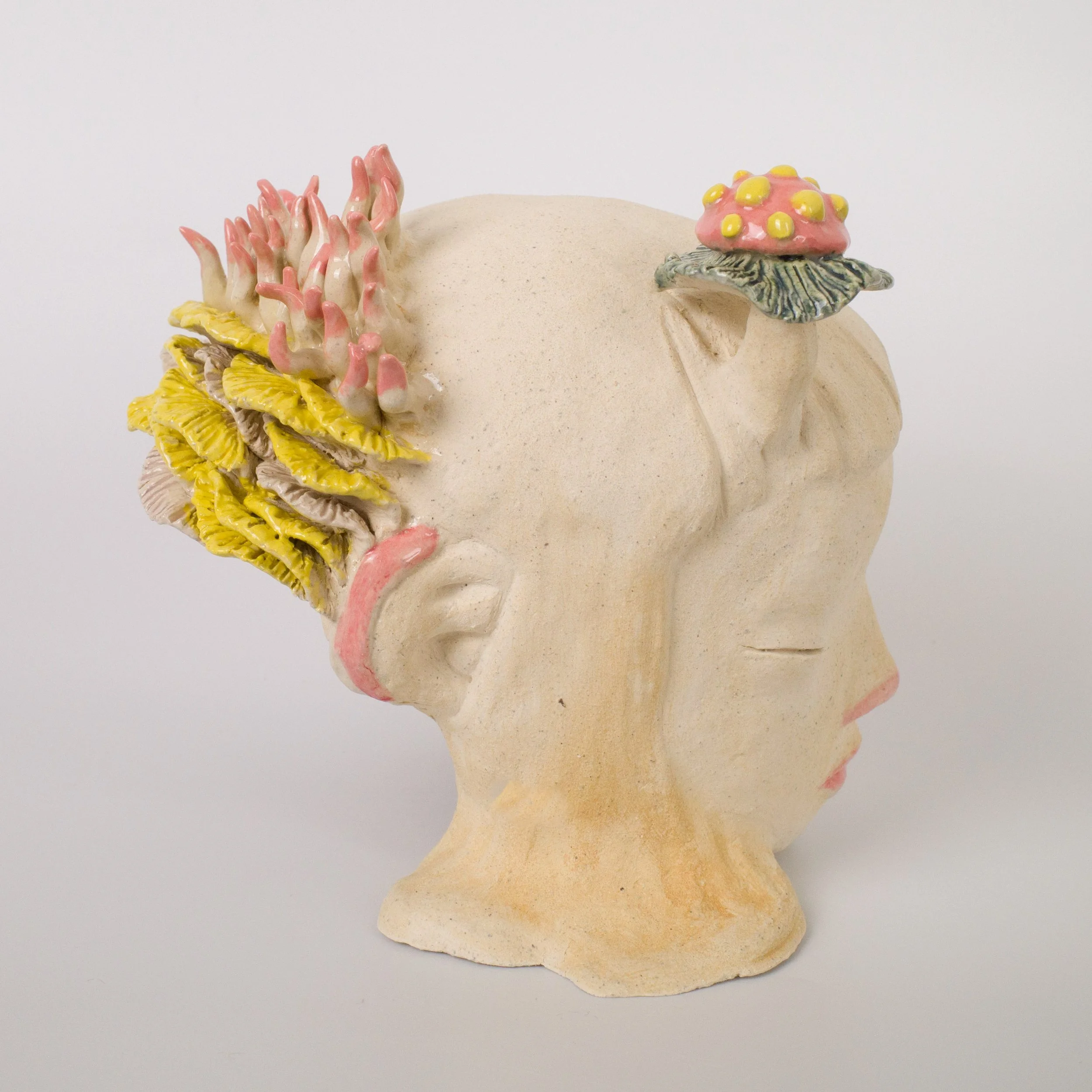
The Things You Tell Yourself_Ceramic