XiuXiu Kong Makes Beauty Hit Like a Blow
XiuXiu Kong’s photographs rarely tell us what has happened, but they make it impossible to believe that nothing has. Her carefully constructed scenes feel cinematic without offering the relief of a complete story: we arrive too late for the beginning and leave before the consequences. For Kong, violence is never the subject on its own, but a language through which desire, intimacy and liberation become visible. In this conversation, she discusses staging images that still feel alive, creating closeness beyond conventional romance, the freedom of being misunderstood, and why beauty becomes most powerful when it begins to overwhelm us. We talked about why lovers bleed into one another, long black hair moves like a creature of its own, and bodies hover somewhere between tenderness, revenge and surrender.
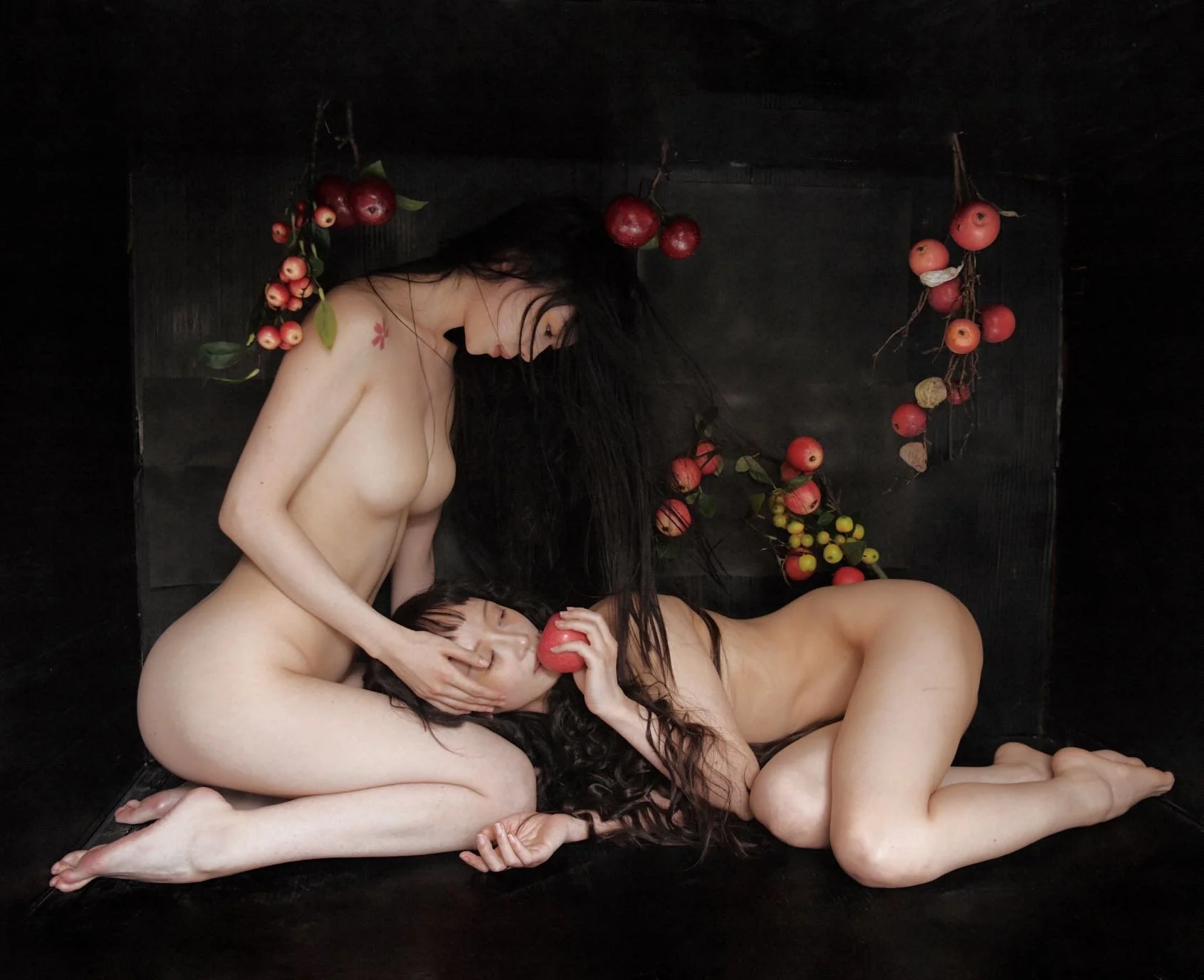
Your photographs often feel like scenes from a film whose beginning and ending we’ll never know. Do you intentionally leave the narrative unresolved?
Yes, I love images where it feels like something is happening, especially when the person in the frame looks like they’re thinking. I might set up a themed shoot and control every detail—the fish tank, the leaves, raindrops, or curtains—but many of my favorite shots are actually candid ones taken during breaks while the model was waiting. The funny thing is, when someone is staring into space, they look a lot like they're thinking. Sitting naturally in the setting I created, she just sits there lost in thought, and I capture it.
That’s how people mostly are in movies: they aren't trying to tell you anything directly, things just happen, and they reflect. A photo is only a single instant and lacks the full narrative of a film, so I want to leave as much room for the viewer’s imagination as possible.
If someone only saw one of your photographs, what would you hope they misunderstand about it?
Many people misinterpret my work, but I trust that some will truly get it. I don't really expect anything from the audience, haha—they can interpret it however they like.
Beauty and violence coexist naturally throughout your work. Do you see them as opposites, or as two expressions of the same emotion?
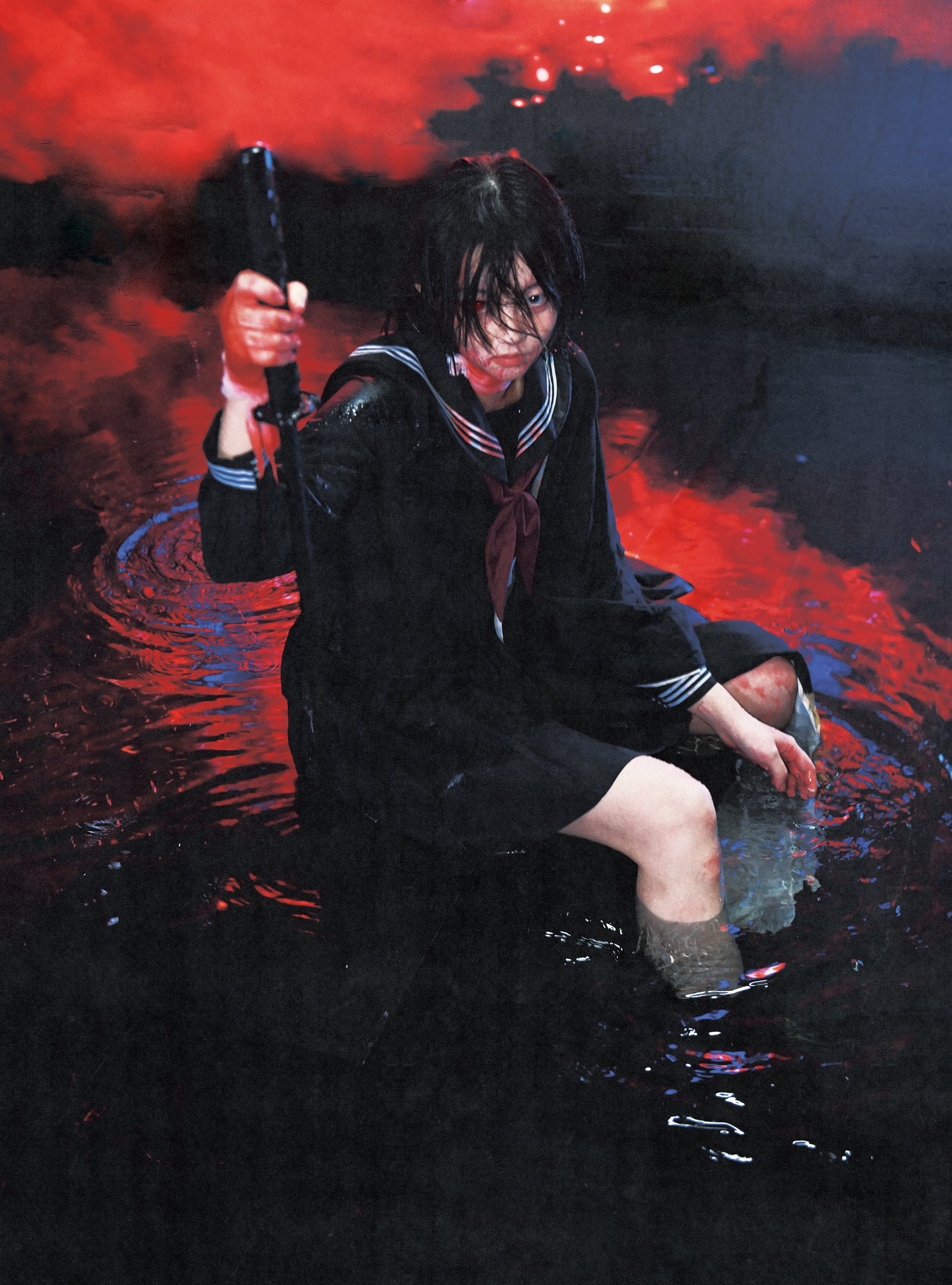
I've always believed that beauty, when pushed to a certain degree, becomes a form of violence—dizzying, as if it knocked me out cold with a single blow.
The violence in my photos is mostly just a medium for expressing emotion. The subjects fall in love, they seek revenge; these emotions are the true heart of the work. Violence for its own sake is meaningless.
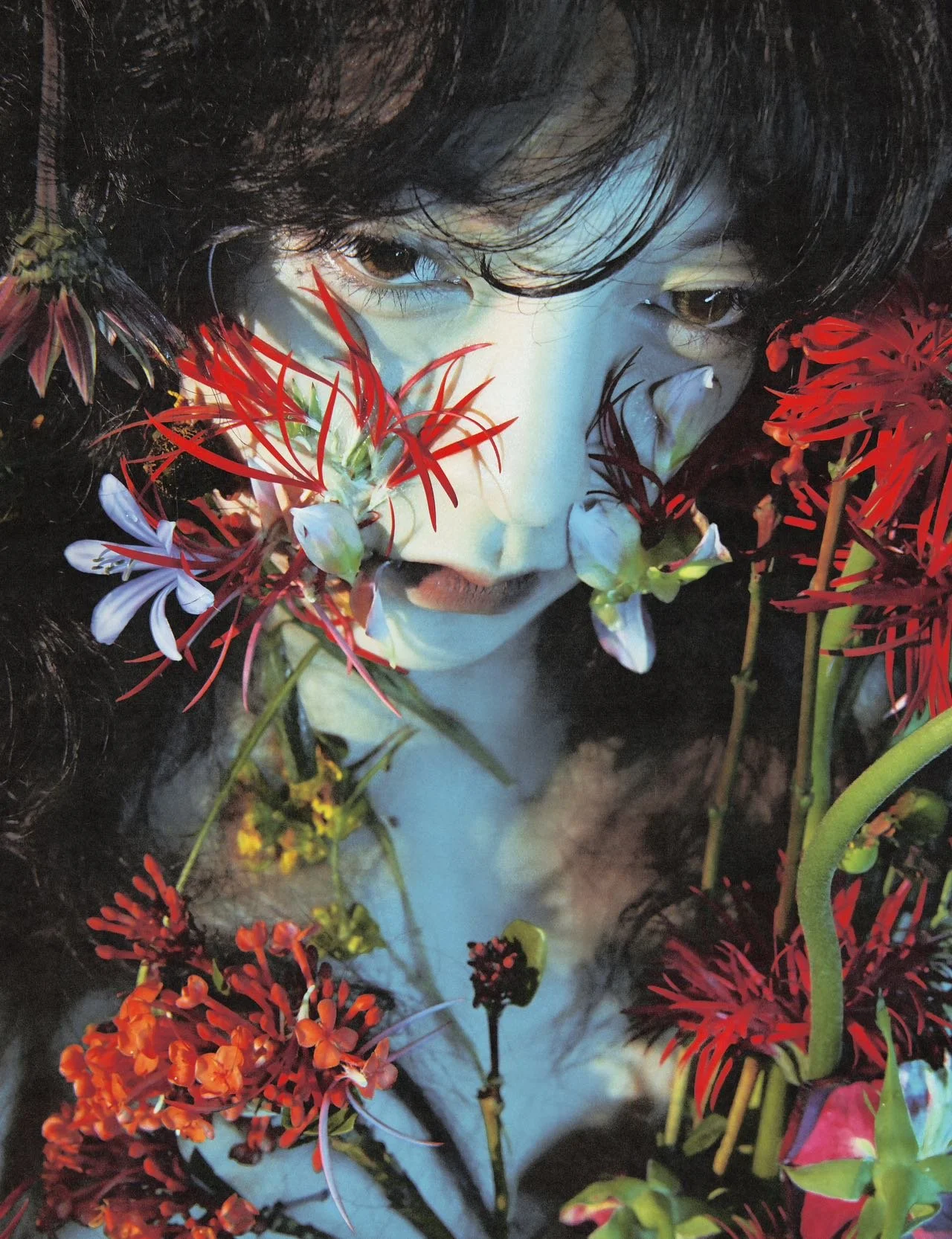
Blood, water, flowers and hair appear repeatedly in your images. Do these symbols carry fixed meanings for you, or do they evolve with each work?
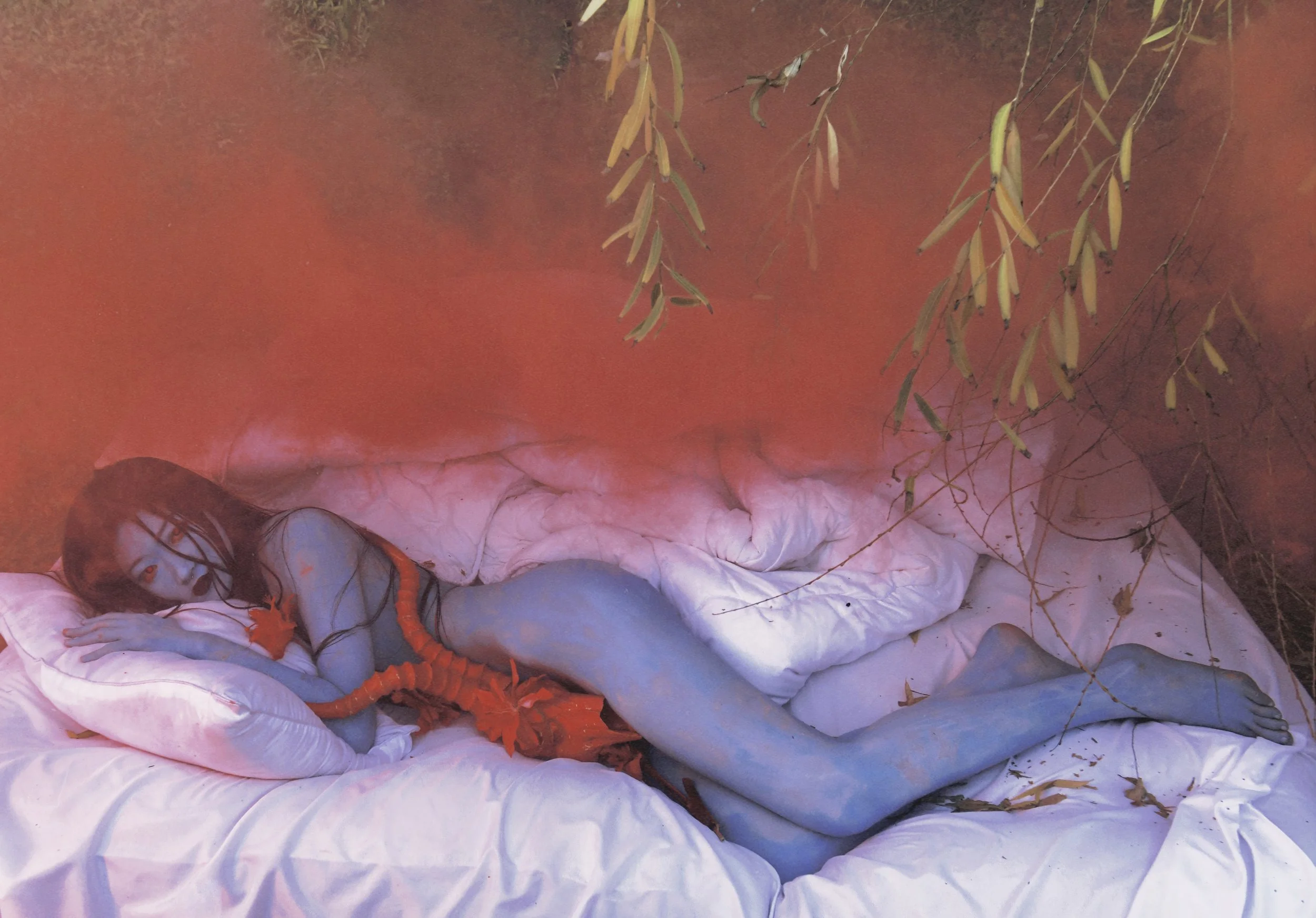
Every photo has its own unique meaning. For example, in LOVE, the blood is as clear and brilliant as lakes or precious gems because it represents that blind, romanticized imagery between lovers—two people letting their blood flow into each other, merging together.
On the other hand, the blood in the Father series consists of heavy, raw stains like those left by a butcher, flowing and splashing everywhere as a symbol of intense, liberating freedom.
I really love shooting hair, especially long black hair that drapes over bodies almost like a living thing. It evokes different feelings depending on who you look at—everyone’s hair has a different weight, and it moves in the wind in its own distinct way.
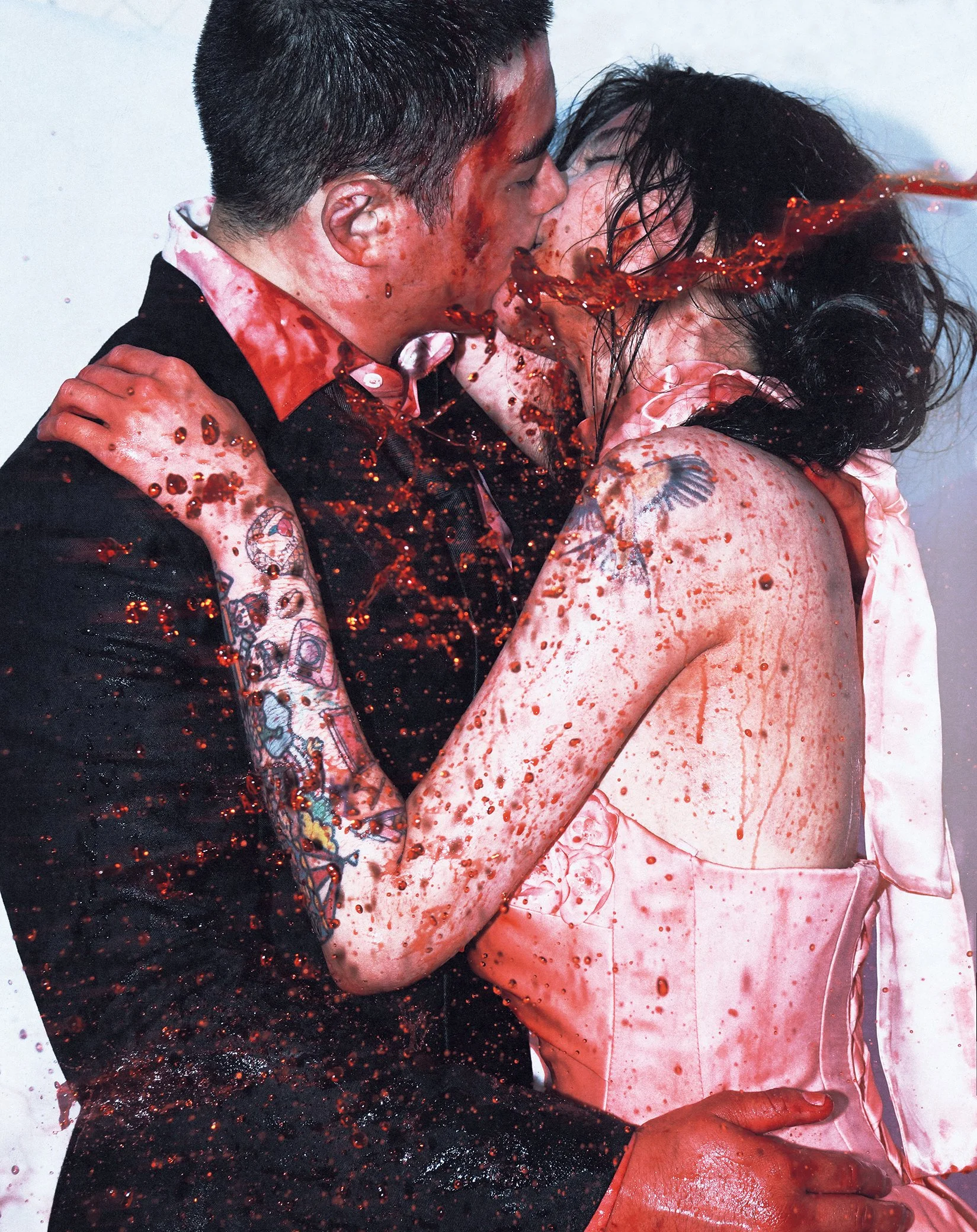
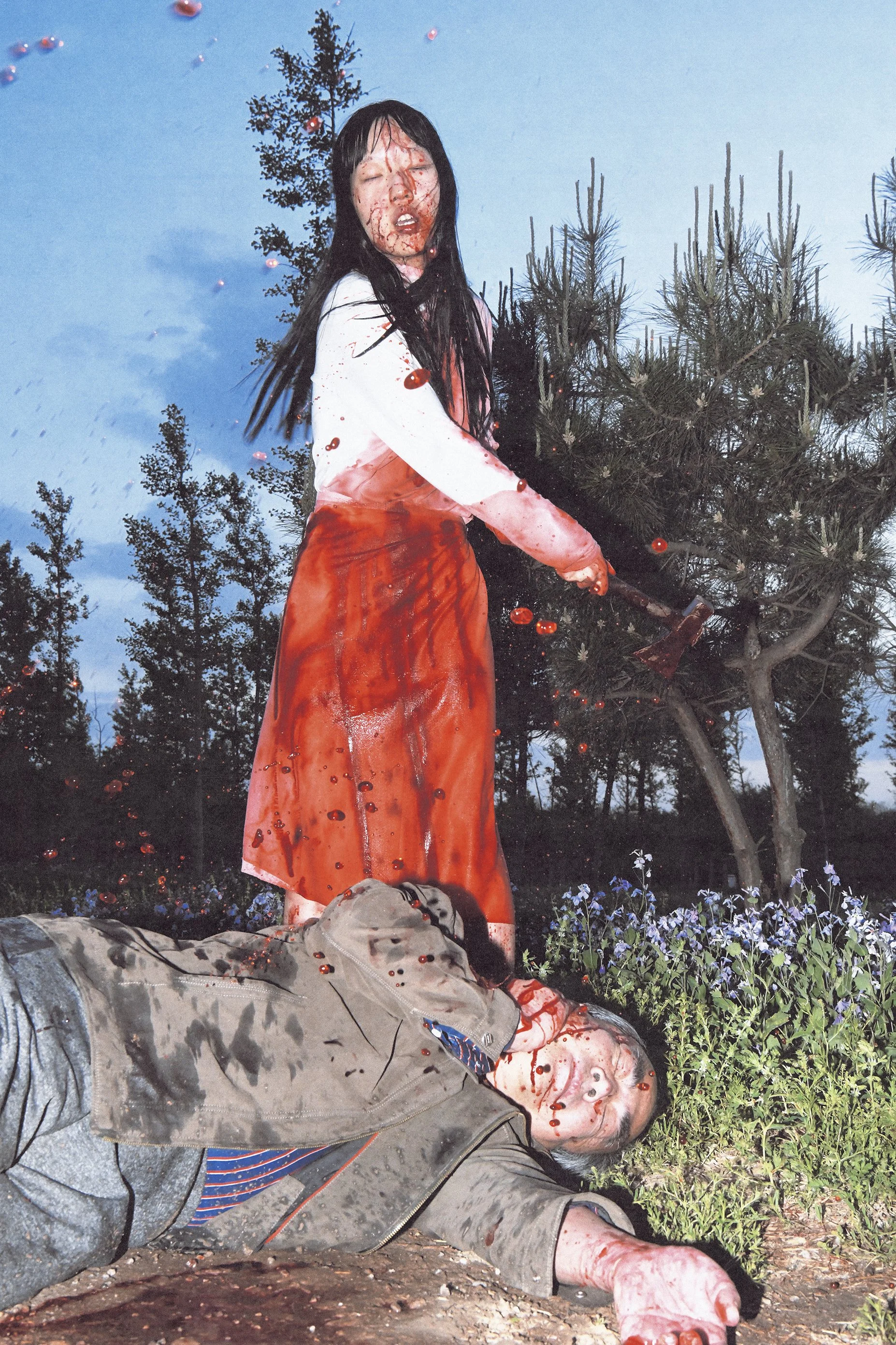
Many of your images depict physical closeness, yet they rarely feel romantic in a conventional sense. What interests you about intimacy beyond love?
That’s the funny thing—being an aromantic asexual, intimacy itself completely fascinates me. I’ve always been so curious about these personal relationships, and my take on them is definitely far from traditional. Turns out, just staying entirely true and sincere to my creative instincts was all it took to make it happen.
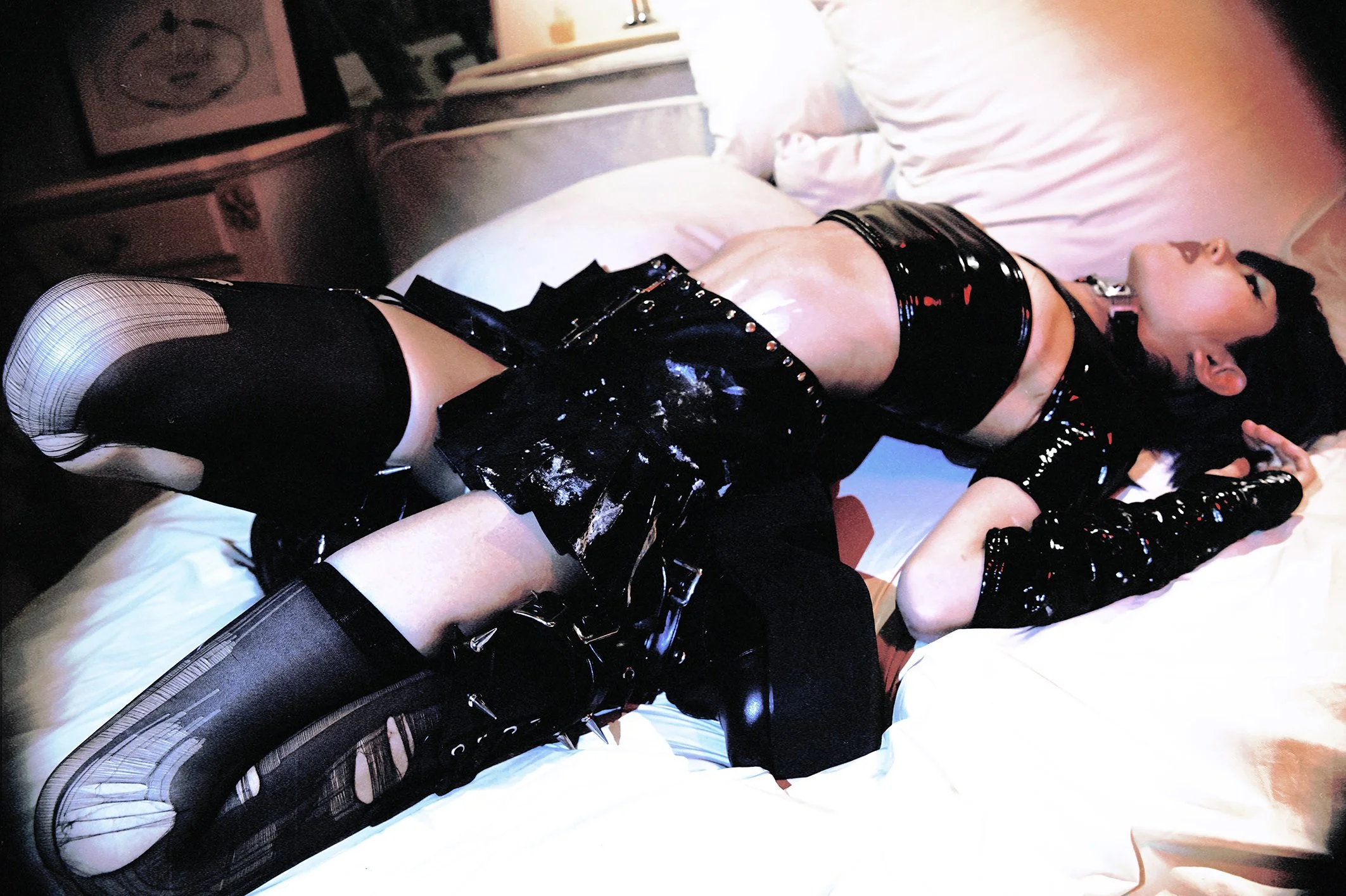
Your subjects frequently appear to exist somewhere between human, myth and dream. Are you interested in escaping reality, or revealing another version of it?
I’ve been thinking about this a lot, and I realized I really need to explain myself a bit so people can better understand my work. My subconscious and my creative habits, after all, go all the way back to my childhood.
I started practicing Christianity when I was seven, going to church twice a week. Reading the Bible, singing hymns, and praying were just my normal routine. Even though I left the faith after high school, the Bible’s influence on me remains significant. Especially regarding nudity—I don't think humans should feel ashamed. You can see my genuine affection for the human body in my nude photographs; if anything, covering up is what reflects a sense of shame.
On top of that, I dream every single day. Since I was a kid, even a five-minute power nap comes with a dream. Bad sleep is actually a great virtue for gathering inspiration.
I guess even when I'm shooting reality-based themes and trying to recreate every detail, my camera still paints things with a dreamlike tint. I daydream a lot and don't really socialize. It’s not so much that I’m trying to escape reality, but rather that I unconsciously create from within a world I’ve constructed around myself.
I see reality, but I am definitely building my own world.
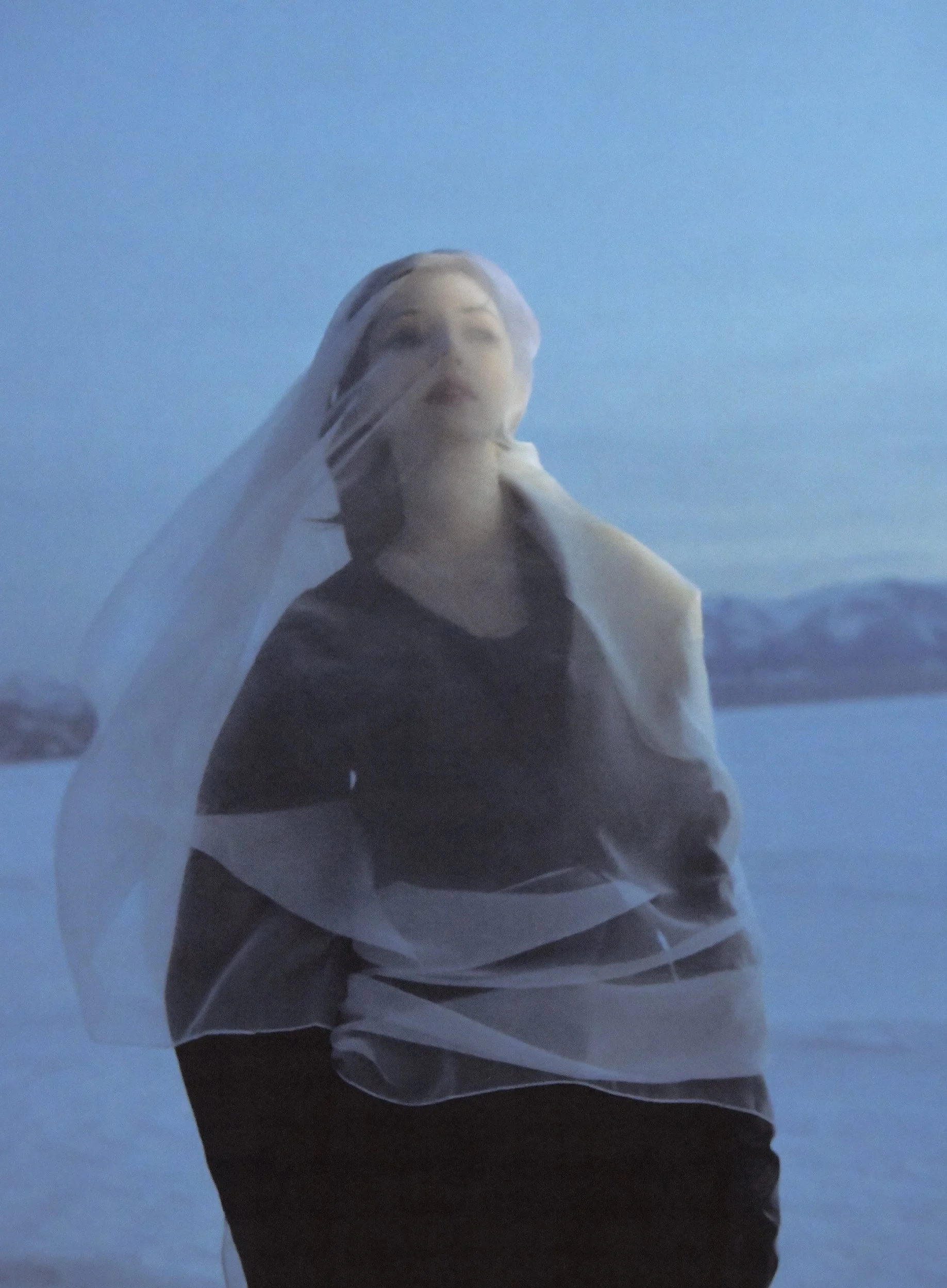
Your work feels incredibly staged, yet emotionally spontaneous. Which of those is harder to create? Do you usually begin with a visual image, a story, or a feeling?
For me, the hardest part of photography is staging, because I must imbue these deliberately arranged elements with authenticity and meaning. In contrast, the candid and authentic moments simply fall into place. The scenery is there, the person is there; I only need to observe with my eyes to capture chance encounters. It's like a game, full of uncertainty, and it brings me pure joy to shoot that way.
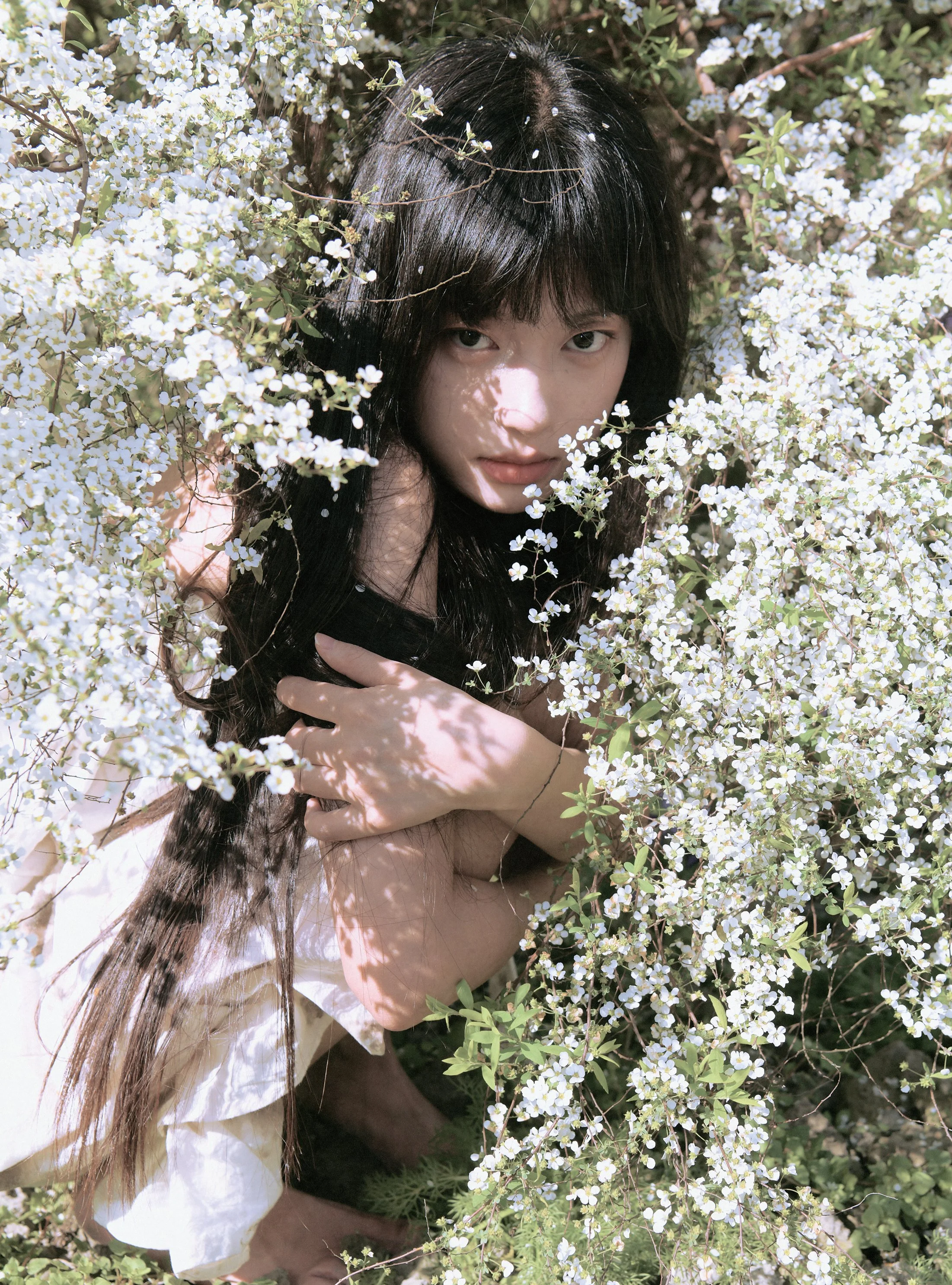
Has a photograph ever become something completely different from what you originally imagined?
Many photos differ from what I envisioned. Reality can never fully mirror what’s in my mind. Photography is a game of manipulating existing structures, not painting on a blank canvas.
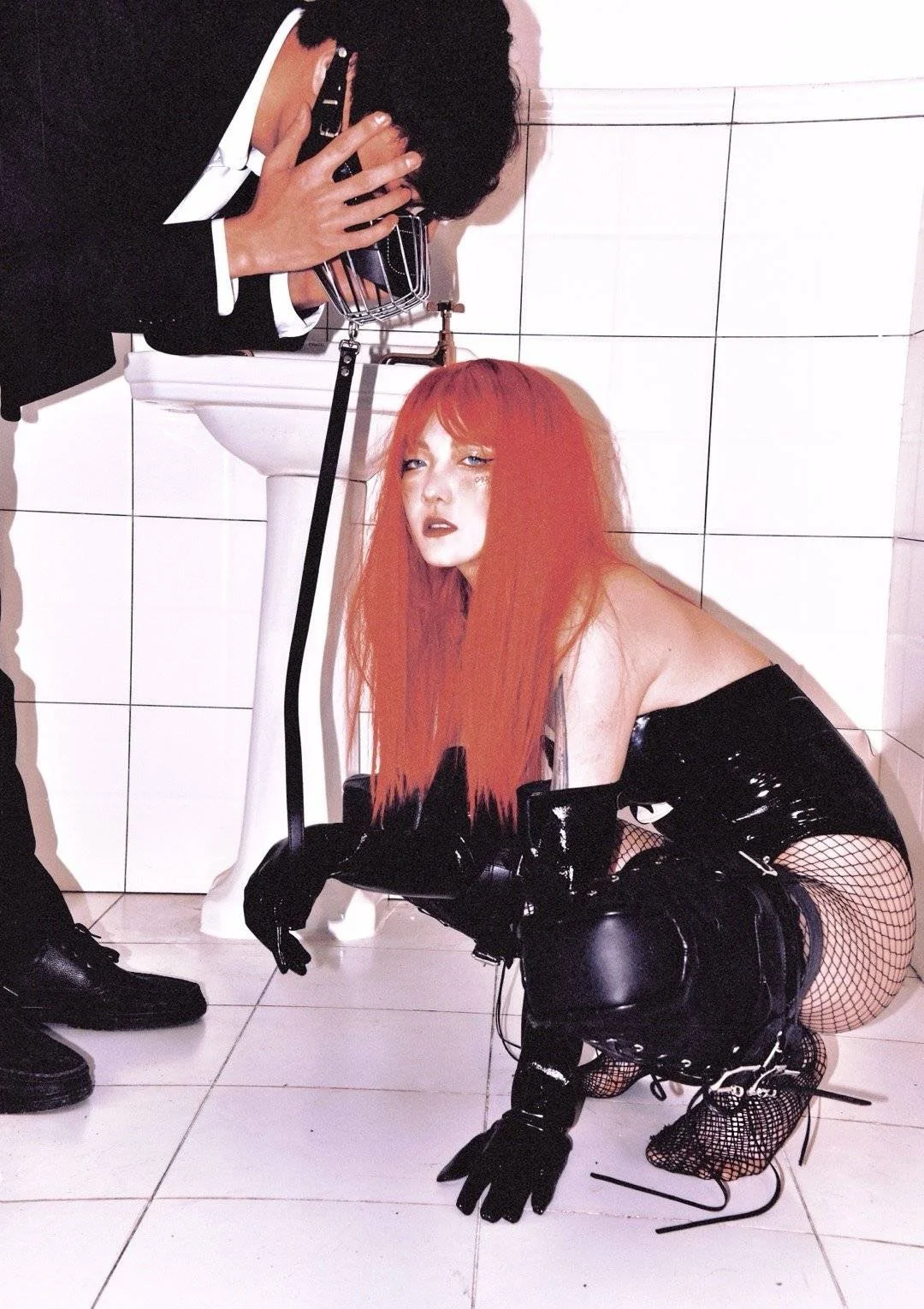
Your work feels deeply personal while also reflecting a growing generation of Chinese artists pushing beyond traditional categories. How has your environment shaped your visual language? Do you think international audiences interpret your work differently from audiences in China?
I’ve always had a huge range of interests across different fields and cultures, and I've been fascinated by the themes I photograph ever since I was kid. In short, it’s like my tastes were hardwired from a young age.
From what I see online, bad takes are pretty much the same everywhere—people aren't that different world-wide. But their reactions to certain themes vary immensely. Because of social media censorship in China, some viewers there are really sensitive about certain subjects, assuming there's something wrong with me mentally. They don't want to see—and can't see—the beauty I'm trying to show, choosing instead to attack me personally. In contrast, global audiences tend to wonder about and reflect on the light, shadow, and color in my work. With my shibari pieces, for example, they ask practical questions about the creative process: 'How did you suspend them?', 'Are they actually a couple in real life?', or 'Did you edit these colors in Photoshop?
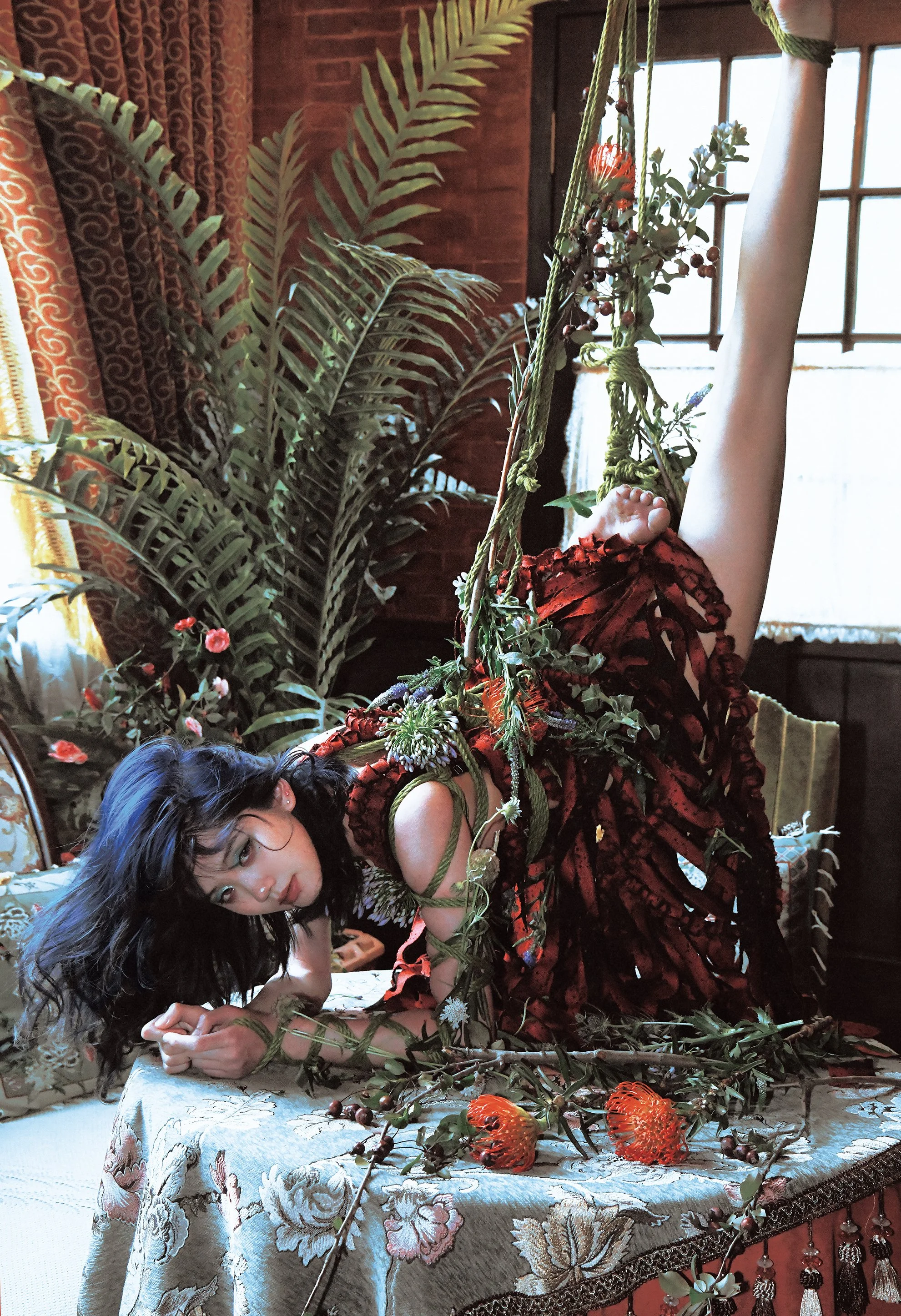
What emotion do you think contemporary photography struggles to represent honestly?
Pain.
No piece of visual art can truly capture what pain feels like; it is a tangible experience and sensation.