Mika Liang Paints the Selves We Want to Become
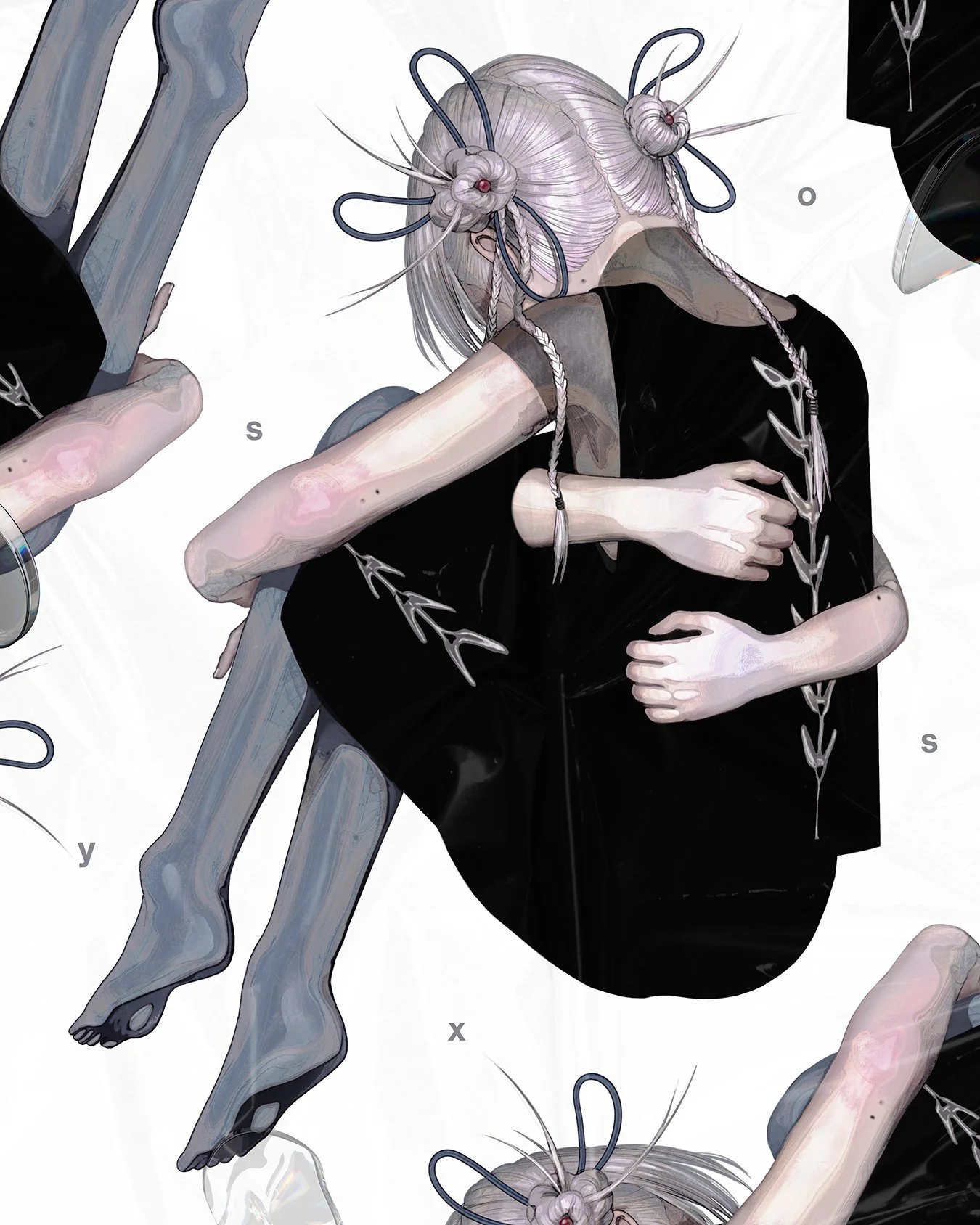
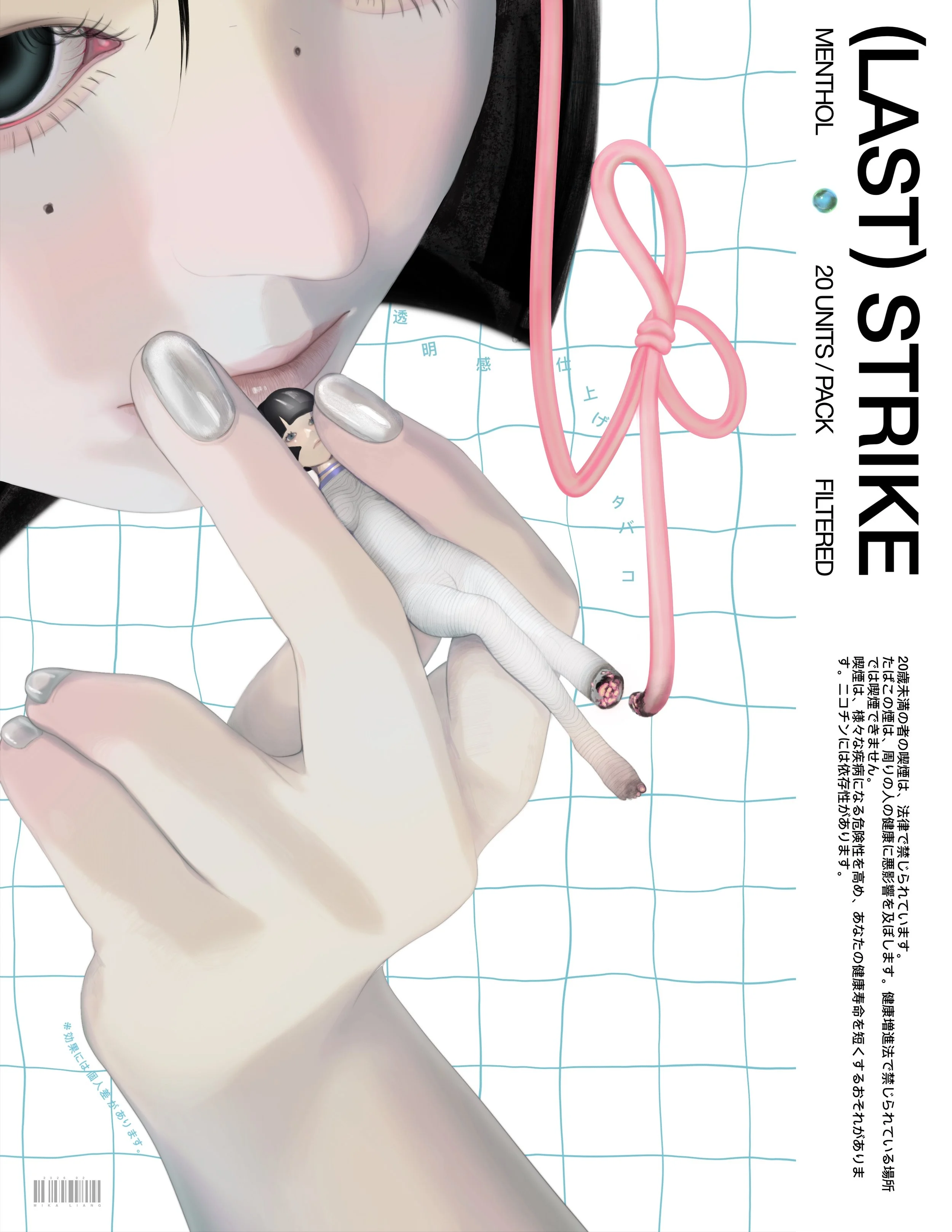
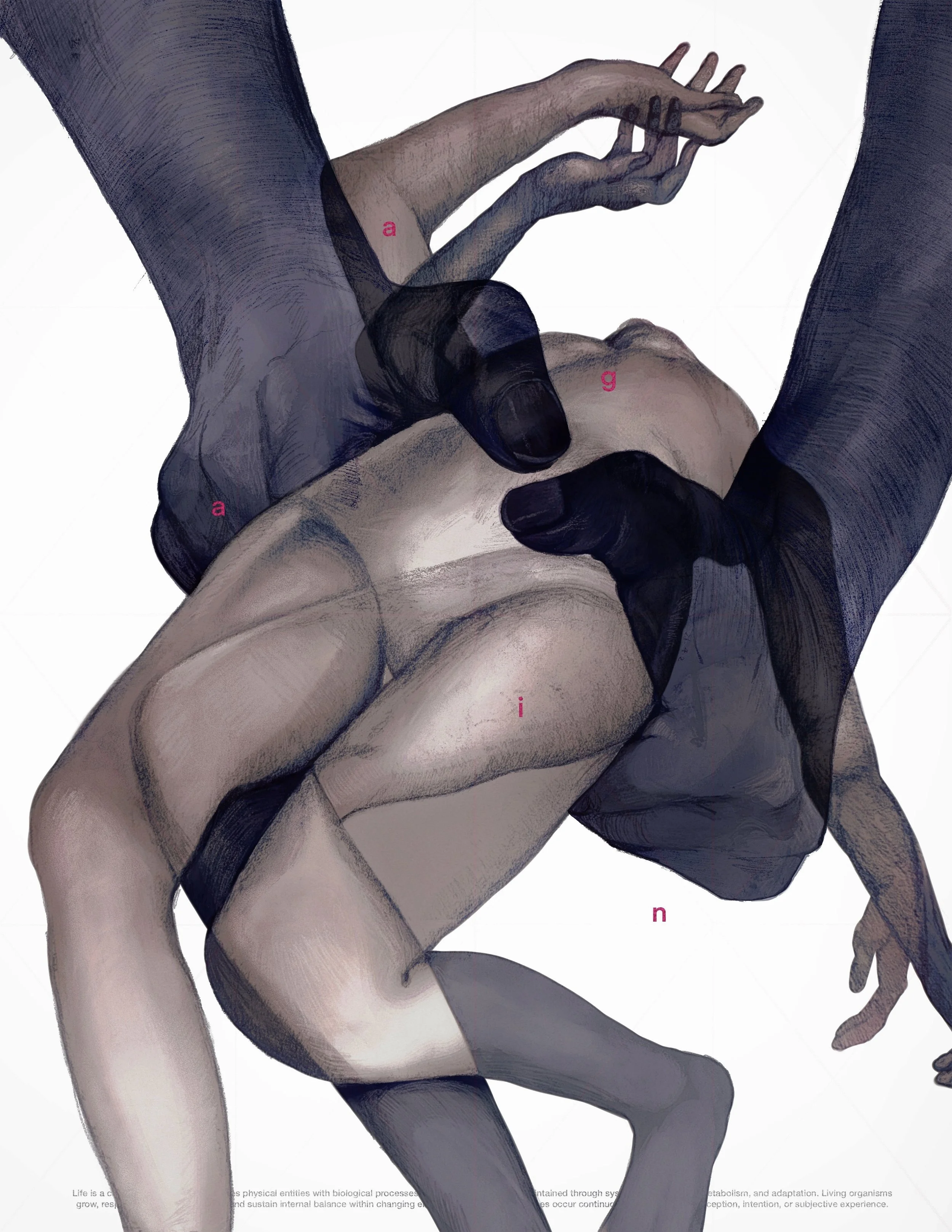
Online, we’re often taught to distrust the self we construct. Mika Liang is more interested in what that construction reveals. In her paintings, masks split open, bodies move beyond realism, and eyes, hands and skin become unstable carriers of beauty, harm and experience. Drawing from early internet culture, Vocaloid and deeply personal memories, Liang has developed a semi-realistic visual language suspended somewhere between reality and fiction. For Liang, emotion comes before character or composition, while the internet offers less a false identity than a space in which we can construct the person we want to become. Here, she talks about masks and ideal selves, breaking the rules of visual language, resisting the influence of algorithms, and what it means to build an artistic life today.
Your characters often feel like they’re caught somewhere between avatars and real people. Do you think we’re becoming more ourselves online, or further away from ourselves?
I don’t think it’s either. I don’t think the internet makes us more or less like our true selves. Instead, I think it brings us closer to an ideal version of ourselves. Reality comes with many limitations, but the internet gives us a space to construct the person we genuinely want to become. Painting works in much the same way for me. It allows me to shape ideas, characters, and worlds into something more complete, something closer to the image I have in my mind. So I don’t think our online selves are necessarily fake. In many ways, they’re actually closer to our desires, and closer to the people we aspire to be.
Your work treats beauty almost like a surface that can be peeled back or reconstructed. What interests you more—the mask or what’s underneath it?
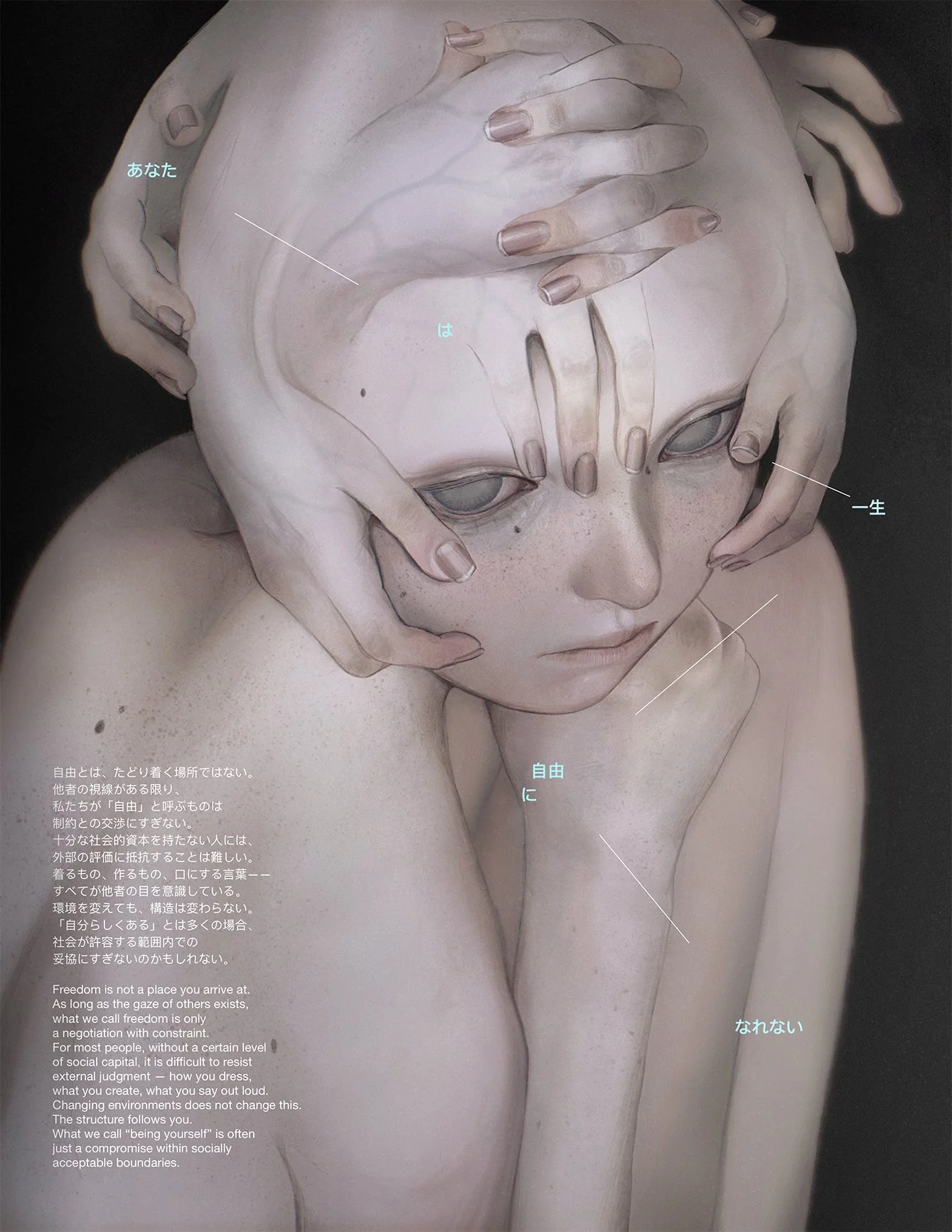
I’m interested in both, but more specifically, I’m interested in the tension between them. I’ve always loved masks themselves because they feel so complete. But the moment you pull them apart and reveal what’s hidden underneath, that sense of completeness suddenly breaks. I find that tension between the surface and what’s beneath it incredibly compelling.
Hands, eyes and skin appear repeatedly throughout your work. Are they symbols you’ve consciously chosen, or images that keep finding you?
They’ve never felt like consciously chosen symbols to me. They simply appear very naturally in my work. I’ve always felt that the human body is a beautiful medium in itself. Eyes, hands, and skin are the most direct ways we experience the world. Hands can create beauty, but they can also cause harm. Eyes can discover beauty, but they can also witness pain. None of these elements carry a fixed meaning. Instead, they embody the complex and often contradictory relationship between people and the world around them.
Growing up online has created an entirely new visual language. Which parts of internet culture have genuinely influenced your artistic voice?
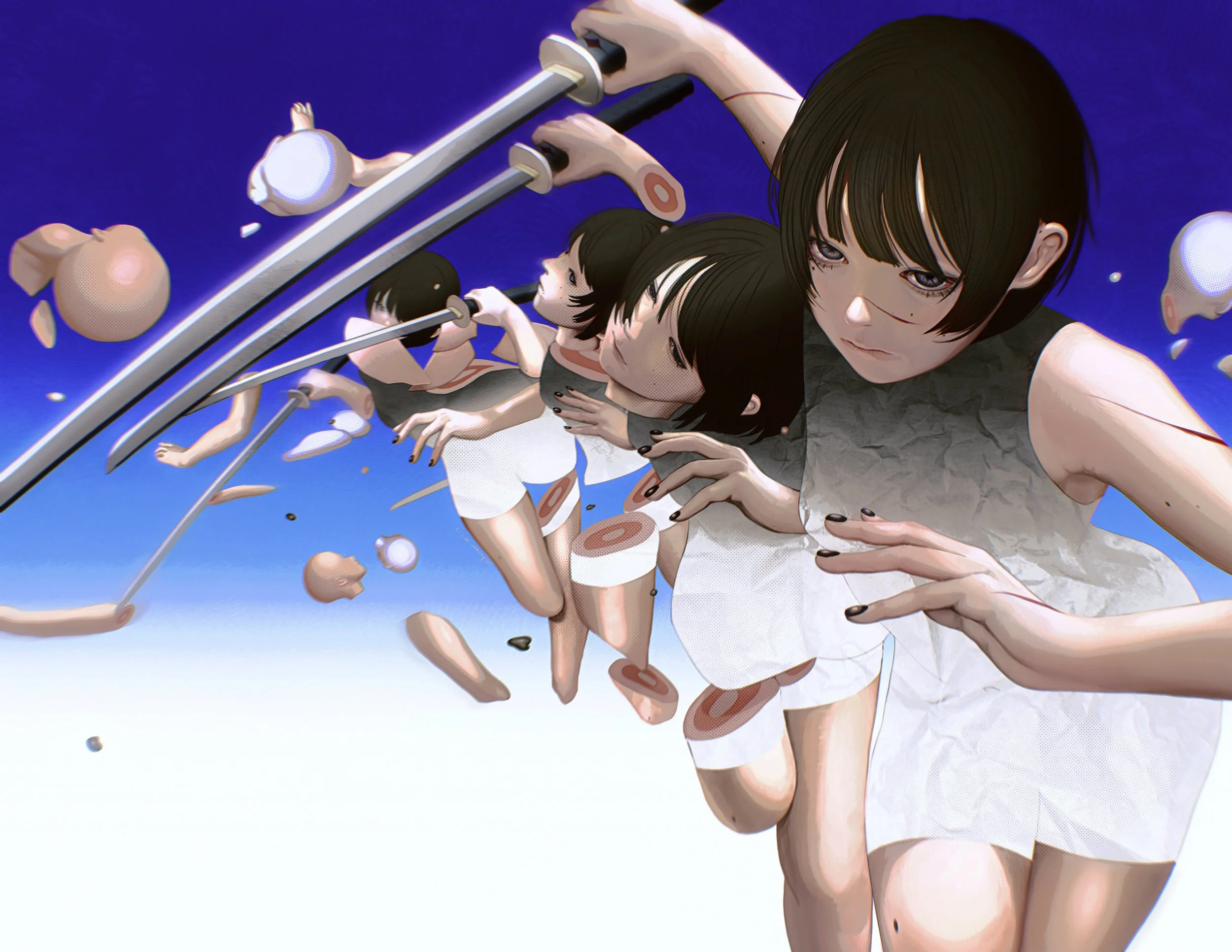
The biggest influence the internet had on me wasn’t introducing me to a particular visual style. It was making me realize that visual language doesn’t have fixed rules. If an idea calls for an impossible body or a completely different way of telling a story, I’m always willing to explore it. The internet taught me that expressing an idea is more important than following conventions, and that it’s okay to break away from the limitations of traditional media. When I was younger, I was deeply influenced by Vocaloid culture, so I spent a lot of time drawing characters. That influence has stayed with me, which is probably why my work is still very character centered today. Over time, those early internet influences blended with my own experiences in the real world, gradually shaping the semi realistic visual language I work with now, somewhere between reality and fiction.
Do you ever worry that algorithms are beginning to shape artists’ aesthetics as much as artists shape culture? And has social media changed the way you finish an illustration, knowing it will first be experienced through a phone screen?
Not really. I think an artist’s voice comes from much more than what they see online. It’s shaped by their experiences, cultural background, education, and the countless interactions they’ve had with the world around them. Algorithms may influence trends, but I don’t think they can truly shape an artist’s creative voice. Social media hasn’t changed the way I think about making a piece, but it has changed the way I present it. Many of my works are in a vertical format. It works well on phone screens, but it also translates naturally to books, posters, and many other forms of print. So for me, it’s more of a practical adjustment than a creative one.
Do you start with a feeling, a composition, or a character?
I always start with a feeling. Emotion is the starting point of every piece. Characters are simply the vessel that carries that emotion, while composition is what allows the idea to come together. All three are important, but emotion is always where the work begins.
Has there ever been an artwork you couldn’t finish because it became too personal?
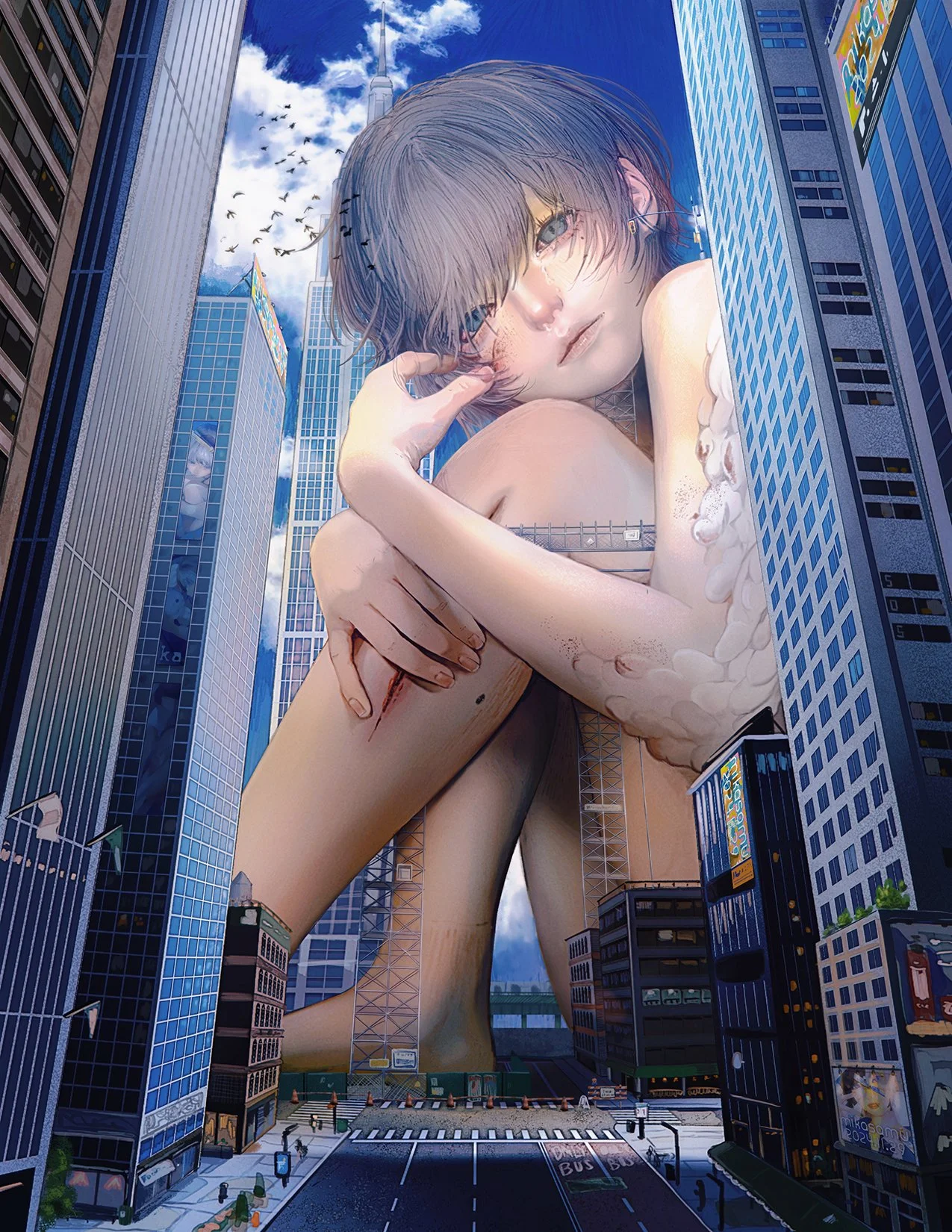
Actually, no. For me, the more personal and genuine an experience is, the more it pushes me to create. Many of my works come from deeply personal experiences, but I rarely depict those experiences literally. Instead, I prefer translating them into more open visual narratives that allow viewers to interpret them through their own experiences, rather than simply seeing mine.
Do you think today’s young artists have more freedom than previous generations—or simply different pressures?
Young artists today definitely have more freedom to express themselves. The internet gives us access to ideas from all over the world and allows us to share our work much more easily than before. At the same time, we face pressures that previous generations didn’t. With the rise of AI and new technologies, many industries that prioritize efficiency and commercial value are becoming increasingly reliant on automation. As a result, traditional opportunities for artists have become more limited. Because of that, I think the biggest challenge today is figuring out how to stay true to your own voice while building a sustainable career. Finding that balance between creative expression and making a living is something many artists of my generation are navigating today.