Kyeonghoon Oh uses color like a mood

When Kyeonghoon Oh picks up a pencil or brush, the first thing he draw is always a simple circle. It’s his way to calm scattered thoughts and start turning feelings into images. His paintings feel like glimpses into a dream world, filled with characters that quietly carry stories between memory and imagination. Influenced by the rhythm of life in Seoul and led by emotion, Kyeonghoon uses color like a mood—soft and nostalgic one moment, bright and hopeful the next. His upcoming show, Slave to Serenity, explores the tricky balance between wanting peace and feeling trapped by it, offering a personal look at that tension through powerful, open-ended work.
What’s the first thing you usually draw when you pick up a pencil or brush?
I always start by drawing a circle. As I slowly trace a circle on the paper, the scattered thoughts in my head begin to settle, and emotions I didn’t realize I was holding start to emerge. It feels like a quiet, personal form of meditation. Once my mind calms down a bit, that’s when the image I want to draw finally begins to take shape. A lot of people say that painting is the freest act—but for me, it’s a series of endless hesitations. I keep asking myself: Is this line right? Is this emotion real? Do I truly want to draw this? That one simple circle always becomes the starting point for those hesitations. It may look small and quiet, but to me, it’s like a door— a silent door that leads me into the world of my painting.
Your characters feel like they belong in a dream or a soft myth—do you write stories for them, or do they exist only in your paintings?
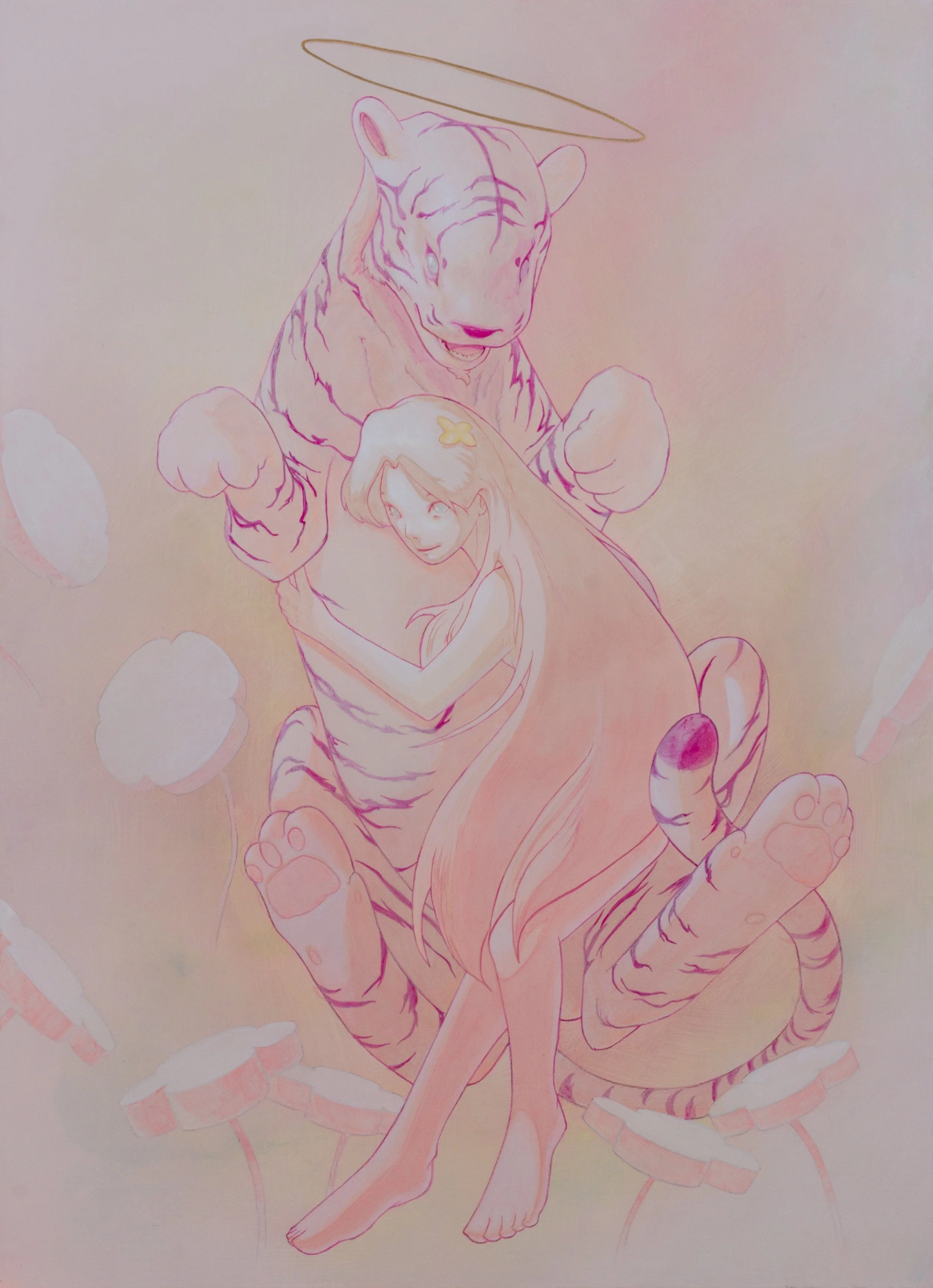
I don’t write full stories for my characters, but they’re naturally connected to one another. Sometimes, a character from one painting appears again in another, and over time, they start to form their own narratives—without me even realizing it. People often tell me that my characters feel like they belong in a myth, and honestly, I can see why. I think I’ve been unconsciously influenced by that kind of world. To be honest, I’m not exactly sure where these characters come from. Maybe they’re fragments from something I saw when I was young, pieces of dreams, or traces of memories buried deep in my subconscious. One thing I do know for sure is that animation and comics have had a huge influence on me. Those collected images and emotions suddenly shoot out of my mind— so suddenly, and yet so naturally. One day, I’d love to gather all these characters and weave them into a full story. For now, though, they each live quietly within their own paintings.
How do you approach color? It seems like emotion leads your palette.
Yes, my use of color always begins with emotion. I believe I feel emotions just like anyone else— When I’m feeling nostalgic, I naturally imagine softer, more lyrical colors. When I feel hopeful or uplifted, brighter and more playful colors tend to come out. Emotion sets the tone for my palette, but translating that emotion into an actual, physical color is incredibly difficult. After I finish my sketch, I usually transfer it to my iPad and experiment with colors digitally— it’s easier to adjust hues in that environment. But turning those digital tones into real paint? That’s a completely different story. To reach the final color I want, I create countless color swatches and test them obsessively. That whole process feels like a mission to bridge the gap between emotion and color— two very different worlds. It’s not easy, but maybe that’s why I dive into it so deeply.
Do you feel your work is more about memory, imagination, or something in between?
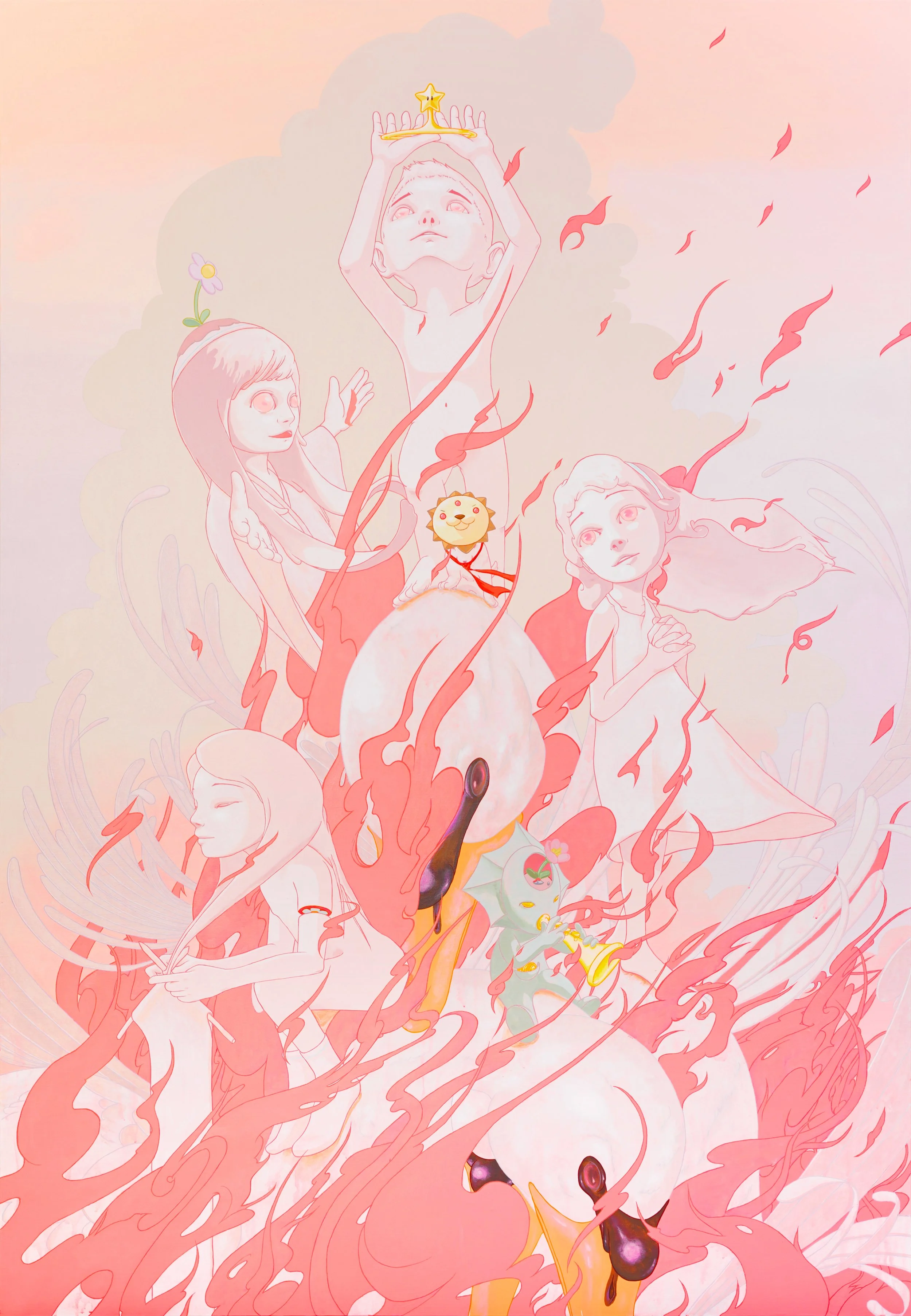
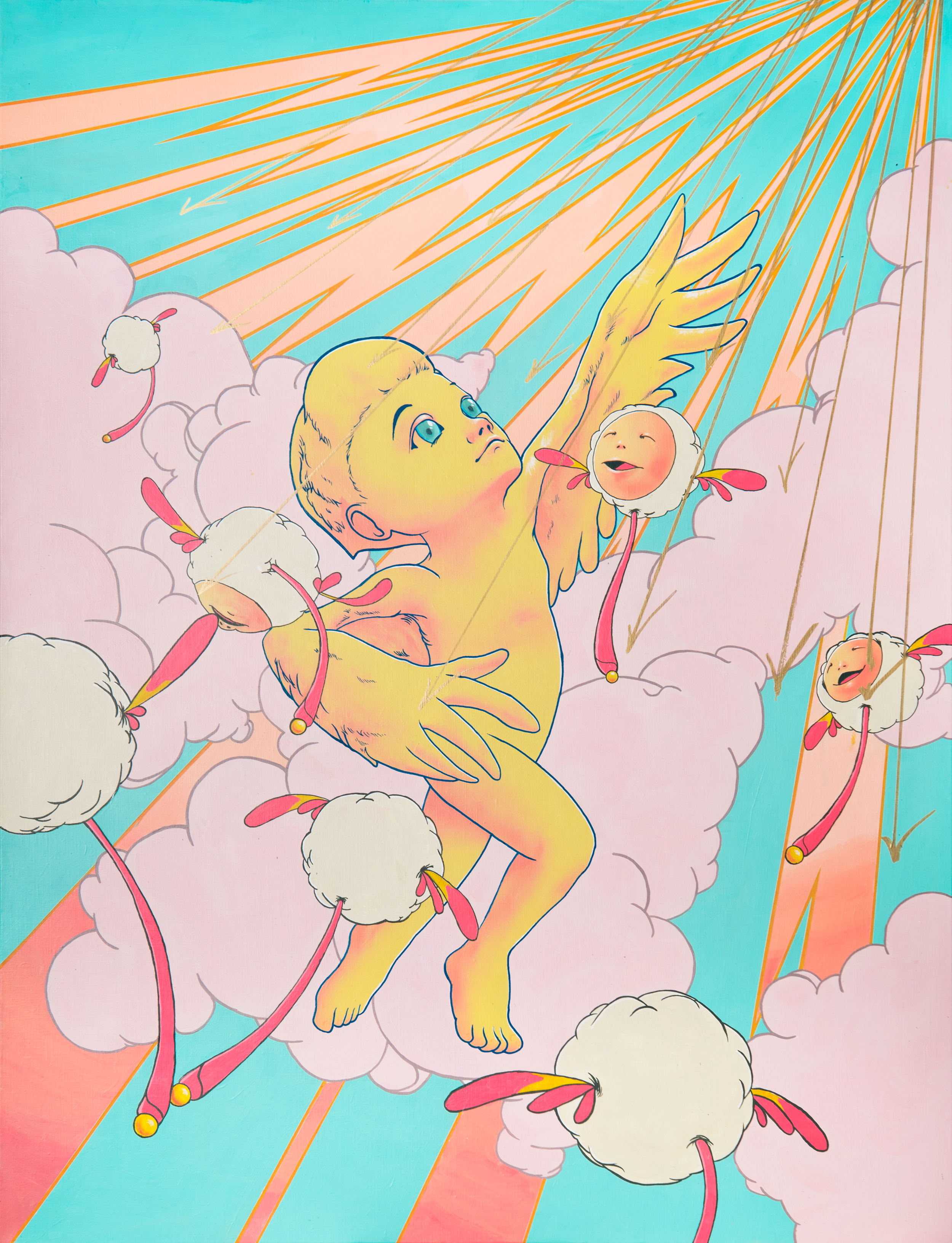
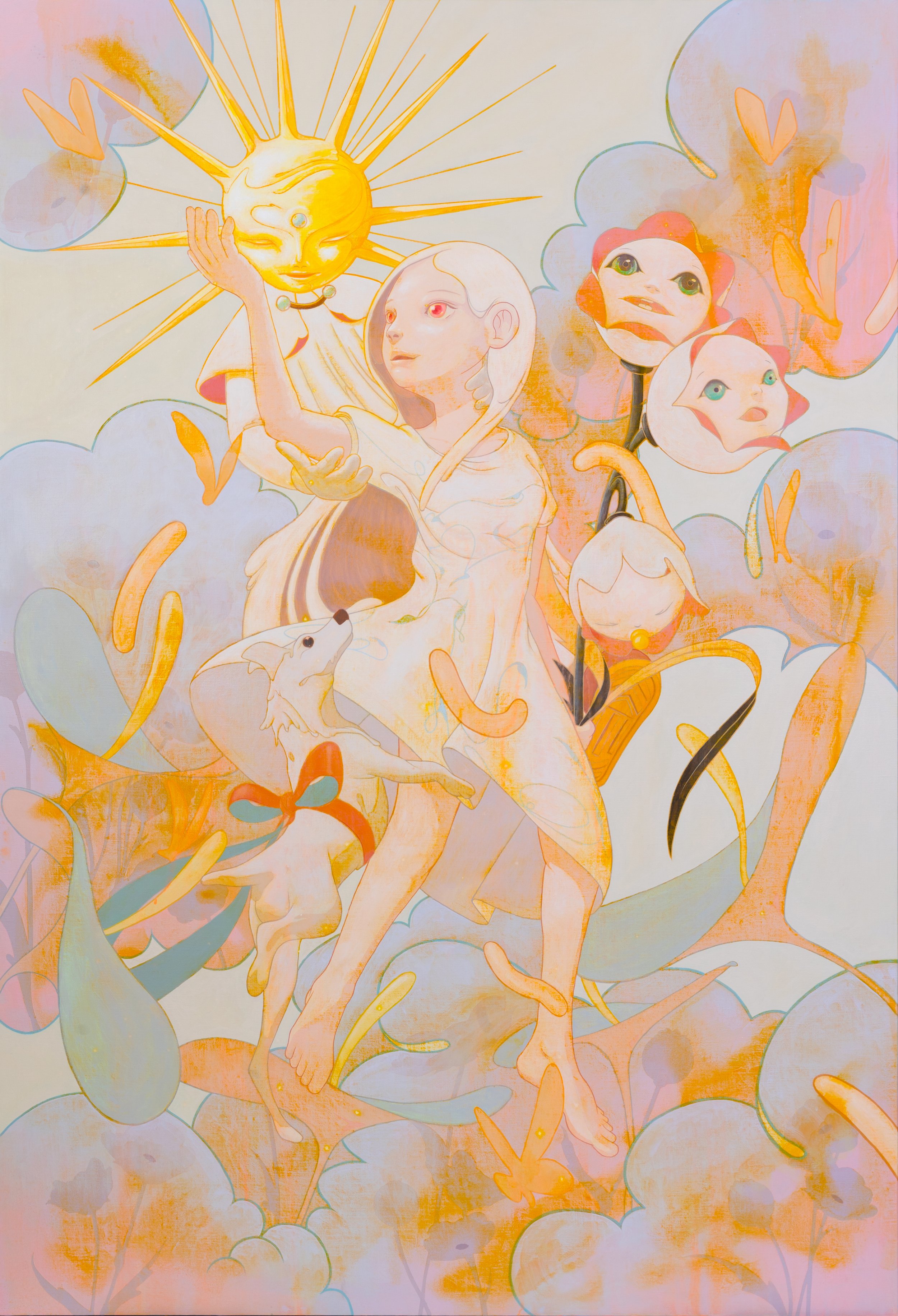
I would say my work sits somewhere in the middle—memories layered with imagination. One of my larger paintings, titled “viva la ttu ttu tti va - pretty summer,” captures this idea best. That painting is dedicated to everyone chasing their dreams and imagining a better future. When I was young, I worked in a watermelon field to earn money. It was, without a doubt, one of the hardest experiences of my life. An endless stretch of watermelon fields, a sun that felt like it could melt me, and no access to even a cup of water. I still vividly remember the moment when the boss, after I asked for water, told me to eat a broken watermelon lying in the dirt. That absurd yet unforgettable memory became the seed of this painting. When I start painting, the things that moved me naturally come to mind—Frida Kahlo, Coldplay’s “Viva La Vida,” and Eugène Delacroix’s “Liberty Leading the People.” I bring those influences together with my own memories and emotions, shaping them into a single world on canvas. Most of my works begin this way—from something deeply personal, and then stretching out into the imaginary. Sometimes, they come from a single feeling—grief, joy, anger, hope. That emotion turns into a landscape, a character, a story.

How do you know when a piece is “finished”? Or do they always feel a little open-ended?
Honestly, the feeling of completion is always a little incomplete for me. Even after I decide that a painting is “finished” and apply the final varnish, I often find myself wanting to fix something later. That’s why my works always feel like they exist in an open state—never entirely closed, more like a moment that leaves space for possibility. I think completion, for me, is really just a kind of pause that the artist accepts. It’s not necessarily the end—maybe just a quiet decision to stop, for now.
What role does Seoul play in your creative process?
I spend most of my time in my studio. My days follow a simple rhythm—just moving back and forth between home and the workspace. Like many artists, I think I live in a bit of a pattern, which leaves little room to actually “feel” the city. Although I live in Seoul, there are still moments—when I’m walking downtown or driving through the city—where it all feels strangely unfamiliar. It’s a kind of distance that exists even within familiarity. Sometimes, I feel like a stranger in this city. That quiet dissonance naturally seeps into my work. Seoul is crowded, buzzing with life, yet it can feel incredibly isolating. That duality—the closeness and the detachment—often becomes the atmosphere in my paintings.
If one of your characters could speak, what would they say?
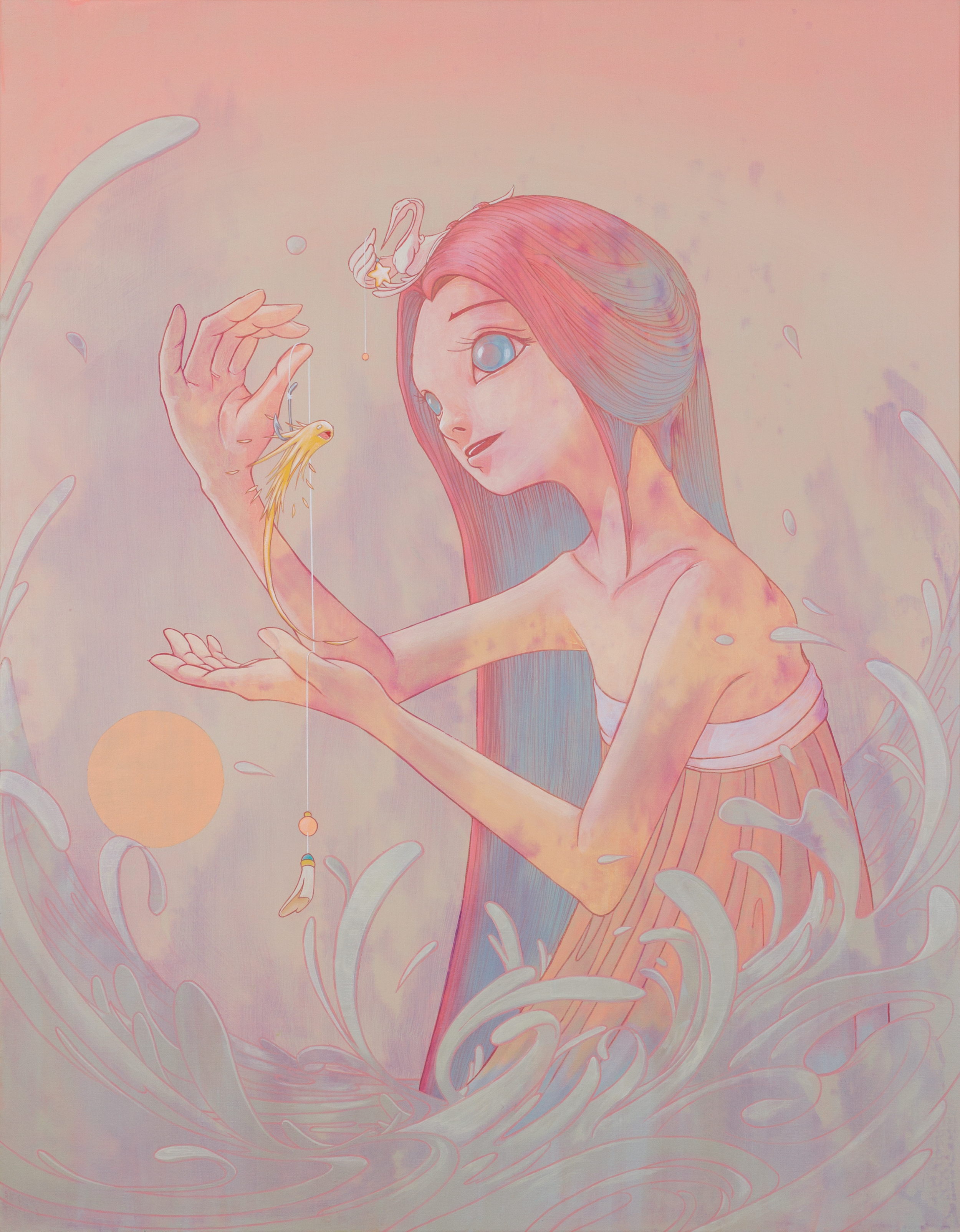
The character I’m painting right now would probably say something like, “Bring it on, you bastards.” haha It may sound like a joke, but that line captures exactly how I’m feeling inside these days. I never paint from just one emotion. My emotions come in waves—they rise and fall, and sometimes swing like a kind of emotional whiplash. That’s why my characters always have such layered, complex inner lives. Each one seems to speak to me in a different way. Some days, they gently say, “You’re doing fine, just keep going.” And other days, they shout with defiant energy. I think those multi-layered emotions are what keep my paintings alive. That tension, that rhythm—that’s the heartbeat of my work.
How do you want people to feel when they see your work for the first time?
What I hope is that my work reaches people in different ways. To someone who’s already achieved their dream, I want it to feel like a trophy in their hands. To someone still chasing that dream, I hope it becomes a burst of energy—a visual stimulant. And for someone simply seeking peace, maybe it can be a quiet place to rest. If a single painting can deliver different messages depending on the viewer’s emotional state, I honestly don’t think there’s anything more meaningful than that. I want to create art that comes from one heart, but arrives in many.
What’s something you’re afraid to paint—but want to?
I want to find hope in the works I create—that’s always been important to me. And maybe that’s why I still find it difficult to confront and paint the darker emotions inside me. People often say that finding happiness and peace is the hardest thing, and I think that’s true. I’ve always tried to paint courage, love, hope—these positive feelings—but honestly, sometimes those emotions feel the most distant and unfamiliar to me. So I hesitate when it comes to painting my darker side. But recently, for the first time, I tried to face those feelings and turn them into a painting. It was a quiet, careful step—but it felt like a very important one.
Your exhibition is coming up. Can you share the story or emotion behind the new works you're showing? What more would you like to share about it?
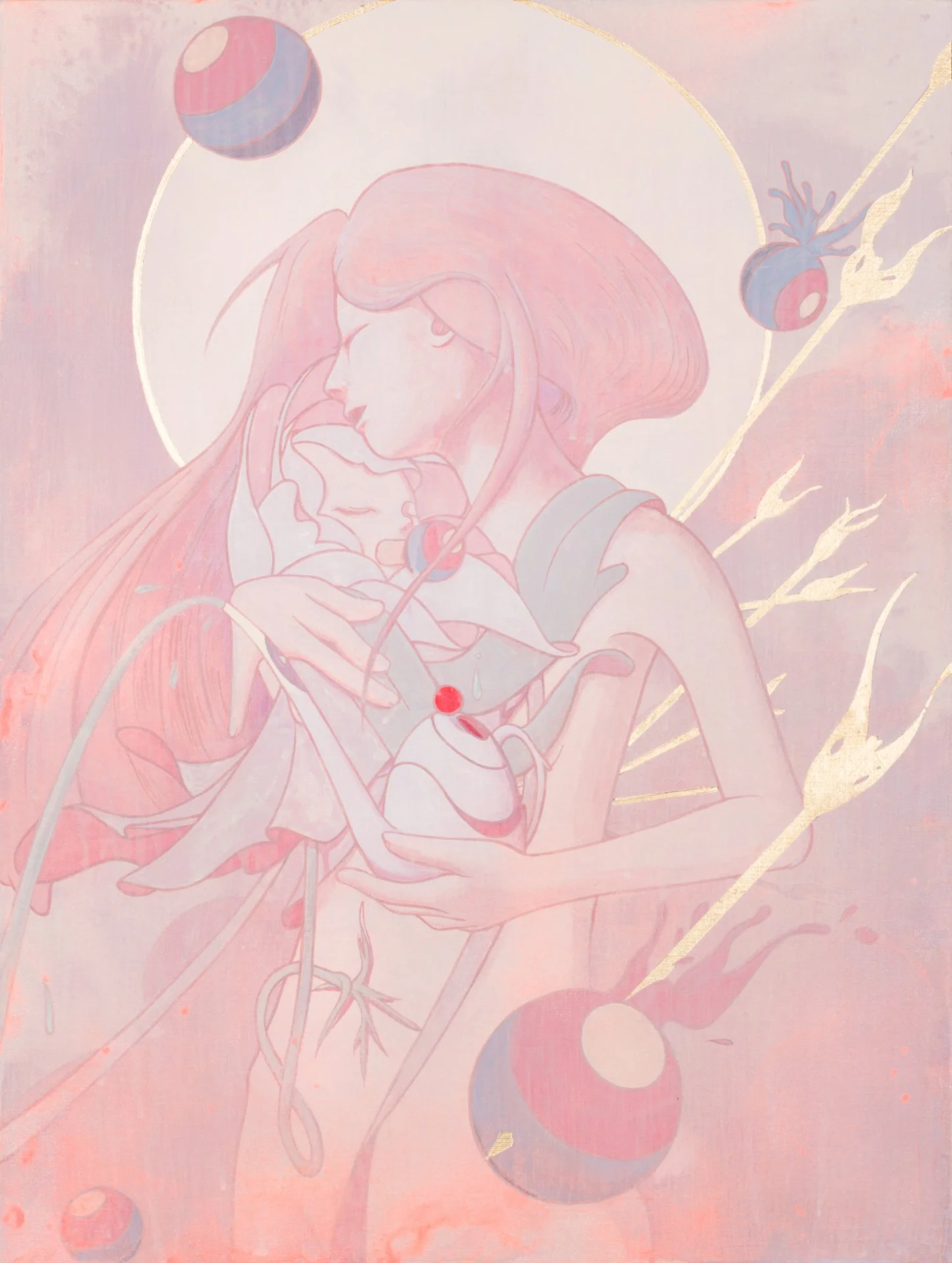
The title of my upcoming exhibition is “Slave to Serenity.” We all long for peace—somewhere to rest, something that no longer wavers. But if you look closely, that longing can sometimes trap us. It can hold us still, make us stop moving, or quietly confine us without realizing it. I kept thinking about that contradiction, and the new pieces in this show were born right inside that tension—between desire and resistance, stillness and strain. While painting, I kept asking myself, “Is the serenity I want truly a kind of freedom... or is it just another kind of cage?” This exhibition is my way of trying to answer that question. It’s not just a show—it’s a personal conversation.