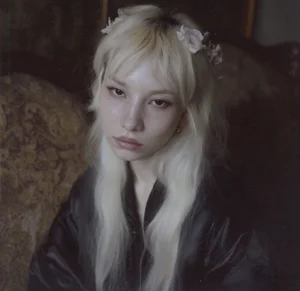
The Fragile Worlds of Chiara Paluan
Chiara Paluan creates tender, unsettling worlds where the human figure dissolves into dreams, distortions, and quiet mutations. Through muted watercolors and soft graphite, she builds a personal microcosm shaped by gendered experience, mental health, and a deep connection to nature. Her characters feel like fragile alter-egos — part self-portrait, part collective memory — revealing the discomforts we repress and the inner voices we inherit. With her intimate palette and recurring motifs of insects, seedlings, and watchful flowers, Paluan turns vulnerability into a form of resistance, inviting viewers into a space where softness becomes political and every fragile creature carries a story
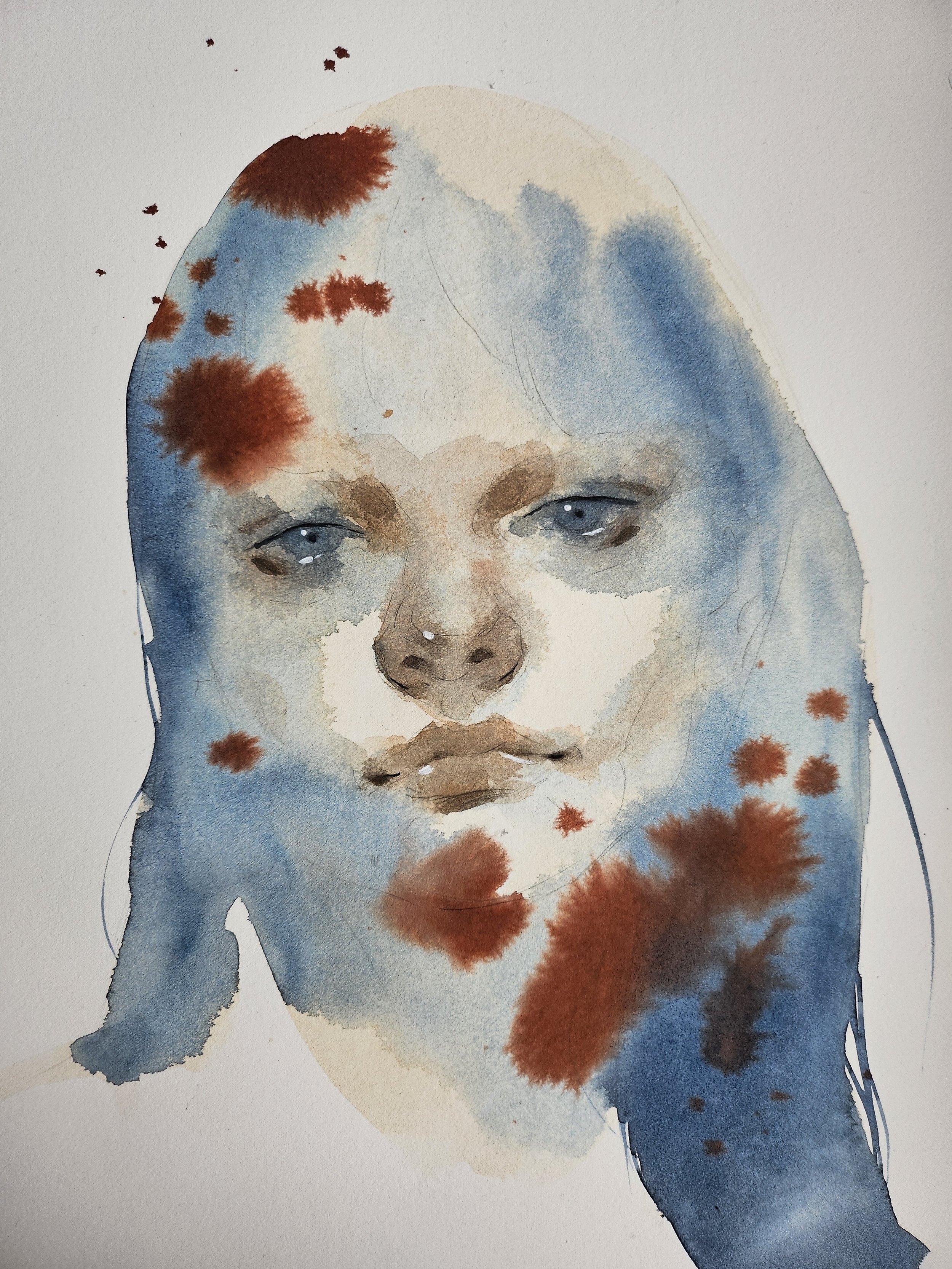
Burn, 2024, acquarello e inchiostro, 23x30 cm
Your work feels like it comes from a private ecosystem that is part human, part creature, part dream. When you’re painting, who are you speaking to?
In my drawings I try to include everything that fascinates me, that I am passionate about and that I consider important. I am trying to create a personal microcosm with an alphabet coded entirely by me. This is what fascinates me about art: it gives the possibility to create entire parallel universes that respond to their own laws and have a meaning of their own. A place to take refuge. The world has been taking a worrying turn in recent years, and now more than ever it's crucial to dream big and visualize utopias and ideal worlds, and then try to bring them into everyday life. There's a lot in my art about what I dream about, my ideals, my values, what I find right and what I want the world to be like. When I paint, I talk a lot to myself, to the part of myself that is hurt and disappointed by the world, to the part that sees everything dark and negative, to show her that another reality is possible and that sooner or later changes will come. But I also speak, and perhaps especially, to people who see my art. I feel very responsible for how we leave the world to future generations. That's why, with my art, I hope to bring as many people as possible closer to the issues I care about and to connect with people who dream of my own future.
Do you feel your characters are self-portraits, or are they versions of people you wish existed or do they exist?
In the last illustrations I did, a kind of alter ego began to emerge, a recurring character on which I am pouring many of my ideals, dreams and expectations but also disturbances, negative experiences, traumas and difficulties. And this character is always feminine, first of all because it reflects my identification with the female gender, and then it is a political act: I think it's important to start making the voice of one of the genres that in history have been most silenced, erased and obscured because of male hegemony. It's important to start hearing a different version of reality and a different approach to things. A lot of what I tell is autobiographical and about my personal experiences, but somehow it has its roots in something much bigger and older than me, which has existed for much longer, a universal condition that affects so many other people. In fact, I often talk about gender inequality, double standards, sexism, sexualization, harassment, but also mental disorders, cognitive distortions, body dysmorphism, growth and change. So to answer the question, my characters are both self-portraits and representations of what other people also experience and have experienced. I entrust my characters with the task of expressing my feelings, of denouncing injustices perpetrated since the dawn of time, of reflecting on certain mechanisms, dysfunctional dynamics of our society and beliefs that should be changed, and of raising awareness and reflecting on the issue of mental health, which is still stigmatized and seen as taboo. Our society has a great difficulty in accepting weakness, feeling bad and asking for help.
Don't look at me that way
Your faces often appear doubled, blurred, or in mutation. What does the idea of ‘multiple selves’ mean to you?
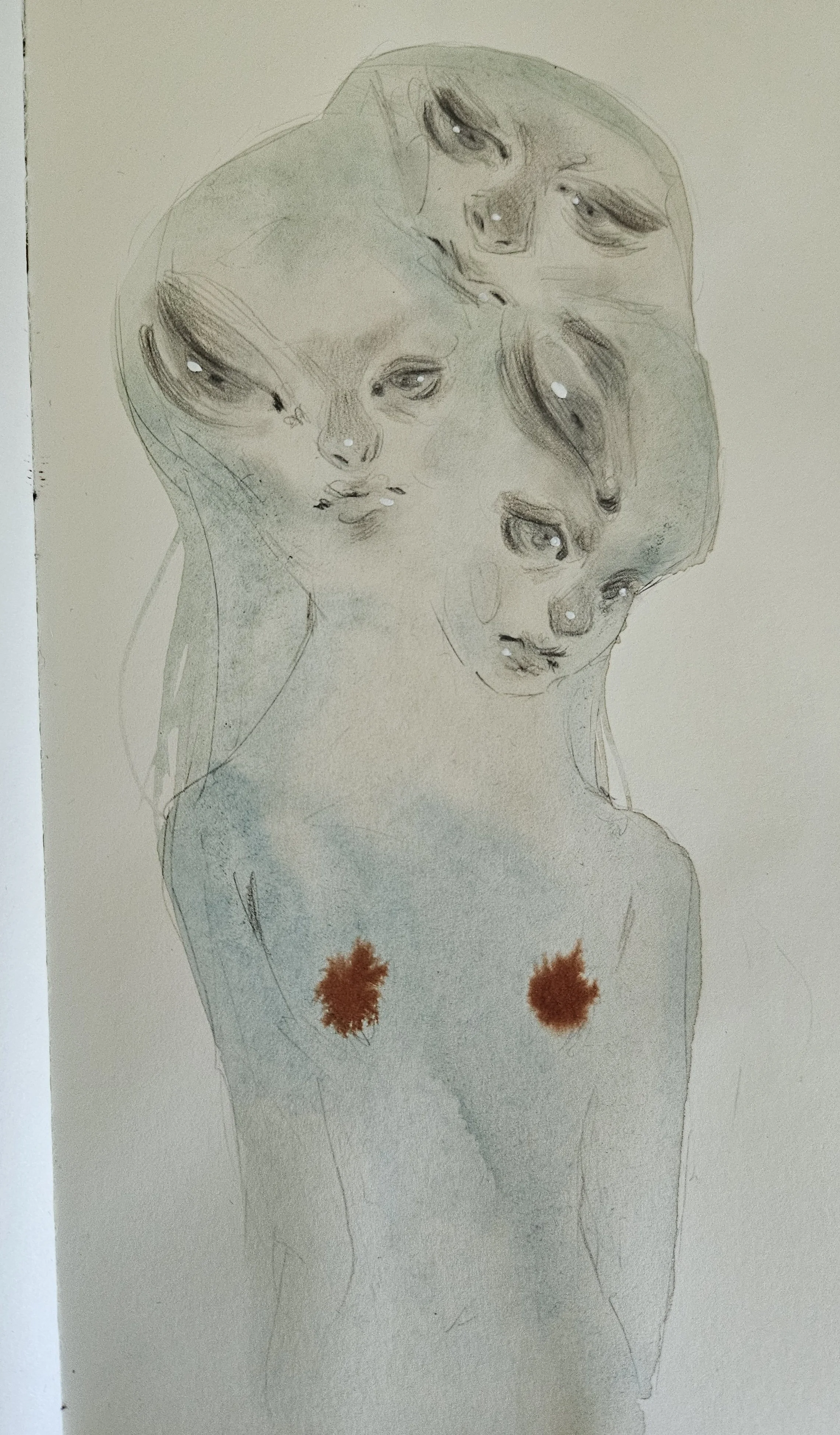
In my work I feel the need to go beyond physical reality and the way things appear outwardly. It is as if I were talking about what is a little deeper, on an inner level, and how this spills outward. Our inner world is always much more complex, multifaceted and articulate than what we think and perceive. Sometimes there's a huge discrepancy between what we hear and what we've learned to show. And the more we suppress certain things, the bigger and harder they become to manage. I often double up, multiply and deform to talk, for example, about the countless versions of ourselves that inhabit our bodies, about our subconscious that we have little control over, about our most irrational, contradictory, discordant, uncomfortable parts. Sometimes the double is configured in that judgmental, contemptuous and violent voice that convinces us that we are not enough, that we are worth nothing, that we are wrong, leading to a distorted perception of reality. Other times I talk about the voice of the world that has raised us and overwhelms our own, about all the social conditioning that has been absorbed during education and growth, and how this has influenced our construction. In other works, however, I have used this concept of multiple to graphically translate the sense of dissociation, fragmentation and dehumanization that I felt when I was like an object and a piece of flesh in front of the male gaze. I have noticed that in any case the multiplication of the self always coincides with a deep and destabilizing discomfort that I want to bring to the surface and show, first and foremost to allow myself to become aware of it.

Look at the mirror
Why insects? Why seedlings? What do these small, delicate beings allow you to express that humans can’t?
I have always had a huge passion for the plant and animal world: these are subjects that I love to draw and that I would observe for hours. For example, I love the concept of planting a seed in our inner garden, or giving an input into someone's mind and seeing it sprout, develop and thrive. I think it's very poetic. Then, I am opposed to the anthropocentric and pyramid vision of the world, and I think that nature should be put on the same level as us, in an equal relationship and not one of prevarication. In the end, we too are organisms within the same ecosystem and not something external in our own right. I like to see everything as under a macro lens, capturing very close details of small subjects, magnifying them relative to actual size. It gives me the idea of a more tailor-made, more intimate and less dispersive world. That's why the human characters I draw are always very small compared to the rest. The nature I paint often has a disturbing and dark undertone. I play a lot with the natural elements that the artistic tradition has stereotypically associated with the concept of woman, emptying them of their original meaning and reversing it. Flowers and butterflies, generally symbols of femininity, beauty, delicacy, grace and lightness, in my work are full of eyes that peer and are placed in contexts that are anything but light and serene. If you think about it, the butterflies themselves feed on decaying bodies, and the metamorphosis of the moths is associated with involution, with something dark and evil.
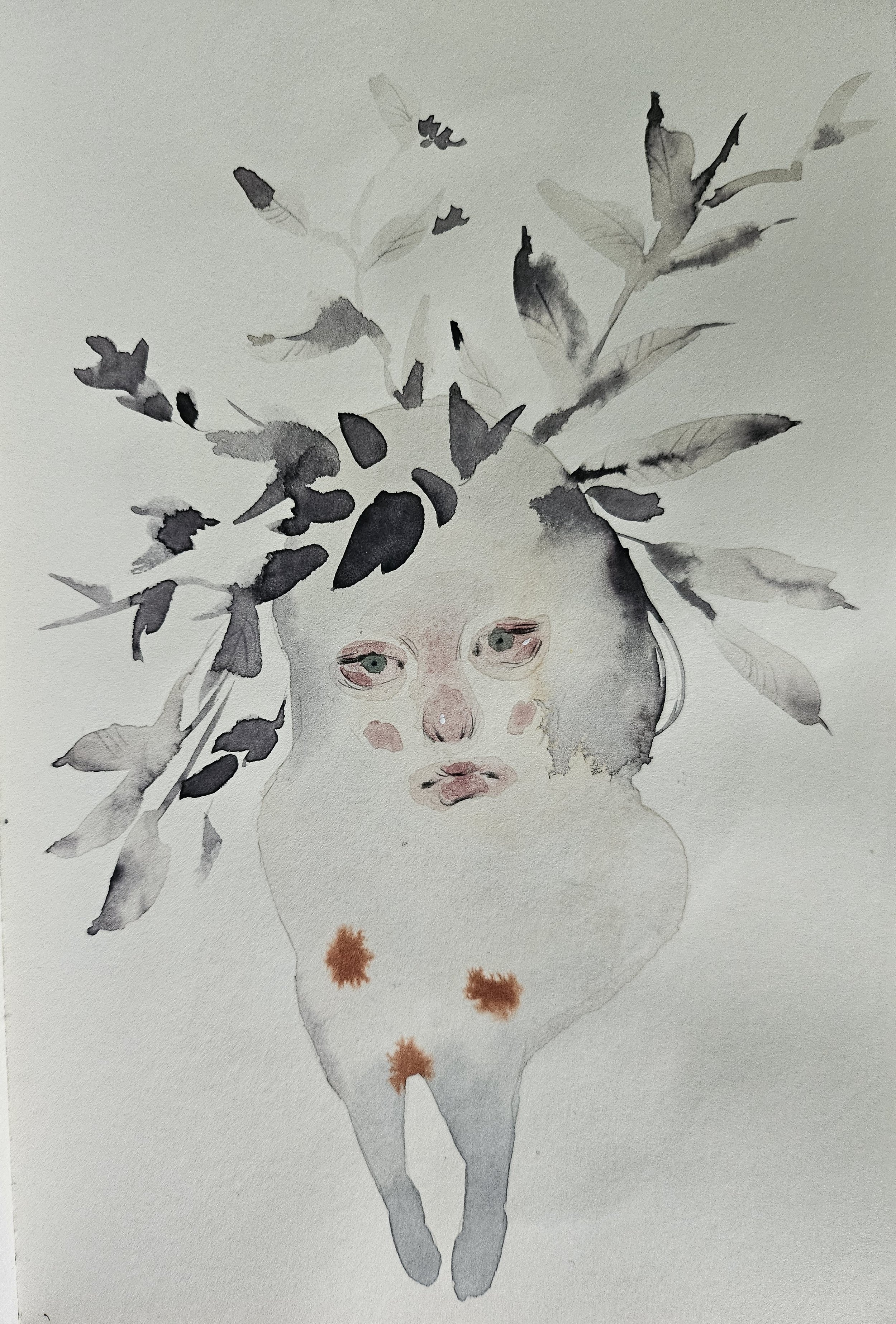
Fioritura
Your color palette is muted, watery, almost dissolving. What attracts you to that softness instead of something louder or more defined?
I've always used colors very intuitively, without thinking too much about meaning and psychological implications. At the beginning of my artistic practice, I used red and orange a lot, which I abandoned over time because I felt too hot, strong and lively for myself. I replaced them with blues, which had a more calming, reflective and introspective effect on me. I felt them more in line with my melancholic and introverted mood, and they helped me express myself better. I was particularly fixated on indigo, which could reach very marked contrasts. In recent times, however, I have actually turned to more neutral, mute, desaturated and earthy tones, because they seem to me to be quieter and more delicate, reminding me of nature, soil and what is raw. I also turned off the contrasts because it's as if I felt the need to turn down the volume, to deal with more background sensations. They also reflect my disillusionment on certain issues that sadden me a little. They give me the idea of something old and worn out, dusty, that I had buried for a long time and that just needed to emerge. I often talk about what we are taught to repress, hide and forget. Of changing, impalpable and foggy things that even escape us. Moreover, as I mentioned earlier, many of the issues I deal with are as old as the world, not just about how long I am existing. And I think this palette helps me a lot to describe this.
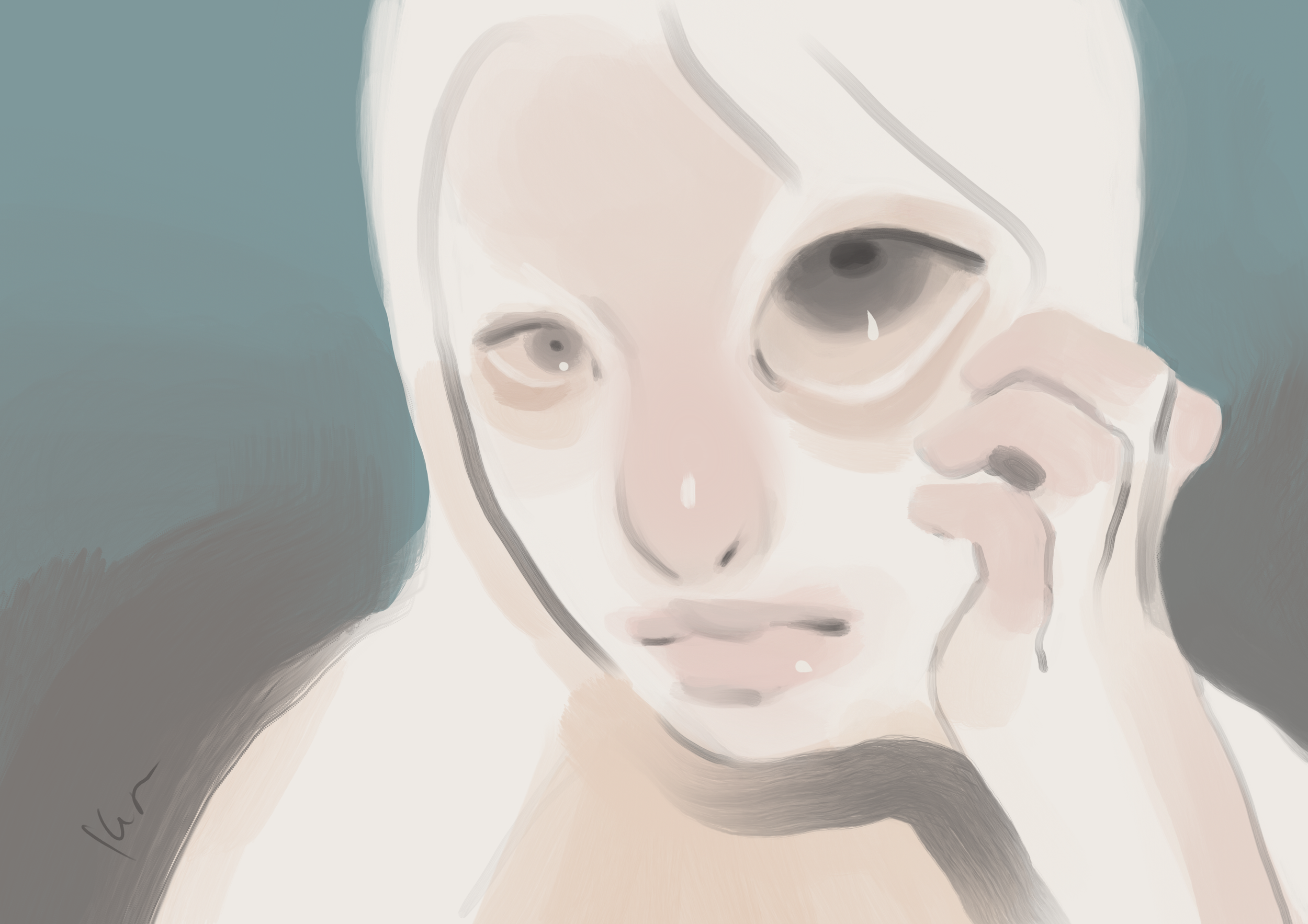
Dysmorphism
Do you create better in silence or in chaos? What does the room sound like while you work?
I am a person who loves silence and who really struggles to function in noisy and confusing contexts. Chaos weighs me down a lot and I come out exhausted, and in fact I often need to isolate myself, decompress and recharge. I am very sensitive to noises and sometimes sudden or light but persistent sounds compromise my concentration, mood or make me feel a headache. It's like I need moments when I have total control over what I hear and what comes to me from the outside. In fact, when I paint, I try to create a comfortable atmosphere and I love listening to music from headphones because they allow me to focus the sound, eclipse everything else and create an intimate dimension of recollection. I can also concentrate more easily and listen to everything that comes into my mind. That's why my studio is always very quiet and relaxing from the outside.

Do you feel that making art heals you, or does it expose you?
Both. Making art allows me in the first place to concretize and give shape to what I feel, it helps me to metabolize and accept certain experiences. It is as if once extracted from my head it becomes real, tangible, and I have the opportunity to recognize to myself that that thing exists and has an impact on myself. It allows me to look at it with the right detachment, validating what I feel and giving it the right importance, without judging or diminishing it. Putting all of this on paper also makes it visible and therefore usable by other people, so in a way it's like breaking down all the barriers that I've built over time, making myself vulnerable. Especially in the last illustrations I've done, there are very fragile pieces of myself, and sometimes it's very hard to share it with someone outsider, exposing myself on social media. But I am always very grateful for the love I receive and the sensitivity that shows those who support me.
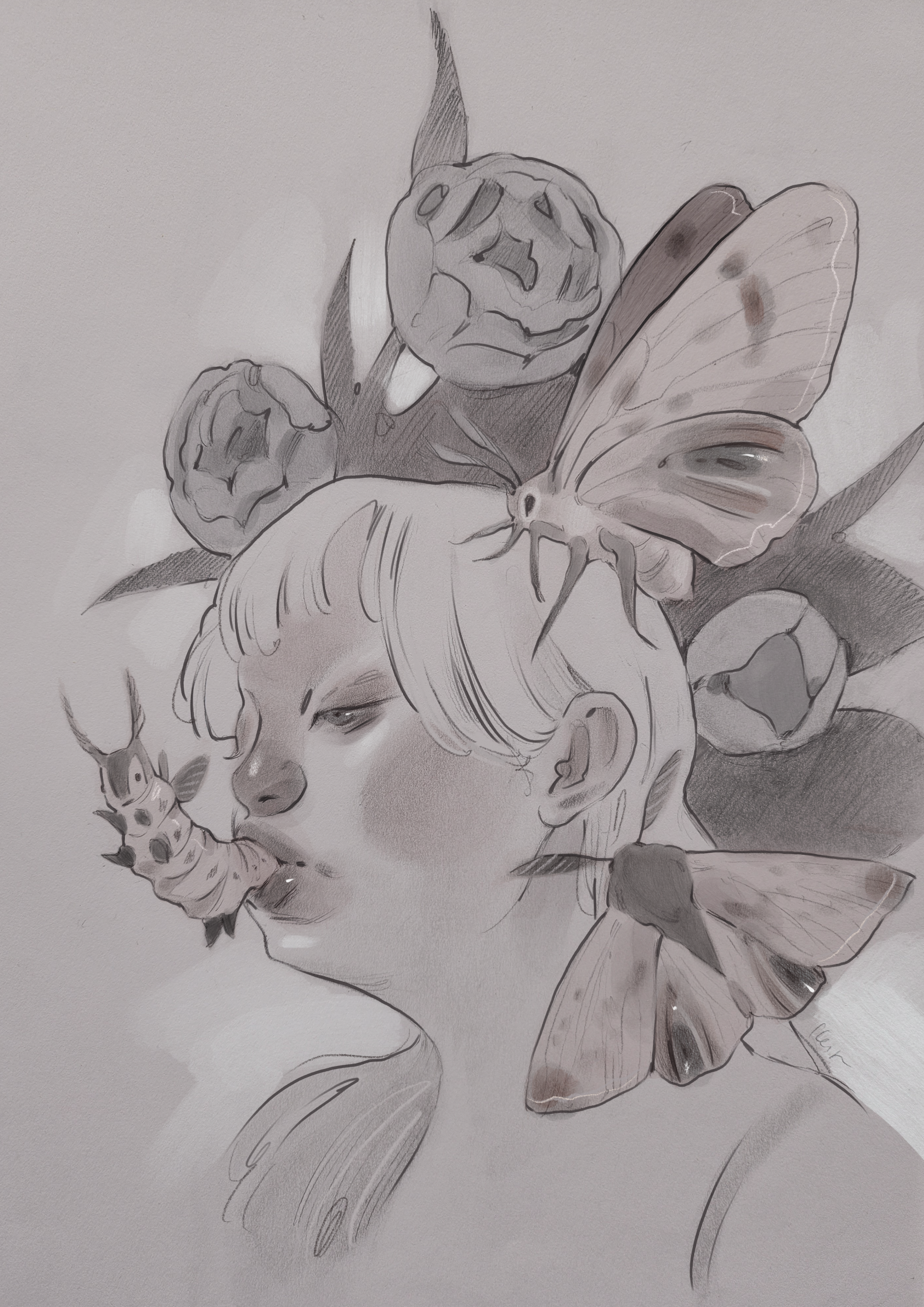
In the garden
If you could collaborate with a filmmaker, writer, or musician to expand your world, who would it be and why?
It would be a dream for me to be able to collaborate with singer Aurora Aksnes. I hold her in high esteem as an artist and as a person: she is socially engaged and participates in initiatives related to environmental issues, gender equality and human rights, all of which are close to my heart. Her music is aimed at raising awareness of important social, ethical and political issues, creating awareness and critical thinking. With her musical universe, she has created a kind of safe haven, a welcoming, inclusive and open dimension. And that's what I'd like to try to do with my art. I think she is a very deep, kind and visionary person with great emotional intelligence, sensitivity and understanding. I also love her music that is so ethereal and emotional, clear and genuine. I happen to hear her very often while I'm painting. It's a huge inspiration to me and she’s one of my role models.